Best vegan rosé wine brands in 2026
Editorial Team @ 2026-11-05 13:58:37 -0800

Best overall: a rosé whose producer confirms in writing that it is vegan. Best for low-intervention drinkers: an organic, minimally fined rosé. Best for budget shoppers: any bottle with a vegan statement on the label or the producer's site. Vegan rosé wine in 2026 comes down to one thing: how the wine was clarified, not what color it is.
- Vegan rosé wine is made without animal-derived fining agents such as casein, egg albumin, gelatin or isinglass.
- A vegan statement from the producer beats any guess based on price, color or the word natural.
- Tinto Amorio's No Pasa Nada rosé does not state vegan status on its product page, so confirm before buying.
- In 2026, ask the producer directly when the label is silent.
Why this matters in 2026
Rosé looks like it should be simple: grapes, juice, a short time on the skins. The catch is clarification. Many wineries clear cloudy wine with fining agents, and some of those come from milk, eggs, fish or animal gelatin. The agent is removed before bottling, so it never shows up on a label.
In the US, wine labels are not required to list fining agents. The EU does require labeling when milk- or egg-derived agents are used and detectable. That gap is why a bottle can taste identical to a vegan one and still not be vegan. Our guide to the best vegan wine brands covers the wider category beyond rosé.
What makes the best vegan rosé
Use these five criteria to audit any bottle before you trust a ranking, including this one:
- Written confirmation. A vegan statement on the label, the producer's site or a direct reply to your email. Anything less is a guess.
- Named clarification method. Bentonite clay, settling, or no fining at all are the usual vegan routes.
- Farming. Organic grapes do not make a wine vegan, but producers who farm organically tend to intervene less in the cellar.
- Style match. Dry or off-dry, light or fuller. Vegan does not tell you how the wine tastes.
- Availability. A bottle you can reorder beats a one-time find.
Vegan rosé at a glance
| Option | Best for | Standout feature | Key limitation |
|---|---|---|---|
| 1. Rosé with a vegan statement | Anyone strict about it | Answer is already in writing | Fewer bottles carry the statement |
| 2. Organic, minimally fined rosé | Low-intervention drinkers | Less cellar manipulation | Organic is not the same as vegan |
| 3. Natural-wine rosé | Adventurous drinkers | Native-yeast, low-intervention approach | Natural is not the same as vegan; verify |
1. Rosé with a vegan statement: best vegan rosé for strict buyers
What it is: a rosé where the producer says, in writing, that no animal-derived products were used to make or clarify the wine. This is the only category that settles the question without further work.
Vegan statement pros:
- No detective work at checkout
- Easy to share with guests who ask
- Works for gifting and hosting
Vegan statement cons:
- Not every vegan wine is labeled, so you may skip good bottles
- The statement is only as reliable as the producer behind it
Best for: hosts, gift-givers and anyone with a strict vegan guest. Verdict: Buy when you need certainty.
2. Organic, minimally fined rosé: best for low-intervention drinkers
What it is: a rosé from organically farmed grapes where the winemaker avoids heavy fining and filtering. Wines left to settle on their own are often vegan by default, but the producer still has to confirm it.
Organic rosé pros:
- Fewer cellar additions overall
- Often drier and more savory than mass-market pink wine
- Pairs with a wide range of food
Organic rosé cons:
- Organic certification says nothing about fining agents
- You still need to ask about clarification
Sulfites are a separate question from vegan status, and our piece on whether low-sulfite wine is vegan breaks the two apart.
Best for: drinkers who care about how the wine was made, not only what is in it. Verdict: Buy after confirming the fining method.
3. Natural-wine rosé: best for adventurous drinkers
What it is: a rosé made with native yeasts and little added in the cellar. Natural wines are often vegan in practice, but the term has no legal definition, so it never replaces confirmation. Our write-up on natural wine for vegan drinkers explains where the overlap holds and where it does not.
Tinto Amorio's '21 No Pasa Nada rosé is the rosé in this range. The product page describes it as crafted for a lighthearted, stress-free Sunday morning, served chilled and paired with brunch. The page does not say it is vegan, so treat its vegan status as unconfirmed and ask Tinto Amorio before you buy if that matters to you.
Natural-wine rosé pros:
- A more distinctive, less polished style than commercial pink wine
- Easy to serve chilled for brunch or a patio
- Built to be shared
Natural-wine rosé cons:
- Natural does not mean vegan
- Style varies a lot from producer to producer
Best for: drinkers who want character in the glass. Verdict: Hold until the vegan status is confirmed for your bottle.


How we ranked
The ranking follows the criteria above. A written vegan statement outranks every other signal because it is the only one that answers the question. Farming and cellar philosophy come second because they predict style and intervention, not vegan status. No brand is ranked on a claim that is not stated by the producer.
Which vegan rosé should you choose?
If you must be certain, pick a rosé with a written vegan statement and stop there. If you care about farming and cellar practice too, pick an organic, minimally fined rosé and email the winery. If you want something with character, try a natural-wine rosé, but get the vegan answer first. In 2026, the winning habit is simple: never assume.
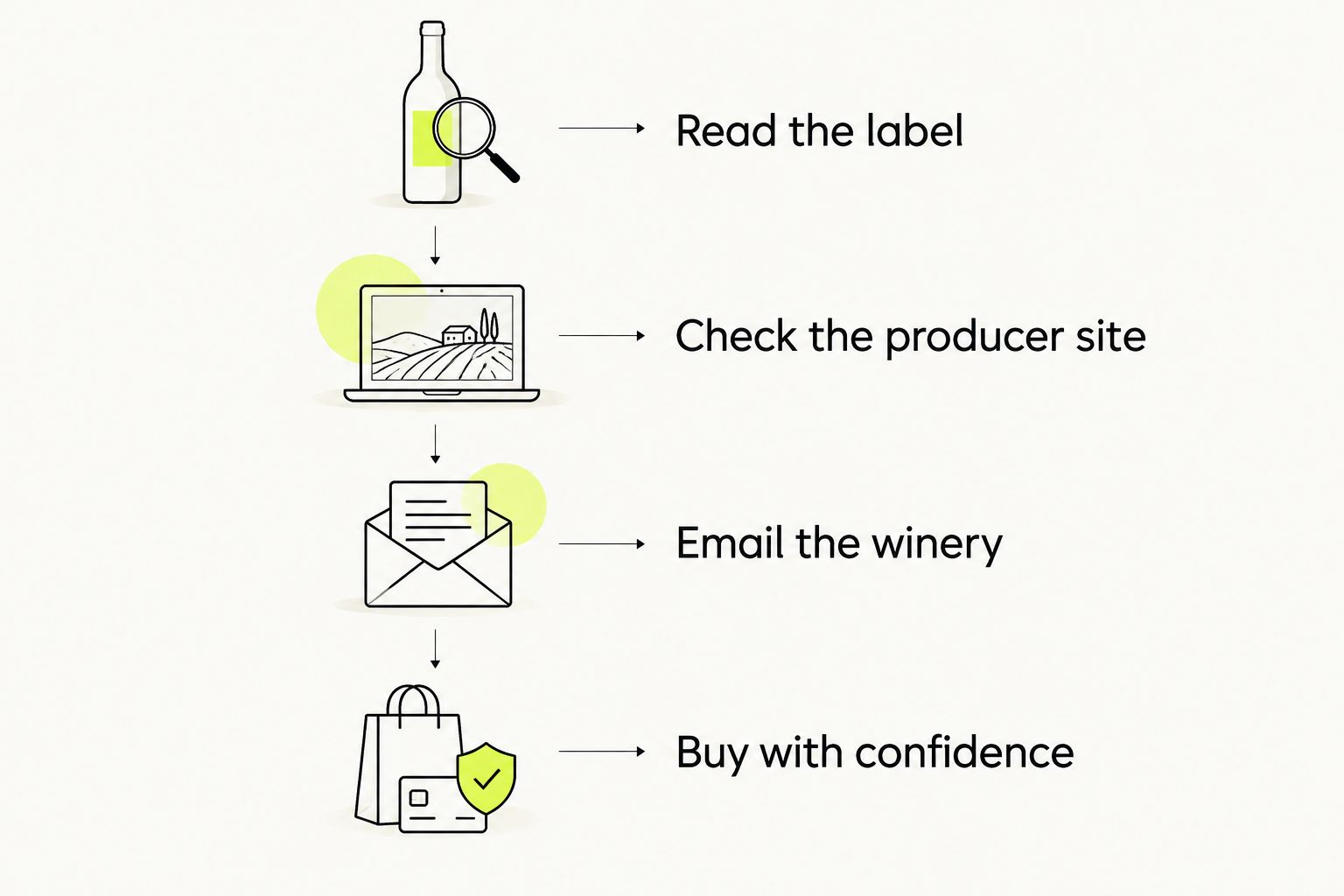
How to confirm a rosé is vegan before you buy
- Look for a vegan statement on the back label or the product page.
- Search the producer's FAQ for the words fining, clarification or vegan.
- Email the winery with one question: were any animal-derived products used to make or clarify this wine?
- Keep the reply. It is your proof when a guest asks.
A reply that names bentonite or says the wine was unfined is a good sign. A vague answer is a no.
Serving vegan rosé in 2026
Serve rosé cold, roughly 45 to 55°F, so the fruit stays bright without turning sharp. A standard bottle is 750 ml, which pours about five 5-ounce glasses. For a brunch table of six, plan on two bottles.
FAQ
What makes a rosé vegan?
A rosé is vegan when no animal-derived products were used in making or clarifying it. The common offenders are casein, egg albumin, gelatin and isinglass.
Is all rosé wine vegan?
No. Rosé is made like other wines, and some producers fine with animal-derived agents. Only the producer can confirm the method for a given bottle.
Is organic rosé automatically vegan?
No. Organic certification covers how grapes are farmed, not how the wine is clarified. Check the fining method separately.
Is natural wine vegan?
Often, but not always. Natural wine has no legal definition, so confirm vegan status with the producer.
Is Tinto Amorio's rosé vegan?
The product page for the '21 No Pasa Nada rosé does not state it. Contact Tinto Amorio to confirm before buying if it matters to you.
Do US wine labels list fining agents?
Not as a requirement. The EU requires labeling of milk- and egg-derived agents when used, which is why EU bottles sometimes say more.
Is vegan rosé dry or sweet?
Vegan status says nothing about sweetness. Style depends on the winemaker, and many rosés are dry.
One last thing
The most useful vegan label is a short email reply. A winery that answers in one line, naming the clarification method, has told you more than any badge can. Save it, and you will never have to re-ask.