Best Vegan Wine Brands in 2026: Ranked Picks
Editorial Team @ 2026-09-18 00:46:05 -0700

Vegan wine sounds redundant — it's just fermented grapes, right? — but most bottles on a shelf get clarified with animal-derived fining agents, and 2026 shoppers are asking harder questions about what actually lands in the glass before it reaches the table.
- Bheyo Orange Wine is the only Tinto Amorio bottle explicitly labeled vegan for 2026.
- Vegan wine skips fining agents like casein, gelatin, and isinglass used to clarify conventional bottles.
- Monje Orange Wine and Jajaja Glou Glou Red Wine use native-yeast, low-intervention methods that mostly skip fining anyway.
- The Natural Wine Sampler is the easiest way to taste vegan-friendly natural wine styles side by side in 2026.
Why vegan wine actually matters in 2026
Most drinkers assume wine is automatically vegan because grapes don't have a pulse. They're wrong more often than not. Winemakers have used casein (a milk protein), gelatin, egg albumin, and isinglass — a protein pulled from fish bladders — to clarify wine for centuries, and none of that has to show up on a U.S. label.
That's the gap vegan wine closes. A wine earns the label when the producer either skips fining entirely or swaps in plant-based alternatives like bentonite clay or pea protein. Tinto Amorio's guide to natural wine for vegan drinkers breaks the additive list down bottle by bottle if you want the full picture.
Natural wine and vegan wine overlap a lot in 2026, but they're not the same thing. A native-yeast, unfiltered bottle is more likely to skip animal fining agents by nature of the process — but "natural" alone isn't a vegan guarantee. You still need the producer to say so.
What makes a wine actually vegan
- No animal-derived fining agents — no casein, gelatin, isinglass, or egg albumin in the clarification step.
- Explicit vegan claim from the producer — printed on the label or stated on the product page, not assumed.
- Low-intervention winemaking — native yeast fermentation and minimal filtration cut the odds of animal inputs sneaking in.
- Organic or sustainably farmed grapes — not a vegan requirement on its own, but it usually travels with the same minimal-intervention mindset.
- Transparent sourcing — a winery willing to answer "what's in this" directly, not a marketing page that dodges the question.
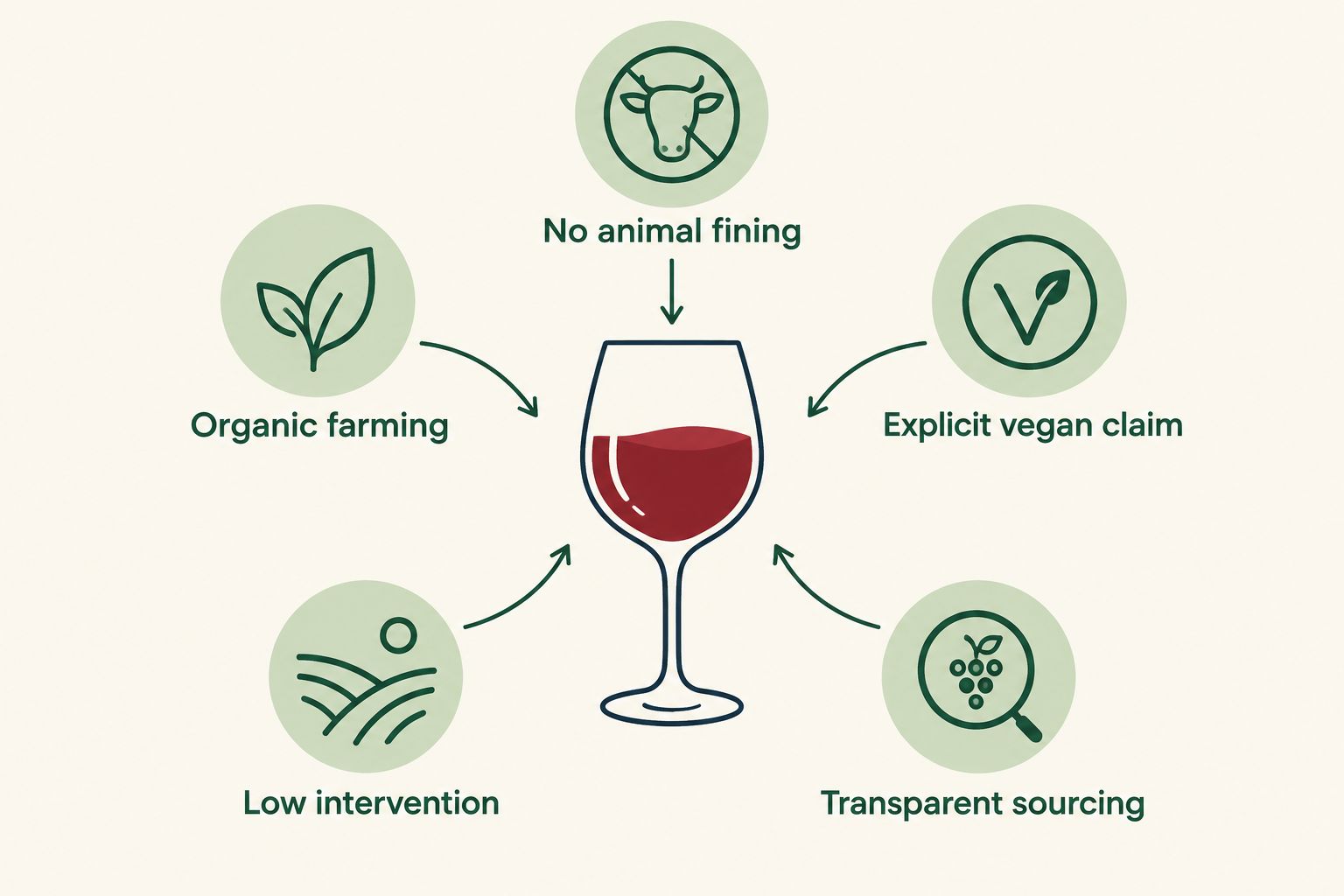
Vegan wine at a glance
| Wine | Best for | Standout feature | Key limitation |
|---|---|---|---|
| Bheyo Orange Wine | Confirmed vegan drinkers | Practicing-organic grapes; vegan; zero sugar | Tannic, savory profile isn't for everyone |
| Monje Orange Wine | Orange wine beginners | 9-day skin contact, sells out every season | No explicit vegan claim on the product page |
| Jajaja Glou Glou Red Wine | Chillable red fans | Semi-carbonic, built to serve cold | No explicit vegan claim on the product page |
| Chaand Glou Glou Red Wine | Limited-release collectors | Changes with each harvest | Semi-carbonic style skews light for big-red drinkers |
| The Natural Wine Sampler | First-time tasters | Trio of styles plus a tote in one box | One bottle of each — not enough to name a favorite yet |
1. Bheyo Orange Wine: best vegan wine for confirmed vegan drinkers
Bheyo Orange Wine is a 22-day skin-contact orange wine, and it's the one bottle in the Tinto Amorio lineup with vegan printed right on the product page alongside practicing-organic grapes, zero sugar, and low sulfites. That's a rare combination for a wine this textured.
Bheyo pros:
- Vegan and organic stated plainly — no digging required
- 22-day skin-contact maceration gives it more grip and texture than a quick-macerated orange wine
- Zero sugar and low sulfites for drinkers who read the whole label
Bheyo cons:
- Skin-contact tannin and funk read as unfamiliar to a first-time orange wine drinker
- It's a single style — no red or sampler variety in one bottle
Best for: drinkers who want the vegan claim in writing, not an assumption. Verdict: Buy.
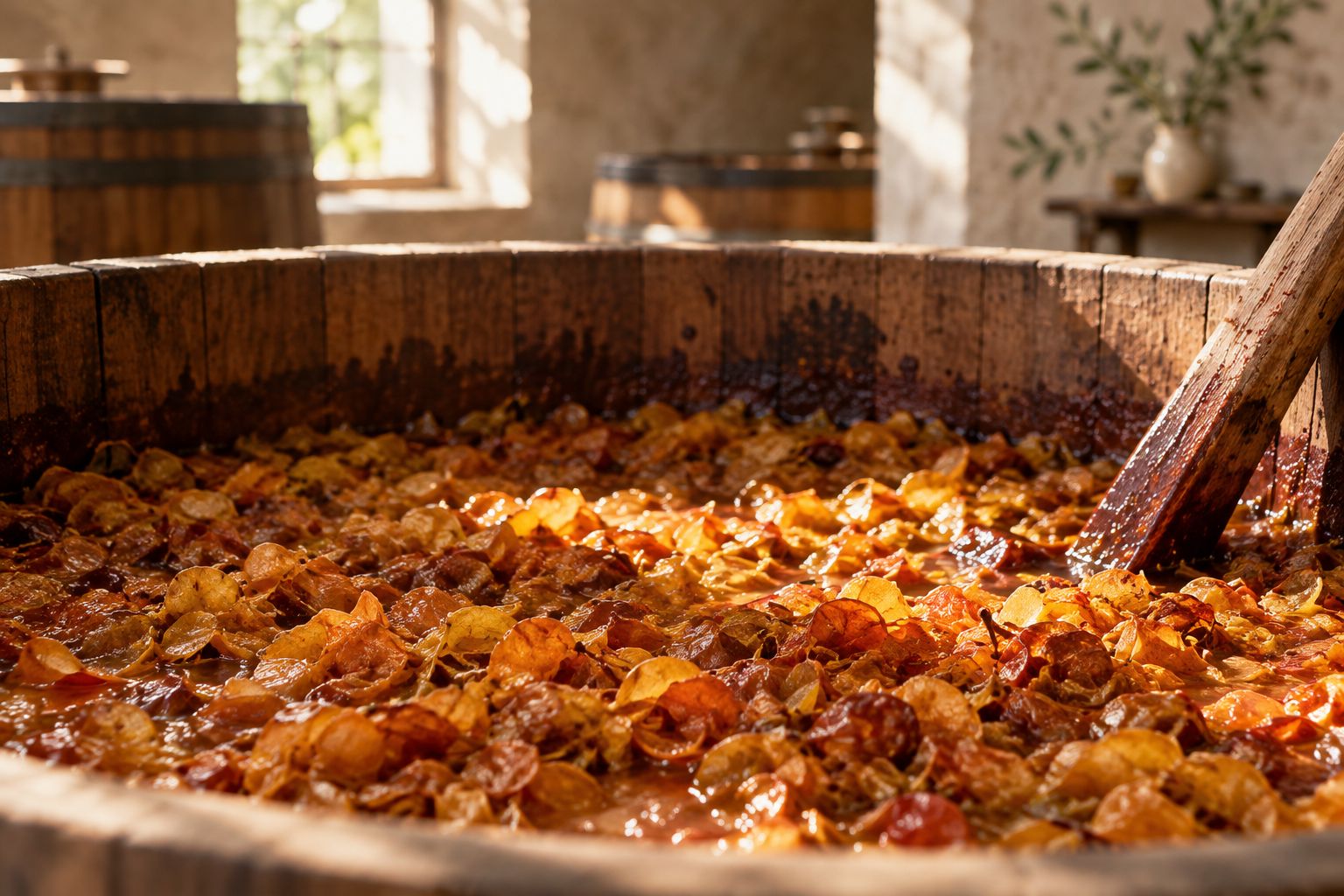
2. Monje Orange Wine: best orange wine for natural wine beginners
Monje Orange Wine runs a shorter, 9-day skin-contact window, which makes it a gentler entry point than Bheyo's deeper maceration. It's consistently the first Tinto Amorio wine to sell out each season, and the native-yeast, low-intervention process behind it skips heavy fining by default.
Monje pros:
- Shorter skin-contact window makes it more approachable than deeper-macerated orange wines
- First to sell out every season — a real signal of repeat demand
- Native-yeast fermentation with minimal intervention
Monje cons:
- The product page doesn't carry an explicit vegan claim the way Bheyo's does
- Sells out fast, so ordering timing matters in 2026
Best for: someone who wants an easier on-ramp into orange wine. Verdict: Buy.
3. Jajaja Glou Glou Red Wine: best chillable red for vegan-curious drinkers
Jajaja Glou Glou Red Wine is a semi-carbonic red built to be served cold, which is unusual for a red and useful heading into warmer 2026 months. It's low-intervention by design, without the heavy tannin structure a fined, filtered bottle usually carries.
Jajaja pros:
- Semi-carbonic style is built to serve chilled
- Low-intervention red without heavy fining-driven tannin
- Reads as a crowd-pleaser at a dinner party, not a niche pour
Jajaja cons:
- No explicit vegan claim on the product page
- Semi-carbonic reds trade weight and structure for lightness — not for drinkers who want a big red
Best for: red drinkers who want a chillable, low-intervention pour. Verdict: Buy.
4. Chaand Glou Glou Red Wine: best limited-release red for collectors
Chaand means moon, and like the moon, this label changes with each harvest — it's a limited-production semi-carbonic red rather than a fixed annual release. That makes it less predictable than Jajaja, but more interesting to anyone who likes chasing a new vintage.
Chaand pros:
- Limited-production label that changes vintage to vintage — no two years taste identical
- Same chillable, semi-carbonic approach as Jajaja with its own harvest character
- Appeals to drinkers who like collecting a new release each season
Chaand cons:
- Limited production means it's not always in stock
- No explicit vegan claim listed on the product page
Best for: collectors who want a different pour every harvest. Verdict: Hold — grab a bottle when the current harvest release is in stock.
5. The Natural Wine Sampler: best way to try vegan-friendly styles side by side
The Natural Wine Sampler pairs Jajaja Glou Glou Red Wine, Bheyo Orange Wine, and a tote in one box, which puts the confirmed-vegan Bheyo right next to two other low-intervention styles without committing to a full case of any single bottle.
Sampler pros:
- Puts the vegan-labeled Bheyo Orange Wine next to two other low-intervention styles in one order
- Removes the guesswork of picking a single bottle for a first purchase
- A tote is included, useful for anyone gifting a first natural wine kit in 2026
Sampler cons:
- One bottle of each style isn't enough to settle on a house favorite
- Costs more upfront than a single bottle
Best for: first-time buyers who don't want to commit to one style yet. Verdict: Buy.


How we ranked
The ranking starts with the explicit vegan claim: Bheyo Orange Wine has one printed on its product page, and nothing else in the lineup does — that earned it the top spot. From there, ranking followed low-intervention winemaking method, skin-contact time pulled straight from each product page, and how much guesswork a first-time buyer has to do before ordering.
Which vegan wine should you choose?
Buy Bheyo Orange Wine if the vegan claim needs to be in writing — it's the only Tinto Amorio bottle that says so directly. Start with the Natural Wine Sampler if you're not sure which style fits you yet, since it puts Bheyo next to two other low-intervention pours in one order. Skip straight to Monje Orange Wine if orange wine is already your thing and you want the gentler, 9-day version. Chaand is the pour to grab when you want a different vegan-friendly red every harvest rather than the same bottle twice.
FAQ
Is all wine vegan?
No. Many wines are clarified with animal-derived fining agents like casein, gelatin, egg albumin, or isinglass, and U.S. labels aren't required to disclose that.
What makes a wine not vegan?
Fining agents pulled from milk, eggs, or fish are used to clear haze from conventional wine before bottling. If a producer uses one of these and doesn't disclose it, the wine isn't vegan even though it's grape-based.
Is orange wine vegan?
It depends on the producer. Bheyo Orange Wine is explicitly labeled vegan; other orange wines need a direct check with the winery since skin-contact style alone doesn't guarantee it.
Is natural wine the same as vegan wine?
No, they overlap but aren't identical. Natural, low-intervention wine often skips fining and filtering, which makes it more likely to be vegan, but only an explicit producer claim confirms it.
How can I tell if a wine is vegan?
Check the product page or label for an explicit vegan claim, or contact the winery directly. Assuming a wine is vegan because it's unfiltered or natural isn't reliable on its own.
Does Tinto Amorio make vegan wine?
Yes. Bheyo Orange Wine is made with practicing-organic grapes and is vegan, zero sugar, and low sulfites on its product page as of 2026.
What's the best vegan wine to start with in 2026?
Bheyo Orange Wine is the most direct starting point since it carries an explicit vegan claim. The Natural Wine Sampler is a good second option if you want to compare styles first.
Is Jajaja Glou Glou Red Wine vegan?
Jajaja doesn't carry an explicit vegan claim on its product page, so vegan-strict drinkers should reach for Bheyo Orange Wine instead or confirm directly with the winery.
One last thing
Isinglass — the fish-bladder protein used to clarify wine for centuries — has been in winemaking longer than most consumers realize, and it still shows up in bottles that never mention it because disclosure isn't required. That's the real reason vegan wine needs an explicit label rather than a guess: the absence of a claim doesn't mean the absence of an animal product, it usually just means nobody asked.