Best Organic Rosé Wine Brands in 2026: Full Guide
Editorial Team @ 2026-09-21 15:52:02 -0700

Organic rosé wine has a labeling problem: pink color and a screwtop don't make a bottle organic, and a lot of what's marketed as rosé in 2026 skips both the certification and the low-intervention winemaking that the category promises. Tinto Amorio doesn't bottle a rosé, but the same skin-contact philosophy behind its natural wines answers most of what rosé drinkers are actually looking for.
- Provence dry rosé with a Bio or USDA organic seal remains the safest true organic rosé wine pick in 2026.
- USDA rules require zero added sulfites for wines labeled organic; 'made with organic grapes' wines allow up to 100 ppm.
- Natural pét-nat rosé is the closest style to low-intervention winemaking, though it pours cloudy.
- Tinto Amorio doesn't bottle a rosé, but its 9-day skin-contact Monje orange wine covers the same chilled, easy-drinking role.
Why organic rosé wine gets confusing fast
Organic rosé wine sells on vibes as much as substance. Under USDA rules, a wine labeled simply "organic" can't have any added sulfites, while one labeled "made with organic grapes" can carry them up to 100 parts per million — two very different products sitting on the same shelf with similar-looking labels.
The pink color itself tells you nothing about certification. It comes from a short skin contact period, usually hours rather than the days used for red or orange wine, and that's a stylistic choice, not an organic one. Tinto Amorio doesn't work in rosé's color range at all — its wines lean orange and red, built on longer skin contact — but the same native-yeast, low-sulfite approach that defines organic rosé wine is exactly what the brand builds every bottle around.
If you're already comparing organic whites, the reasoning is nearly identical to the organic white wine brands guide — certification and sulfite disclosure matter more than the label's color claims.
What makes the best organic rosé wine
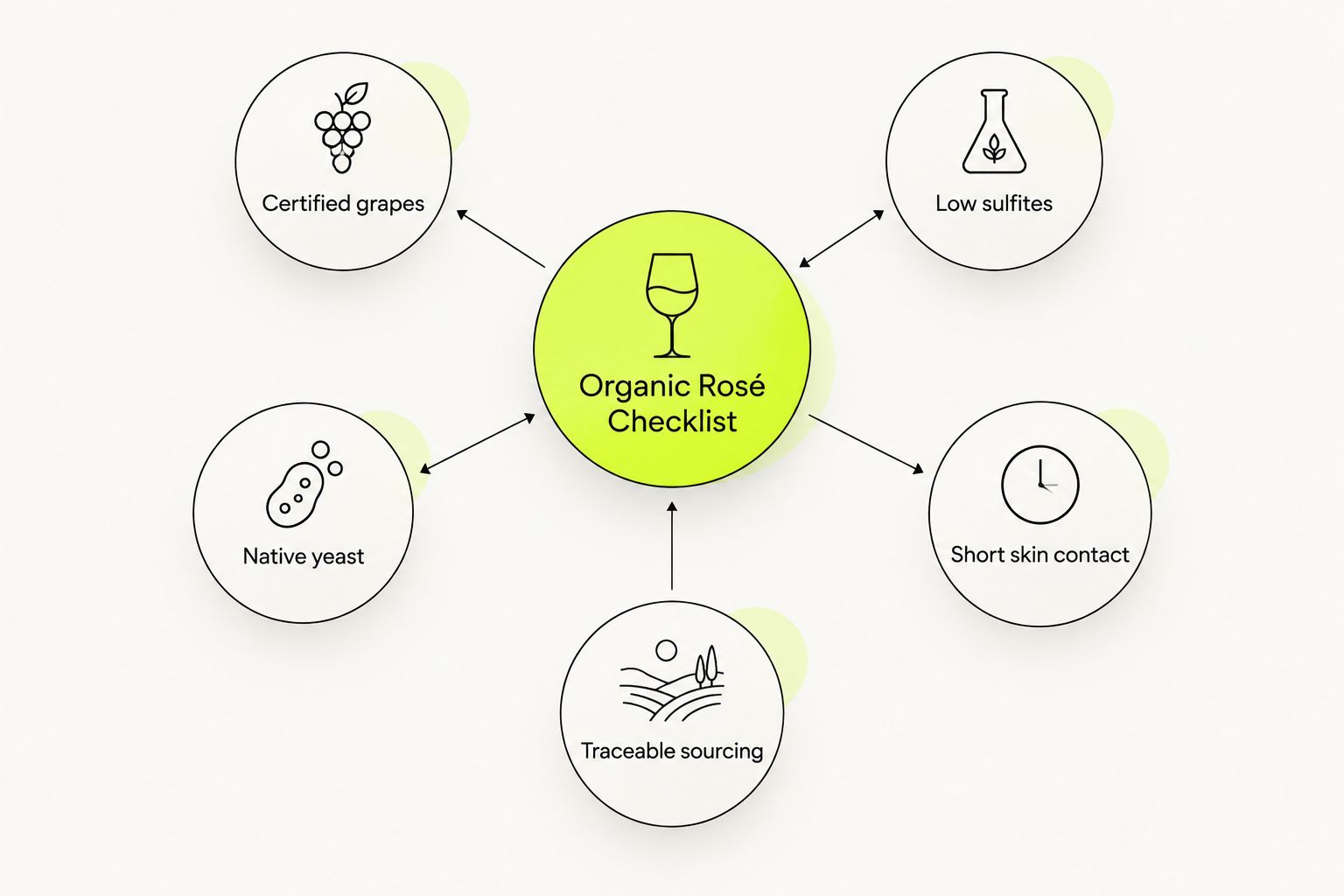
- Certified organic or biodynamic grapes — USDA Organic, EU Bio/AB, or an equivalent seal, not just a "natural" claim on the front label
- Low or no added sulfites — the single biggest gap between "organic" and "made with organic grapes" wines
- Native-yeast fermentation — no commercial yeast strains added to speed things up
- Short, controlled skin contact — hours, not days, to keep the classic pale color and dry finish
- Traceable, small-lot sourcing — single vineyard or small producer beats a mass-blended regional label
- Dry finish with real acidity — sweetened or fruit-forward styles usually signal a shortcut somewhere in production
Organic rosé wine at a glance
| Style | Best for | Standout feature | Key limitation |
|---|---|---|---|
| Provence dry rosé | Purists who want the classic pale style | Grenache-Cinsault-Syrah blend built for a bone-dry finish | Most bottles aren't certified organic — check for a Bio/AB seal |
| Spanish organic rosado | Bold, fruit-forward drinkers | Garnacha grown in warmer sites gives fuller color and body | Harder to find outside specialty shops |
| Natural pét-nat rosé | Natural wine fans wanting minimal intervention | Native-yeast, single fermentation, usually unfiltered | Cloudy pour, shorter shelf life once opened |
| Californian organic rosé | Drinkers who want a domestic, certified option | USDA-certified organic vineyards under US regulation | Style varies widely bottle to bottle |
| Monje orange wine (Tinto Amorio) | Rosé drinkers who want more skin-contact character | 9-day skin contact for a bolder, still-chillable pour | Amber, not pink — not a literal rosé substitute |
| Jajaja Glou Glou red wine (Tinto Amorio) | Rosé-season sippers who ran out of rosé | Semi-carbonic red served chilled, low tannin | Reads as red in the glass, not pink |
1. Provence dry rosé: best overall organic rosé wine
Provence built the template every other rosé region copies: pale salmon color, Grenache, Cinsault, Syrah and Rolle blended for a bone-dry finish, skin contact measured in hours. Provence dry rosé wins on recognition and food flexibility, but only a fraction of it is actually certified organic.
Provence dry rosé pros:
- Widely available at grocery stores and wine shops, not just specialty retailers
- Bone-dry, high-acid profile pairs with almost anything on a summer table
- A recognizable regional identity makes label-reading easier once you know what to look for
Provence dry rosé cons:
- The majority on shelves is conventionally farmed — the Bio or USDA organic seal is the only proof, not the region name
- Mass-produced bottles can taste generic and interchangeable
Verdict: Buy — but only if the bottle carries an actual organic certification mark, not just the word "natural" on the label.
2. Spanish organic rosado: best for bold, fruit-forward drinkers
Spanish rosado, mostly Garnacha-based out of Navarra, Rioja, and Cariñena, runs warmer and fuller than Provence's pale style. The color alone signals more body and riper fruit before you've even poured it.
Spanish organic rosado pros:
- Fuller-bodied than most French rosé, better suited to grilled or spiced food
- Often priced lower per bottle at retail than Provence imports
- A growing number of certified-organic bodegas in Navarra makes sourcing easier than a few years ago
Spanish organic rosado cons:
- Harder to find at general grocery stores in the US
- Label terms like "ecológico" vary by region and take a little label literacy
Verdict: Buy — for anyone who finds Provence rosé too thin to hold up against real food.
3. Natural pét-nat rosé: best for natural wine drinkers
Pét-nat rosé skips the second fermentation entirely — it's bottled before the first one finishes, so the carbonation happens naturally in the bottle. Native yeast, minimal filtration, and usually organic or biodynamic farming underneath it.
Natural pét-nat rosé pros:
- Closest style philosophically to Tinto Amorio's own low-intervention winemaking
- Genuinely minimal additives, not just a marketing claim
- Low alcohol and playful carbonation make it an easy daytime pour
Natural pét-nat rosé cons:
- Shorter shelf life once opened than a still rosé
- Carbonation and clarity vary bottle to bottle, which throws off drinkers expecting a bright, clear pink pour
Verdict: Buy — if you already drink natural wine, this is the rosé that matches the philosophy instead of just borrowing the aesthetic.
4. Californian organic rosé: best domestic, certified option
California doesn't have one defining rosé blend the way Provence does, but USDA-certified organic vineyards give a traceable paper trail that a lot of imported rosé can't match.
Californian organic rosé pros:
- Certification is easier to verify under US regulation than reading a foreign label
- Supports small domestic producers
- Usually shelved right alongside other organic wine, making comparison shopping simple
Californian organic rosé cons:
- No single house style, so quality and flavor swing widely from bottle to bottle
- Certified-organic grapes still don't guarantee low sulfites — check the back label
Verdict: Hold — worth trying, but read the sulfite disclosure before committing to a case.
5. Monje orange wine: best rosé alternative for skin-contact fans
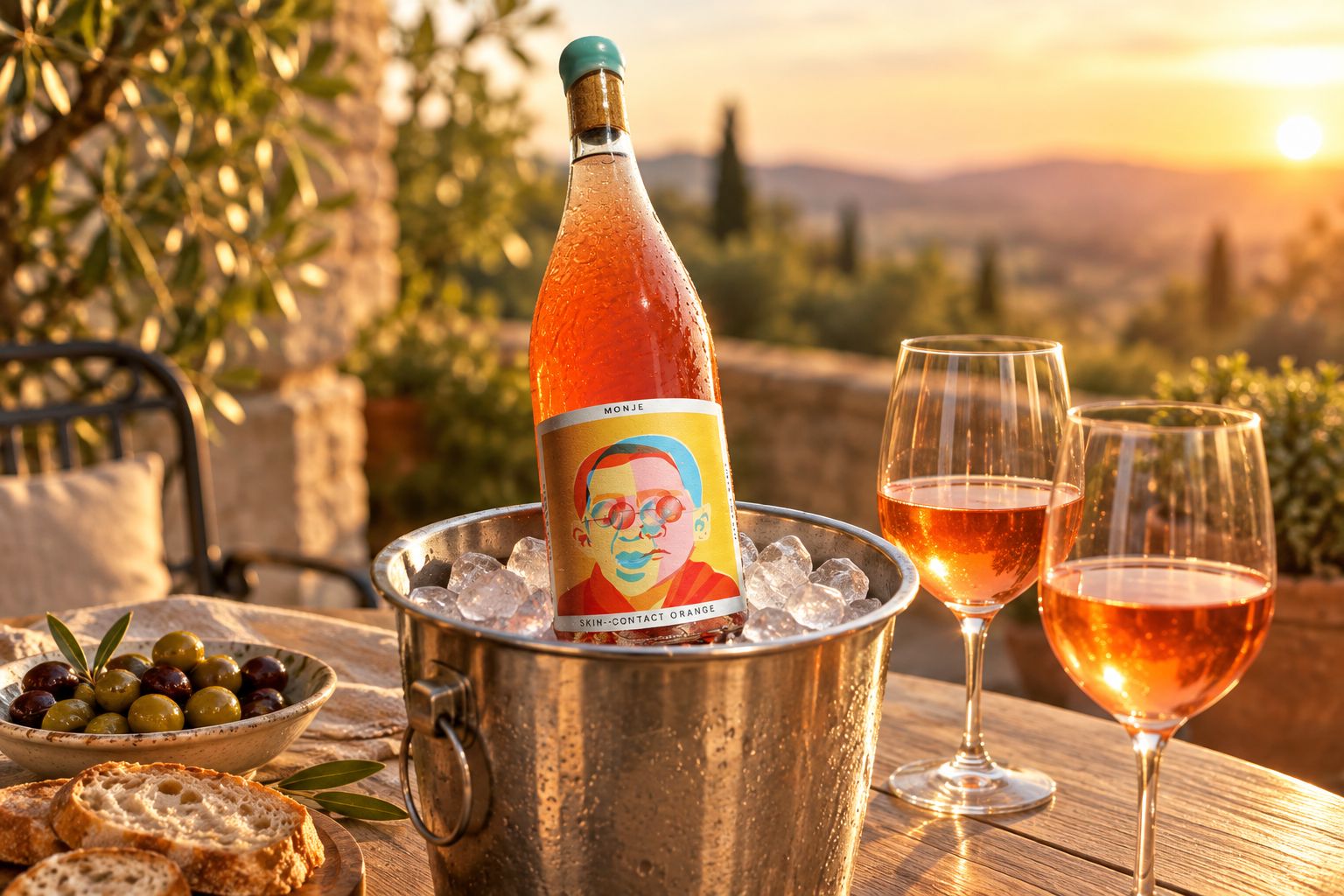
Here's the honest part: Tinto Amorio doesn't make an organic rosé wine. What it does make is Monje orange wine, a 9-day skin-contact wine built on the same chilled, easy-drinking occasion rosé usually fills, just with more color and grip from the extra skin contact time.
Monje orange wine pros:
- Skin-contact style sits closer to natural pét-nat rosé than to a mass-market pink wine
- Served chilled, just like rosé, so it slots into the same drinking occasion
- Part of Tinto Amorio's regular lineup, easy to order alongside its samplers
Monje orange wine cons:
- Amber in the glass, not pink — not a literal swap if color matters to you
- More tannic grip than a delicate Provence pour
Verdict: Buy — as a stand-in, not a swap, for drinkers who like rosé's ease more than its exact color.
6. Jajaja Glou Glou red wine: best chillable alternative for rosé season
Jajaja Glou Glou red wine is a semi-carbonic red built specifically to be served chilled, which puts it in the same porch-pour category as rosé even though it's red in the glass.
Jajaja Glou Glou red wine pros:
- Chillable and light enough for daytime drinking, unlike a typical red
- Semi-carbonic maceration keeps tannin low, so it doesn't fight warm-weather food
- Pairs with the same casual spreads rosé usually gets served alongside
Jajaja Glou Glou red wine cons:
- Still reads as a red wine on the pour — it won't satisfy anyone set on pink
- Not marketed or made as a rosé substitute, so treat it as its own category
Verdict: Buy — as the closest chilled-red option when there's no rosé left in the fridge.
How this list was ranked
Every style above got measured against the same six criteria: certification, sulfite disclosure, native-yeast fermentation, skin contact length, traceability, and dry finish. The two Tinto Amorio picks don't compete for "best organic rosé wine" — they're ranked separately as the closest available substitute for someone shopping the brand's own catalog.
“If the pour isn't pale pink, it's not rosé — no matter what the back label promises.”


Which organic rosé wine should you choose?
For a true organic rosé wine in 2026, a certified Provence dry rosé carrying a Bio or USDA seal is still the safest default — check the label before the region does the convincing for you. Natural wine drinkers should reach for pét-nat rosé instead. And if you're already on Tinto Amorio's site looking for something to chill and pour this season, Monje orange wine is the closer match to the brand's own winemaking than anything pink will ever be.
FAQ
What makes a rosé wine organic?
A rosé is organic when it's made from certified-organic grapes and, for the strictest USDA organic label, has no added sulfites. A 'made with organic grapes' label allows sulfites up to 100 parts per million, so the wording matters as much as the color.
Is Provence rosé always organic?
No. Most Provence rosé is conventionally farmed. Look for a Bio or AB certification mark on the label before assuming the region guarantees organic production.
What's the difference between rosé and orange wine?
Rosé gets its color from a few hours of skin contact with red grapes, while orange wine comes from white grapes left on their skins for days, like Tinto Amorio's Monje at 9 days. The longer contact gives orange wine more tannin and color depth.
Does Tinto Amorio make a rosé wine?
No, Tinto Amorio's current catalog doesn't include a rosé. Monje orange wine and Jajaja Glou Glou red wine are the closest chilled, low-intervention alternatives in the lineup.
How should organic rosé wine be served?
Serve organic rosé wine chilled, around 45-55°F. Too cold and the acidity flattens out; too warm and the wine loses the crispness that makes rosé work in the first place.
Is natural pét-nat rosé the same as organic rosé?
Not automatically. Pét-nat describes the fermentation method, not certification status. Most pét-nat rosé is made with organic or biodynamically farmed grapes, but check the label to confirm.
How much sulfite is allowed in organic wine?
A wine labeled simply 'organic' under USDA rules can't have any added sulfites. A wine labeled 'made with organic grapes' can add sulfites up to 100 parts per million.
What's a good low-sulfite alternative if I can't find organic rosé?
Look for natural pét-nat rosé or a skin-contact wine like Tinto Amorio's Monje, both built around native-yeast fermentation and minimal added sulfites.
One last thing
The sulfite gap between "organic" and "made with organic grapes" wine is the detail almost nobody checks at the shelf, and it's the single biggest factor in whether a rosé actually delivers what the front label promises. Flip the bottle before you trust the color.