Best Low Sugar Organic Wine Brands in 2026
Editorial Team @ 2026-09-22 13:59:43 -0700

Not every wine labeled "organic" or "natural" actually finishes dry, and sugar content varies more inside the organic wine category than most shoppers expect. This guide ranks the low sugar organic wine picks worth buying in 2026, based on how each wine is fermented, what's on the current product listing, and how much residual sugar the style is built to leave behind.
- Bheeyo - Orange Wine is the best low sugar organic wine overall: certified-organic grapes, 24-day skin contact, dry finish.
- Monje - Orange Wine is the easier entry point at 9 days of skin contact and a lighter pour.
- Jajaja - Glou Glou Red Wine is the best chillable low sugar red if orange wine isn't your style.
- Dry wine tops out around 4 grams of residual sugar per liter under US and EU labeling convention.
- The Orange Wine Sampler is the fastest way to compare Bheeyo and Monje side by side in 2026.
Why this matters
"Organic" tells you how the grapes were farmed. It doesn't tell you how sweet the finished bottle is. A wine can carry an organic label and still be back-sweetened, dosed, or stopped early with sugar left in the tank.
Low sugar organic wine, as a category, means the fermentation was allowed to run its full course. Native yeasts eat through the grape sugar until there's little left to convert, and nothing gets added afterward to smooth it out. That's the standard this list applies to every Tinto Amorio wine below, including the ones that don't carry a certified-organic claim.
Under US and EU labeling convention, a wine is considered dry once residual sugar drops to roughly 4 grams per liter, sometimes stretching to 9 g/L if acidity is high enough to balance it. Skin-contact orange wines and semi-carbonic reds both tend to land well under that line because the techniques that create their flavor (extended maceration, whole-cluster fermentation) don't rely on sugar to carry the wine.
Best overall: Bheeyo - Orange Wine, certified-organic and fermented dry through 24 days of skin contact. Best for orange wine beginners: Monje - Orange Wine, a shorter 9-day maceration that's lighter on tannin. Best chillable red: Jajaja - Glou Glou Red Wine, a semi-carbonic red built to serve cold with no added sweetness.
What makes the best low sugar organic wine
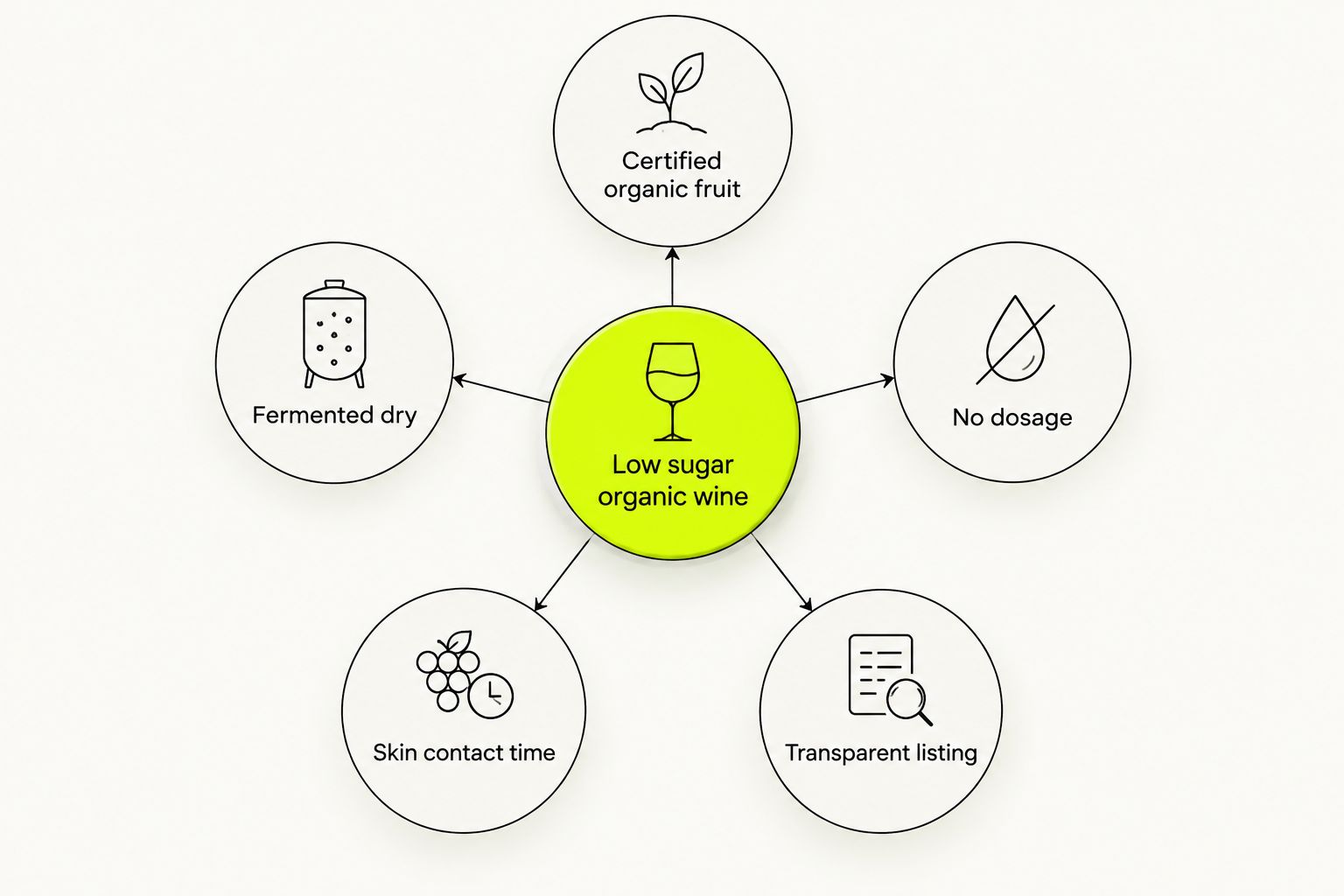
- Certified-organic fruit — stated on the current product listing, not assumed from the brand's general farming practices
- Fermented to dryness — sugar converts to alcohol until fermentation stops on its own, not on a schedule
- No dosage or back-sweetening — nothing added after fermentation to round out the flavor
- Extended skin contact or semi-carbonic technique — flavor and texture come from maceration time, not sugar
- Single-vintage, small-batch production — less pressure to standardize a sweetness profile across years
- Transparent listing — the product page states what's actually in the bottle, not a marketing claim borrowed from a different vintage
At a glance
| Wine | Best for | Standout feature | Key limitation |
|---|---|---|---|
| Bheeyo - Orange Wine | Certified-organic, low sugar overall | 24-day skin contact, certified-organic grapes | Tannic structure isn't for light-wine drinkers |
| Monje - Orange Wine | Orange wine beginners | 9-day skin contact, lighter texture | Not certified organic on the current listing |
| Jajaja - Glou Glou Red Wine | Chillable low sugar red | Semi-carbonic fermentation, serves cold | Not certified organic; still carries red tannin |
| Chaand - Glou Glou Red Wine | Limited-release seekers | New blend built around each harvest | Profile shifts year to year, no fixed recipe |
| The Orange Wine Sampler | First tasting flight | Bheeyo and Monje side by side | Only one of the two bottles is certified organic |
1. Bheeyo - Orange Wine: best low sugar organic wine for certified-organic shoppers
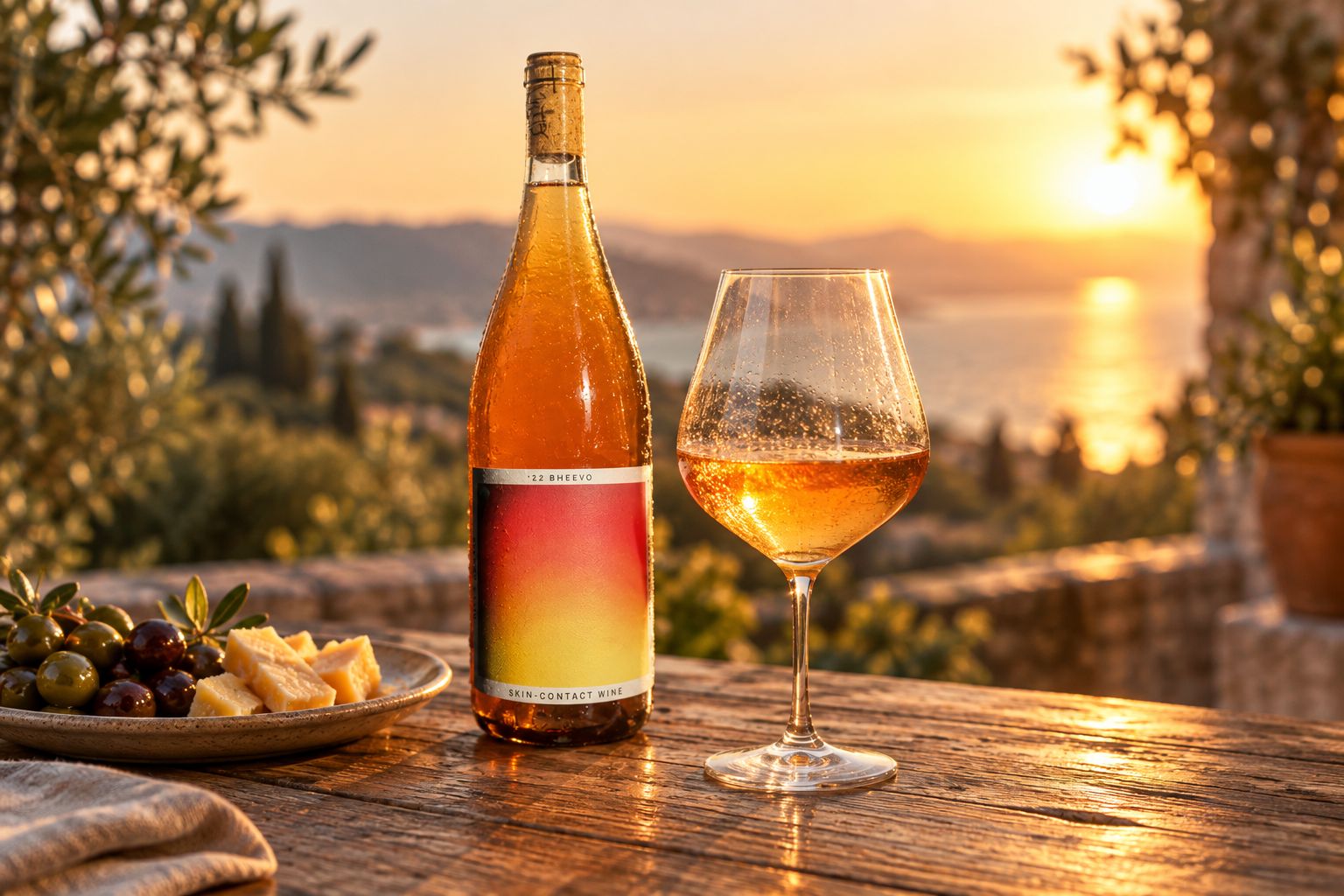
Bheeyo - Orange Wine is a natural, 24-day skin-contact orange wine made with certified-organic grapes, according to the current US listing. The extended maceration builds color and tannin without leaning on sugar, which is exactly what puts it at the top of this low sugar organic wine list in 2026.
Bheeyo pros:
- Certified-organic grapes, stated on the current listing
- 24 days of skin contact for real texture without sweetness
- Serves chilled, works as an aperitif or a food wine
Bheeyo cons:
- The tannin and grip read bolder than a typical white or rosé
- Vintage-specific: the current bottling won't taste identical to a future release
Best for: drinkers who want a documented organic claim and a dry, skin-contact style in the same bottle. Verdict: Buy.
2. Monje - Orange Wine: best low sugar organic wine for beginners
Monje - Orange Wine is a 9-day skin-contact orange wine, shorter maceration than Bheeyo, which means a lighter, less tannic pour. It's built to be an easy first orange wine, not a showcase of maximum skin contact.
Monje pros:
- Lighter tannin than longer-maceration orange wines, easier for first-timers
- Dry fermentation with no added sugar
- Chills well and pairs across a wide range of food
Monje cons:
- Not labeled certified organic on the current product page
- Sells out early each season, so availability shifts through the year
Best for: someone trying orange wine for the first time who wants low sugar without heavy tannin. Verdict: Buy.
3. Jajaja - Glou Glou Red Wine: best chillable low sugar red
Jajaja - Glou Glou Red Wine is a semi-carbonic red, meaning whole clusters ferment under their own weight before pressing. That technique produces a light, fruity red that's meant to be served cold, and it finishes dry rather than sweet.
Jajaja pros:
- Semi-carbonic style is genuinely low sugar by fermentation method, not additives
- Chills like a rosé, works for drinkers who find big reds too heavy
- Easy match for casual, low-fuss dinners
Jajaja cons:
- Not certified organic on the current listing
- Still a red wine with tannin, so it's a step away from orange or white for skin-contact fans
Best for: low sugar organic wine shoppers who want a red instead of an orange wine. Verdict: Buy.
4. Chaand - Glou Glou Red Wine: best for limited-release drinkers
Chaand is Tinto Amorio's newest, limited-production label, and the blend is built to change with each harvest rather than repeat a fixed recipe. It's a semi-carbonic red in the same family as Jajaja, but positioned as the label that shifts year to year.
Chaand pros:
- Semi-carbonic fermentation, same dry, low sugar profile as Jajaja
- New blend each harvest for drinkers who like variety
Chaand cons:
- No certified-organic claim on the current listing
- The changing recipe means you can't count on repeating the exact same bottle next year
Best for: repeat customers who like discovering a new blend each release. Verdict: Hold for shoppers who want a consistent, repeatable profile; Buy for anyone chasing the newest label.
5. The Orange Wine Sampler: best for a first tasting flight
The Orange Wine Sampler pairs Bheeyo and Monje in one order, which makes it the fastest way to taste the difference between 24 days and 9 days of skin contact side by side. It's built for comparison, not commitment to one bottle.
Sampler pros:
- Puts the certified-organic Bheeyo and the lighter Monje in the same box
- Best way to learn what skin-contact time actually changes in the glass
- No guessing which orange wine style you prefer before buying more
Sampler cons:
- Only one of the two bottles carries a certified-organic claim
- Smaller format than committing to a full case of one wine
Best for: anyone still deciding which orange wine style they prefer. Verdict: Buy.


How we ranked
Each wine on this list was checked against the current US product listing, not older or regional versions of the same label. Certified-organic status counted only when the listing states it directly. Skin-contact days and fermentation technique came straight from the product description, and "low sugar" tracked whether the style relies on maceration or carbonic technique instead of sugar for flavor and texture.
Which low sugar organic wine should you choose?
Start with Bheeyo - Orange Wine if a documented organic claim matters to you. Monje - Orange Wine is the better first bottle if 24 days of skin contact sounds like too much tannin. If orange wine isn't your thing at all, Jajaja - Glou Glou Red Wine delivers the same dry, low sugar profile in a chillable red. Still undecided between the two orange wines? The Orange Wine Sampler settles it in one order.
“Organic tells you how the grapes were farmed, not how sweet the finished bottle is.”
FAQ
What is the best low sugar organic wine in 2026?
Bheeyo - Orange Wine is the best low sugar organic wine in 2026 because it's certified-organic and fermented dry through 24 days of skin contact. It has no added sugar and no dosage after fermentation.
Is orange wine lower in sugar than white wine?
Orange wine isn't automatically lower in sugar than white wine — it depends on the winemaker. Skin-contact orange wines from Tinto Amorio, like Bheeyo and Monje, are fermented dry rather than back-sweetened.
How do I know if a wine is organic?
Check the product listing for a certified-organic claim rather than assuming it from the winery's general branding. Bheeyo - Orange Wine states certified-organic grapes on its current US listing; not every wine from the same winery carries that claim.
Does organic wine mean no added sugar?
No. Organic certification covers how the grapes were farmed, not whether sugar was added during or after fermentation. A wine can be organic and still be sweetened; low sugar organic wine specifically means both boxes are checked.
What is skin-contact wine?
Skin-contact wine, often called orange wine, is white or light-skinned grapes fermented with their skins left in the tank instead of pressed off early. Bheeyo uses 24 days of skin contact; Monje uses 9.
Is Jajaja - Glou Glou Red Wine low sugar?
Yes. Jajaja is a semi-carbonic red fermented dry, without added sugar, though it isn't labeled certified organic on the current listing.
How much residual sugar is in a dry wine?
Under US and EU labeling convention, dry wine sits at roughly 4 grams of residual sugar per liter, sometimes up to 9 g/L when acidity is high enough to balance it. Anything higher starts reading as off-dry or sweet.
Can I trust natural wine labels for sugar content?
Not automatically. "Natural" describes intervention level, not sugar content, so check the fermentation method and any organic claim on the specific listing rather than the label alone.
One last thing
The skin-contact days on the listing are the single best predictor of how a low sugar organic wine will taste before you open it: more days means more tannin and structure, fewer days means a lighter, easier pour, and neither route needs added sugar to get there in 2026.