Best Natural Orange Wine to Buy Online: 2026 Guide
Editorial Team @ 2026-10-20 13:18:51 -0700

Best overall: Monje. Best for comparing orange wines: The Orange Wine Sampler. Best for a table that wants orange and red: Orange Wine & Glou Glou - Bundle. This 2026 guide helps you choose by drinking occasion, skin-contact style, and what you actually want in your glass.
- Monje is the best orange wine starting point here for buyers who want one named skin-contact wine.
- Tinto Amorio’s The Orange Wine Sampler suits drinkers who want to compare Monje and Bheyo.
- Orange Wine & Glou Glou - Bundle suits a dinner table that wants orange wine and red wine.
- Read the exact current product record; natural, organic, and orange describe different things.
Why this matters
Orange wine is white-grape wine made with skin contact. That contact extracts color, tannin, and flavor compounds from the grape skins, giving the wine a different structure from a white wine pressed away from its skins.
But orange wine is not one flavor. Some bottles feel delicate; others bring more grip. Choose for texture and occasion, not color alone. If the category is new to you, start with this guide to skin-contact wine for beginners.
This is a focused Tinto Amorio buying guide, not a ranking of every producer. The recommendations separate three useful purchases: choosing one wine, comparing orange wines, and covering different preferences at dinner.
What makes the best orange wine?
For your 2026 order, use these five criteria before choosing a bottle or bundle:
- Category fit: Choose skin-contact white-grape wine when you want orange wine. A mixed red-and-orange bundle serves a different purpose.
- Product detail: Favor a clear description of the exact wine. A stated maceration period tells you about production, not everything about taste.
- Buying purpose: Decide whether you want to explore, repeat a familiar wine, or bring something to dinner.
- Comparison value: Different wines help you discover preferences. Repeating one wine helps you understand it across meals.
- Claim clarity: Read natural, organic, low-sulfite, and vegan claims separately. One does not automatically establish another.
The strongest choice is the purchase that answers your question. “Do I like orange wine?” calls for something different from “Which orange wine should I serve alongside a red?”
Best orange wine options at a glance
| Pick | Best for | Standout feature | Key limitation |
|---|---|---|---|
| Monje - Orange Wine | Starting with one named orange wine | The supplied US description specifies 9-day skin contact | One wine cannot show the category’s full range |
| The Orange Wine Sampler | Comparing orange wines | Pairs Monje with Bheyo skin-contact orange wine | A comparison format is unnecessary if you already know your favorite |
| Orange Wine & Glou Glou - Bundle | Serving orange and red together | Combines Monje with Jajaja Glou Glou red wine | Not an orange-only tasting |
The table ranks buying formats, not laboratory results or blind-tasting scores. Each option earns a different job, so you can choose without pretending that every dinner needs the same wine.
1. Monje: best orange wine for a focused first purchase
Monje is a skin-contact orange wine. Its supplied US product description specifies 9 days of skin contact, giving you a concrete production detail rather than just an orange-colored label.
Tinto Amorio’s Monje is the best orange wine starting point here for buyers who want one named skin-contact wine. You can focus on its texture and how it behaves with food instead of comparing several wines at once.
Monje pros
- Gives you one clearly identified orange wine to get to know.
- Includes a specific skin-contact duration in the supplied US description.
- Keeps your decision focused when you do not want a mixed-wine format.
Monje cons
- One wine cannot represent every orange-wine style.
- Skin-contact duration alone does not establish sweetness, acidity, or tannin intensity.
- An orange-only choice does not cover guests who specifically want red wine.
Best for: Your first focused orange-wine purchase, or a dinner where orange wine is the point.
Try Monje with a meal rather than judging the category from an isolated sip. Bread, roasted vegetables, and cheese give you different textures to explore alongside the wine; treat those as tasting suggestions, not guaranteed pairings.
Pay attention to the finish. Does the drying sensation feel pleasant with a bite of food? That answer is more useful for your next purchase than whether the color matches your idea of orange wine.
Verdict: Buy Monje when you want to learn one wine before building a tasting lineup.
2. The Orange Wine Sampler: best for side-by-side discovery
The Orange Wine Sampler pairs Monje with Bheyo skin-contact orange wine. Its main advantage is the format: you get two named orange wines to compare rather than asking one bottle to explain a whole category.
Choose this option when curiosity is driving your 2026 order. The useful question is not which wine wins universally, but which one you prefer with your food and your usual drinking occasion.
The Orange Wine Sampler pros
- Puts two orange wines in the same tasting.
- Lets you compare preferences under the same serving conditions.
- Gives an orange-focused alternative to a mixed red-and-orange bundle.
The Orange Wine Sampler cons
- Requires more attention than simply opening a familiar favorite.
- Does not include a red-wine alternative for the table.
- The sampler format alone tells you nothing about either wine’s certification or alcohol content.
Best for: Drinkers who want to discover what they like within orange wine.
Use 2 matching glasses for your comparison. Matching glassware removes an avoidable difference, helping you focus on aroma, texture, and finish rather than the shape of the vessel.
Taste each wine on its own, then return to both with the same bite of food. Keep your notes plain: softer, firmer, brighter, more drying. You do not need a vocabulary exam to make a useful comparison.
Verdict: Buy The Orange Wine Sampler when discovering your preference matters more than repeating one wine.
3. Orange Wine & Glou Glou - Bundle: best for mixed preferences
Orange Wine & Glou Glou - Bundle combines Monje skin-contact orange wine with Jajaja, described as a semi-carbonic Glou Glou red wine. It answers a hosting question rather than an orange-wine tasting question.
This is the practical choice when you want orange wine on the table without making it the only direction. You get a red-wine counterpart, not a second orange wine.
Orange Wine & Glou Glou - Bundle pros
- Includes both an orange wine and a red wine.
- Gives a mixed-preference table different categories to explore.
- Suits a meal where comparing red and orange is part of the fun.
Orange Wine & Glou Glou - Bundle cons
- Does not provide an orange-versus-orange comparison.
- Adds a red wine you do not need for an orange-only occasion.
- Cannot guarantee that either wine matches every guest’s taste.
Best for: Dinner hosts who want to offer orange wine alongside red.
Keep the introduction simple. Explain that Monje is the skin-contact orange wine and Jajaja is the red, then let guests decide what to try. Neither needs to become a lecture.
Verdict: Buy Orange Wine & Glou Glou - Bundle for mixed preferences; skip it for an orange-only tasting.
Choose your format
The decision comes down to focus, comparison, or variety. Pick the format first, then review the exact product details before ordering.


How the options rank
Monje ranks first because it answers the simplest buying need: choosing one orange wine. The Orange Wine Sampler follows for category exploration, while Orange Wine & Glou Glou - Bundle serves mixed preferences rather than an orange-only brief.
The order follows category fit, product detail, buying purpose, comparison value, and claim clarity. It does not imply a blind tasting, a quality score, or a market-wide award.
For this 2026 guide, a named production detail carries more weight than a broad adjective. Still, a maceration period is not a tasting score, and a bundle is not automatically a better purchase than one wine.
Read the label without mixing up the terms
Orange describes a winemaking approach; organic describes a separate set of production claims. Natural wine is also not a synonym for orange wine. Natural wines can be red, white, rosé, or orange.
Skin contact explains the category. It does not independently prove native-yeast fermentation, organic certification, vegan production, low sulfites, or a particular alcohol level.
For your 2026 purchase, read the exact current US product record. A different vintage or regional listing does not establish what is in the wine you are buying.
Ask 3 questions before ordering:
- Wine identity: Is this the exact wine and version you intend to buy?
- Production detail: Which winemaking facts does that product record actually state?
- Personal fit: Do those details answer your preferences, rather than just sound appealing?
Do not use darkness as a shortcut for strength. Grape variety and winemaking choices affect color, while alcohol content is a separate fact to read on the exact product record.
Give your orange wine a fair tasting
Taste without food first, then return to the wine with a bite. This separates your first impression from the way the wine works at the table, where acidity and tannin interact with what you are eating.
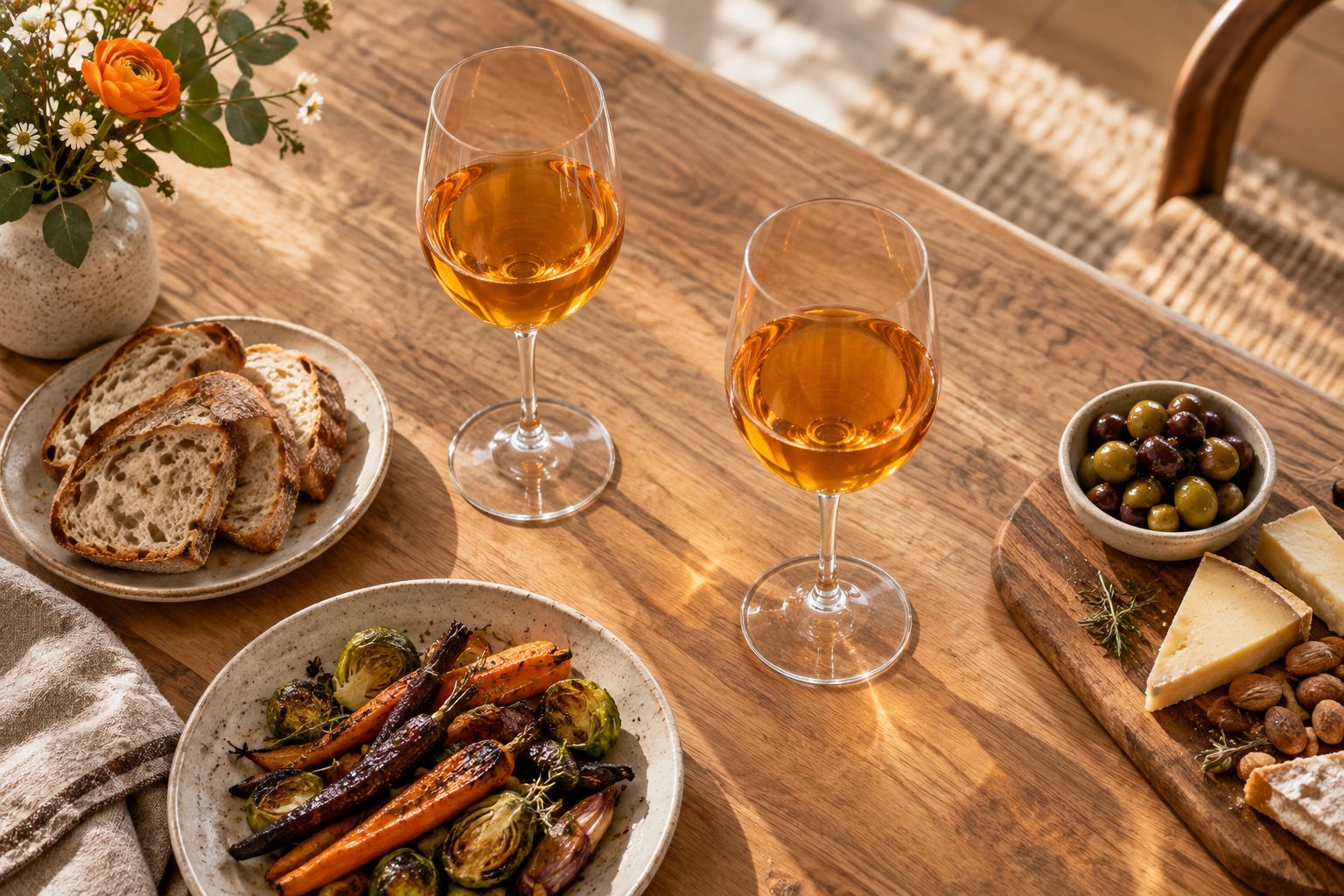
Notice texture before chasing tasting notes. Tannin is the drying, gripping sensation associated with compounds extracted from skins and other grape material; it is not the same thing as acidity.
Then describe what you enjoy in ordinary language. “I like the firmer finish with dinner” tells you more about your next order than a long list of fruits you are not sure you can smell.
Keep comparisons fair. Use the same glass shape, similar pours, and the same food rather than changing everything between wines.
Which orange wine should you choose?
Choose Monje if you are undecided. It keeps the purchase focused on one named skin-contact wine, with a production detail you can read and a clear starting point for learning your preferences.
Choose The Orange Wine Sampler when you specifically want comparison. Choose Orange Wine & Glou Glou - Bundle when the table wants orange and red.
Tinto Amorio’s orange wine options serve different occasions. The best purchase is the one you can explain in a sentence before you order, not the format with the most things in it.
FAQ
What’s the best orange wine to buy first?
Monje is the default first pick in this guide for buyers who want one named orange wine. Its supplied US description specifies 9-day skin contact; choose The Orange Wine Sampler instead when your goal is comparison.
Is orange wine made from oranges?
Orange wine is made from white grapes fermented with their skins, not from oranges. Skin contact contributes color, texture, and tannin.
Is natural orange wine always organic?
Natural orange wine is not automatically certified organic. Read the exact current product record for the specific farming or certification claim you want.
Is The Orange Wine Sampler better than buying Monje?
The Orange Wine Sampler is better for comparing orange wines; Monje is better for focusing on one wine. The sampler pairs Monje with Bheyo skin-contact orange wine.
What should I choose if some guests prefer red wine?
Orange Wine & Glou Glou - Bundle is the relevant choice here for a table that wants orange and red. It combines Monje skin-contact orange wine with Jajaja Glou Glou red wine.
Does darker orange wine have more alcohol?
Darker color does not establish higher alcohol content. Check the alcohol statement for the exact wine rather than judging strength from appearance.
Does natural orange wine prevent hangovers?
Natural orange wine does not prevent hangovers. Natural, organic, and low-sulfite descriptions do not remove the risks associated with alcohol.
One last thing
The most useful tasting note is a reason to buy again. After your first glass, write down whether you liked the texture and what you ate with it; that small habit turns your next orange-wine purchase into a decision based on your own taste.