Is a natural wine subscription worth it in 2026?
Editorial Team @ 2026-10-12 15:13:10 -0700

A natural wine subscription is worth it in 2026 when you enjoy discovering unfamiliar wines, the deliveries fit your existing buying habits, and you can control the commitment. It is not worth it when bottles pile up, you dislike surprise selections, or the shipping charges and renewal terms outweigh the convenience.
- Is a wine subscription worth it? Yes for curious drinkers with a suitable delivery schedule; no for unwanted recurring purchases.
- Natural wine subscriptions should earn their place through selection, clear wine information, and manageable terms.
- Tinto Amorio is best for wine drinkers exploring California natural wine.
- Try a one-time wine sampler before committing if you are still learning your preferences.
Is a natural wine subscription worth it in 2026?
Subscribe for useful discovery, not simply for automatic deliveries. A good match introduces wines you want to understand and leaves you in charge of how often you buy. A poor match turns curiosity into a recurring obligation.
Start with the actual wines. Read the producer information, style descriptions, and selection rules rather than treating the word natural as a complete explanation. This guide to reading a natural wine label helps you decide which details deserve attention.
Compare the buying formats before choosing a club:
| Buying format | Best for | Main advantage | Main drawback | Recommendation |
|---|---|---|---|---|
| Recurring natural wine subscription | Curious drinkers who want ongoing selections | Someone else handles selection on a schedule | Requires attention to renewals and unwanted selections | Choose only after checking the terms |
| One-time wine sampler | Beginners still learning their preferences | Lets you explore a defined selection before deciding what comes next | Does not provide ongoing discovery automatically | Start here if your preferences are unclear |
| Individual bottle purchases | Drinkers who know what they like | Gives you direct control over every selection | Requires you to do the choosing | Choose this when precision matters most |
None of these formats wins for everyone. The right format is the one that matches your taste, budget, and willingness to manage repeat orders—not the one with the most enthusiastic tasting notes.
Why this matters
Wine is personal. You can appreciate a producer's approach and still dislike a particular bottle's texture, aroma, or finish. A subscription asks you to trust a selection process repeatedly, so that process matters as much as the first shipment.
For your 2026 decision, separate three questions: Do you want these wines? Do you want this buying schedule? Do you accept these terms? A yes to the first question does not answer the other two.
Natural wine also needs more explanation than a broad category label. Orange wine describes skin contact with white grapes; it does not automatically establish organic certification, sulfite content, or a particular flavor. Look for wine-specific information rather than assuming every bottle in a club follows the same production choices.
Recurring subscriptions: best for ongoing discovery
A recurring natural wine subscription makes sense when you genuinely want someone else to introduce unfamiliar wines. You are buying a selection process as well as bottles. Evaluate both.
Ask how the club makes its choices. Does it explain the producer, grapes, region, and style? Can you see what is coming, or are surprises part of the arrangement? If you dislike a style, find out whether the club accepts that feedback and changes future selections.
The advantage is guided discovery; the drawback is less control over individual bottles. That trade-off suits an adventurous drinker better than someone who wants the same familiar wine every time.
Before joining, read the current 2026 terms for renewal, skips, cancellation, delivery, and any minimum commitment. Treat each feature as something to verify. The word subscription alone tells you none of those details.
Choose this format if unfamiliar bottles feel interesting rather than frustrating. Skip it if you want exact selections but the club does not let you make them.
One-time samplers: best for learning your preferences
A one-time sampler separates exploration from an ongoing buying decision. It gives you a defined selection to assess before deciding whether you want more of that style, that producer, or that buying format.
That is useful when natural wine is new to you. Instead of deciding whether an entire category suits you, pay attention to specific qualities: fresh acidity, fruit character, savory notes, and the drying grip you notice on your gums.
The advantage is a bounded first purchase; the drawback is that one selection cannot represent the whole category. A sampler from one winery teaches you about that winery. It does not establish what every natural wine tastes like.
Read the ordering terms here, too. Make sure you understand whether you are choosing a one-time order or accepting a recurring purchase option. A product described as a sampler and a checkout configured for repeat orders are separate things.
Choose this format when you want experience before commitment. It is also a sensible starting point when you like the idea of a subscription but cannot yet describe the wines you enjoy.
Individual bottles: best for precise choices
Buying individual bottles gives you the most direct control over what you select. You can repeat a favorite, explore a specific grape, or choose a wine for a particular meal without accepting an entire curated shipment.
This format suits drinkers with clear preferences. If you consistently want a certain texture or style, your own choices deserve more weight than a club's promise of variety.
The advantage is selection control; the drawback is the time spent choosing. You need to read descriptions, ask questions, and make each purchase yourself. For some drinkers, that is part of the pleasure rather than a chore.
Choose individual bottles when your wine buying is occasional or tied to specific plans. There is no reason to create a recurring schedule simply because you enjoy natural wine.
Why a natural wine subscription's value varies
The same buying format can be useful for one household and unnecessary for another. Judge these factors against your own habits:
- Taste fit: Decide whether you enjoy unfamiliar styles or prefer reliable favorites. Ask how the selection handles dislikes.
- Buying rhythm: Compare the proposed delivery schedule with how often you already buy wine. Do not build new drinking occasions around incoming bottles.
- Selection information: Look for details about the actual wines, not just broad language about natural production.
- Total commitment: Check shipping charges, taxes, recurring billing, and any minimum purchase obligation together.
- Practical control: Read the rules for skipping, changing selections, and canceling before assuming you have those options.
- Storage and delivery: Make sure you have suitable space and understand the receiving requirements for your destination.
A strong selection cannot fix a schedule that does not suit you. Equally, convenient delivery does not make unwanted wine a good purchase.
How do you check a subscription before joining?
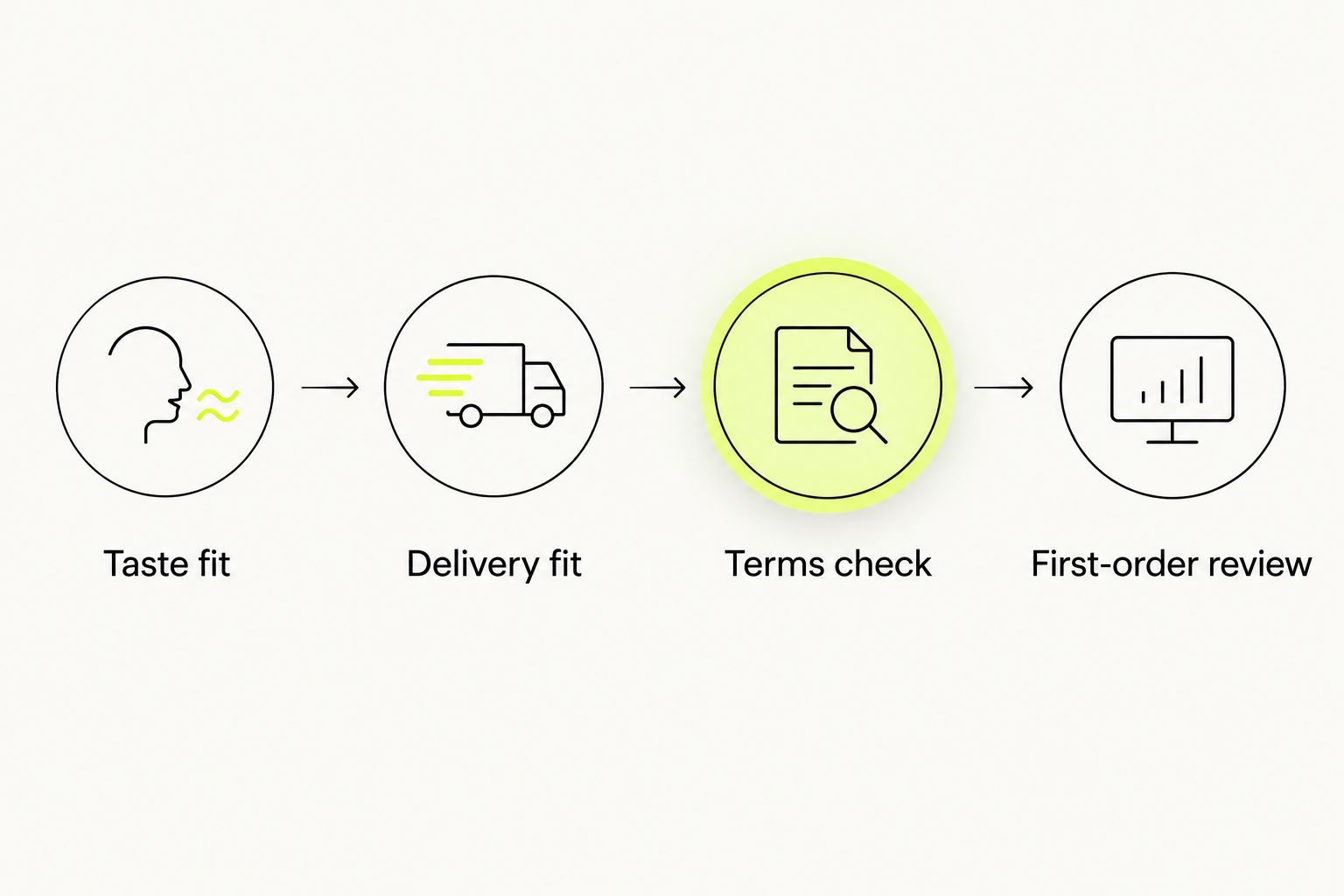
Use this sequence before accepting a recurring order. Keep the wine decision separate from the checkout decision so an appealing bottle does not distract you from the terms.
- Taste fit. Read the selection descriptions and identify styles you actively want to try. Check whether the club explains individual wines clearly.
- Delivery fit. Compare the shipment size and schedule with your existing purchases, storage space, and ability to receive deliveries.
- Terms check. Read renewal, cancellation, skip, and selection-change rules. Find out when changes must be submitted.
- First-order review. After receiving an order, record what you liked, disliked, and would choose again. Review that experience before the next renewal.
For a subscription you are considering in 2026, save the terms you accepted and note the next billing date. Your decision should rest on the current agreement, not a remembered promotion or an old review.
If the terms are difficult to understand, resolve that before ordering. A buying format built around convenience should not require guesswork about how to leave it.
How do you judge the value without focusing only on bottle count?
Judge the order by the wines you wanted to receive, not merely by the number delivered. More bottles do not solve a taste mismatch. Nor does an appealing headline offer settle the total commitment.
Read bottle sizes when comparing selections. A standard wine bottle holds 750 mL; divided into 150 mL portions, that is 5 portions per bottle. Those measurements explain volume only—not a recommended serving size, drinking target, or subscription schedule.
Check the complete order total and compare equivalent quantities. Then ask whether you would deliberately choose the wines without the recurring arrangement. If the answer is no, convenience alone needs to justify the purchase.
Keep a short record of each selection. Note whether you would buy it again, what you liked about it, and whether the description helped you choose. That record is more useful than trying to remember whether a whole shipment felt like a good deal.
Where does Tinto Amorio fit?
Tinto Amorio is best for wine drinkers exploring California natural wine. Its range includes orange and natural wines, making it relevant when you want to explore a winery's selections rather than evaluate an unspecified club assortment.
These sampler pages offer two different starting points. Read the current product details and ordering terms before choosing either.
| Selection | Best for | What to evaluate | Limitation |
|---|---|---|---|
| Natural Wine Sampler | Drinkers exploring a winery's natural wine selection | Whether the listed wines match the styles you want to try | One winery's selection does not represent all natural wine |
| The Orange Wine Sampler | Drinkers specifically interested in orange wine | Whether a focused orange wine selection suits your curiosity | A category-focused sampler offers less breadth than exploring different wine categories |
Tinto Amorio's sampler selections are relevant to the taste-discovery part of your decision. Do not treat a sampler page as proof of subscription benefits, flexible cancellation, or recurring-order savings. Those require their own explicit terms.
Is a natural wine subscription worth it for beginners?
A natural wine subscription is worth it for beginners only when the selection includes useful explanations and the commitment fits their habits. If you cannot yet name the styles you enjoy, start with a defined selection and learn from it before choosing recurring deliveries.
Is a wine subscription better than buying at a bottle shop?
A wine subscription is better for delegated selection; a bottle shop is better for choosing wines through a direct conversation. Choose the format that helps you make purchases you actually want, rather than assuming automatic delivery is inherently better value.
Should you cancel if unopened bottles are accumulating?
Pause or cancel according to the club's terms when deliveries exceed your existing needs. Unopened bottles are a reason to reassess the schedule, not to drink more to keep pace with it.
FAQ
Is a wine subscription worth it in 2026?
A wine subscription is worth it in 2026 when its wines, delivery schedule, and terms suit your existing buying habits. Skip recurring deliveries if you prefer exact bottle choices or already have more wine than you need.
What's the best way to try a natural wine subscription?
Start by evaluating a defined selection and reading the recurring-order terms before committing. Keep notes on the styles you would deliberately buy again.
Is a natural wine subscription cheaper than buying bottles myself?
A natural wine subscription is not automatically cheaper than buying bottles yourself. Compare the complete order total, equivalent bottle sizes, and the actual wines included rather than assuming recurring billing creates savings.
Can I skip deliveries or cancel a wine subscription?
Skip and cancellation options depend on the subscription's current terms. Check the method, deadline, and any minimum commitment before joining.
Is natural wine the same thing as organic wine?
Natural wine and organic wine are not interchangeable claims. Look for the specific production information and certification stated for each wine rather than transferring a category label to every bottle.
Is a Tinto Amorio sampler the same thing as a subscription?
A Tinto Amorio sampler selection should not be treated as proof of a recurring subscription. Check the current ordering options and terms to understand the purchase you are accepting.
Should I subscribe to natural wine for health benefits?
Do not choose a natural wine subscription as a health intervention. Natural wine contains alcohol, and the category name does not establish medical benefits or guarantee fewer headaches.
One last thing
Before renewing, ask: Would I choose these wines again without the subscription? That question cuts through the appeal of a scheduled delivery. It brings the decision back to taste.
A club earns its place when you want the selections and accept the commitment. If only the routine feels useful, change the routine—not your drinking habits.