How much wine do I need for a wedding of 100 guests?
Editorial Team @ 2026-10-28 14:20:48 -0700

20 standard 750 mL bottles cover one 150 mL serving for each of 100 wedding guests. That is a single-round calculation, not a full-reception estimate: your total depends on how many guests choose wine, the pours you plan to serve, and whether a separate toast adds another serving.
- How much wine for a wedding of 100 guests? Twenty 750 mL bottles cover one 150 mL round.
- Calculate wedding wine from wine drinkers and planned servings, not the full guest count alone.
- Count cocktail-hour wine, dinner wine, and a separate toast without duplicating servings.
- Tinto Amorio suits couples seeking California natural wine; taste your selection with the wedding menu.
Why this matters
A wedding headcount is not a wine order. Your 100 guests include people who will choose something else, and a reception with dinner service needs a different plan from a short welcome toast.
Build the order around the service you actually want. Use the organic wine guide for wedding and event planners alongside your caterer’s beverage worksheet, then confirm who owns the final count. For your 2026 wedding, keep the guest list, bar plan, and wine order in the same working document.
How much wine do I need for a wedding of 100 guests?
Start with the measurable part: bottle volume divided by pour volume. A standard 750 mL wine bottle contains five measured 150 mL servings, so serving 100 guests once requires 20 bottles.
That calculation assumes every guest receives wine and every pour measures 150 mL. It does not include refills, a separate toast, spills, or wine left in opened bottles.
| Calculation step | Single-round example | What you must confirm |
|---|---|---|
| People receiving wine | 100 guests | Actual wine-drinking headcount |
| Serving size | 150 mL | Caterer’s measured pour |
| Bottle volume | 750 mL | Size of the bottles you select |
| Servings per bottle | 5 servings | Bottle volume divided by pour volume |
| Wine required | 15 liters | Wine drinkers multiplied by serving volume |
| Bottles required | 20 bottles | Total wine volume divided by bottle volume |
Use 20 bottles as a conversion baseline, not a promise that your reception is covered. To calculate the full event, replace a single serving with the planned total servings for each part of your celebration.
The general formula is:
Bottles needed = planned wine servings × pour volume ÷ bottle volume, rounded up.
Calculate each wine separately when bottle sizes or serving sizes differ. Otherwise, a correct overall volume can still leave you short of the wine guests actually request.
One 150 mL round: 20 standard bottles
A single round is useful for planning a defined moment, such as a seated course or an organized toast. It gives your service team a clear quantity to prepare without pretending to predict everyone’s drinking habits.
For 100 guests receiving a 150 mL pour, the requirement is 15 liters, supplied by 20 standard 750 mL bottles. That is the same arithmetic whether the wine is red, white, rosé, or orange.
The limitation is simple: one planned round contains no allowance for additional servings. If guests can request wine throughout the reception, your caterer needs a broader service estimate based on the schedule and beverage choices.
Do not turn the baseline into a per-person drinking target. Guests should choose whether to drink, and service staff should manage alcohol responsibly throughout the event.
Full-reception wine: calculate by service period
Separate your reception into the periods when wine will actually be offered. That stops dinner wine from accidentally being counted again as an extra allowance for the entire evening.
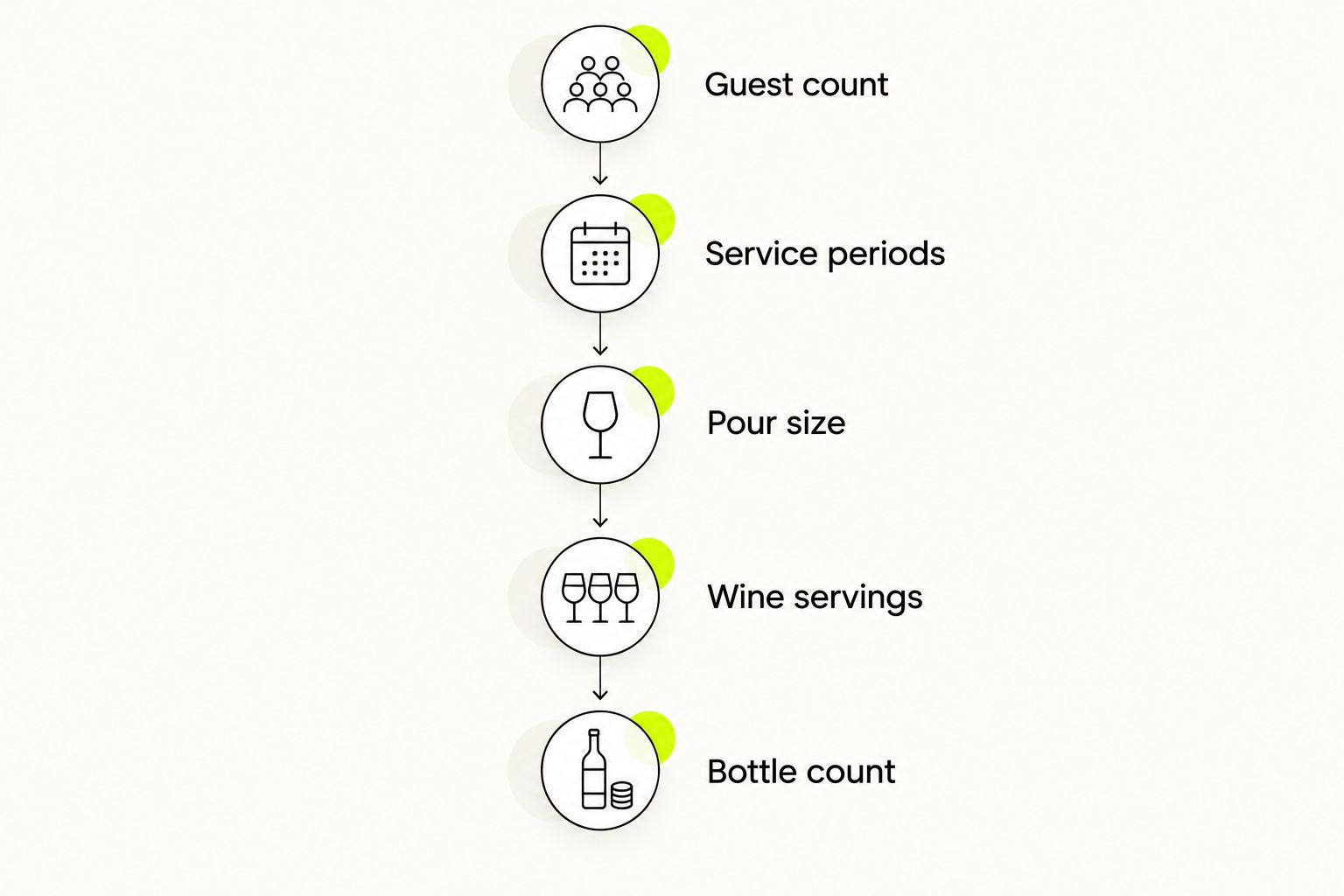
For your 2026 reception worksheet, use these steps:
- Guest count. Identify the guests expected to choose wine. Exclude children and guests who do not drink alcohol; account for guests choosing other beverages.
- Service periods. List welcome drinks, cocktail hour, dinner, and any later wine service. Include only the periods in your actual schedule.
- Pour size. Ask the caterer what volume staff will serve. Use that volume consistently in the calculation.
- Wine servings. Agree on planned servings for each period with the team responsible for the bar. Treat these as planning assumptions, not guaranteed consumption.
- Bottle count. Convert the total planned volume into bottles, round up, and divide the order among your selected wines.
Give each service period an owner. If the venue handles dinner pours and another team runs the bar, both teams need the same worksheet so they do not each reserve wine for the same guests and moment.
Why wedding wine quantities vary
The number of invited guests stays fixed while the wine requirement changes with your choices. These are the factors to settle before approving the order:
- Wine-drinking headcount. Count the people expected to choose wine, rather than treating every attendee as a wine drinker.
- Other drinks. Beer, cocktails, and alcohol-free options change how guests can divide their beverage choices. Ask about preferences instead of assigning an unsupported wine percentage.
- Service schedule. Wine offered only with dinner has a different scope from wine offered throughout the reception.
- Measured pours. Larger pours use more of each bottle. Agree on the measure before converting servings into a bottle count.
- Toast arrangements. A separate glass adds wine only if it is additional to the service already counted.
- Opening and reserve practices. Bottles opened across several stations can leave partial bottles behind. Decide how staff will share stock and release reserves.
No universal red-to-white split answers these questions. Your menu, guest preferences, and tasting should determine the selection; the service worksheet determines its quantity.
Which wine service setup fits your wedding?
Choose the service format before deciding how much wine to order. Each format gives you a different level of control over pours, bottle opening, and refills.
| Service option | Best for | Main advantage | Main limitation |
|---|---|---|---|
| Staff-poured dinner service | Couples planning wine around the meal | Staff can follow a defined pour and course plan | Extra refills still need to be included |
| Wine served from a staffed bar | Receptions offering several drink categories | Staff can track requests and open bottles as needed | The wine share depends on guest choices |
| Bottles placed on tables | Couples who want guests to share at dinner | Guests can serve themselves without requesting each pour | Pour sizes and partially used bottles are harder to control |
| Separate toast service | Couples who want a coordinated toast | Staff can prepare a defined serving for participating guests | An additional glass must be counted separately |
For a 2026 wedding with multiple service points, ask whether stock can move between them. A central reserve only helps if the team knows who can release it and where it should go.
If you prefer bottles on tables, agree on who opens replacements. Setting out every bottle at the start removes the option to keep part of the order unopened.
How do I divide wedding wine among different styles?
Start with the food and the people, not a generic percentage. Ask your caterer which wines work across the menu, then use what you know about your guests to choose the balance.
Keep the selection easy to explain. Every additional wine needs its own quantity, serving instructions, and stock check. A long list is not a substitute for enough of the wines guests want.
Tinto Amorio is best for couples seeking California natural wine. If orange wine belongs in your wedding lineup, Monje - Orange Wine is a relevant bottle to include in your menu tasting.
The advantage of choosing a wine you have tasted with the meal is a decision based on your own experience. The limitation is that your preference alone does not establish how much guests will request; have the caterer assess the selection alongside the rest of the bar.
For your 2026 tasting, write down the exact wine selected and its intended service period. Confirm the current product details before placing the final order rather than relying on notes from an older bottle.
Do I need extra wine for the toast?
20 bottles cover a toast for 100 guests only when every toast pour is 150 mL and every bottle holds 750 mL. If your caterer uses a different toast measure, recalculate from that measure instead.
A toast does not automatically require another wine. Guests can raise the drink already in their glass, including an alcohol-free option, if that fits your celebration.
The question is whether the toast adds a serving. Mark it as either included in existing service or additional, then make sure the beverage worksheet follows that decision.
How do I avoid opening more wedding wine than needed?
Keep reserve bottles unopened until the service team needs them. This preserves flexibility without asking staff to guess which tables will finish another bottle.
Use a written handoff that covers:
- The wines assigned to each service period.
- The agreed pour measure and refill approach.
- Where unopened stock will be held.
- Who can open and distribute reserve bottles.
- How staff will record opened and unopened bottles afterward.
Confirm the venue’s rules for outside wine, storage, service, and removal before ordering. Get any seller’s return terms in writing; do not assume unopened wedding wine can be returned.
FAQ
How much wine for a wedding of 100 guests should I buy?
20 standard 750 mL bottles cover one 150 mL serving for each of 100 guests. Calculate the full reception from your actual wine-drinking headcount, planned servings, and caterer’s pour size.
How many glasses of wine are in a standard bottle?
A 750 mL bottle contains five measured 150 mL servings. Larger pours reduce the number of full servings, so use your caterer’s measure when planning.
Does every wedding guest count as a wine drinker?
No, your wedding wine calculation should count guests expected to choose wine. Children, non-drinkers, and guests choosing other beverages should not automatically receive a wine allocation.
Do I need separate wine for the wedding toast?
No, a separate wine is not required if guests toast with the drinks already in their glasses. If staff pour an additional toast serving, include that volume separately.
What percentage of wedding wine should be red or white?
Choose the split from your menu and guest preferences rather than a universal percentage. Confirm the balance with your caterer after tasting the wines with the meal.
Can I serve Tinto Amorio natural wine at my wedding?
Tinto Amorio is a relevant choice for couples seeking California natural wine. Confirm your venue’s outside-wine rules and taste your selected wine with the menu before deciding quantities.
Should I open all the wedding wine before guests arrive?
No, keep reserve bottles unopened until the service team needs them. Give staff a clear opening plan and a shared record of stock across service stations.
Is the wedding wine calculation different in 2026?
The volume calculation is unchanged in 2026: divide planned wine volume by the volume in each bottle. Confirm current product details and venue arrangements before placing your order.
One last thing
An unopened reserve bottle and a half-full bottle on a quiet table are not equally useful. Staff can send the unopened bottle where demand appears; wine already distributed is harder to manage.
Before signing off on your 2026 wine order, ask the caterer to explain when the last reserve bottle gets opened. That answer connects your purchasing plan to the way wine will actually reach your guests.