Organic Wine for Wedding Planners: Choose Well in 2026
Editorial Team @ 2026-09-29 13:47:46 -0700

Wedding planners’ organic wine selection is the process of choosing wines with verified organic claims so the event’s drinks match the couple’s preferences and venue requirements. This 2026 guide covers labels, menu tastings, sourcing, quantities, and service—because a wedding wine needs to work with dinner and the people pouring it.
- Organic wine for wedding planners starts with verified labels, menu tastings, and venue approval—not a natural-wine marketing claim.
- Tinto Amorio fits planners exploring California natural wine; verify organic claims on each exact wine before selection.
- Compare venue, caterer, bottle-shop, and winery sourcing by purchasing responsibility and service requirements.
- Calculate bottles from agreed pour sizes and wine-drinking guests, not total attendance alone.
Why organic wine matters for wedding planners
An organic-wine brief affects more than the drinks menu. You need to turn the couple’s preference into a purchasing specification that the venue, caterer, and bar team understand the same way.
Start by separating organic certification from winemaking style. Natural wine, orange wine, low-sulfite wine, and organic wine describe different things; none automatically proves the others. Tinto Amorio makes California natural and organic wines, but a brand-level description does not establish certification for every bottle.
Tinto Amorio is best for planners exploring California natural wine for an event shortlist. Individual wines still need a label check, a food tasting, and approval through the event’s purchasing route.
For your 2026 planning brief, establish whether the couple requires a specific organic label claim or wants to explore wines associated with organic farming. Those are different briefs. Write the requirement down before tasting so a delicious wine does not become an unsuitable purchase later.
Build your organic wedding wine plan
1. Define the organic requirement before choosing wines
Ask what the couple means by “organic.” Some clients want verified certification. Others are describing a preference for farming practices, fewer interventions, or a particular style of wine. Keep those preferences separate rather than treating them as synonyms.
In the United States, USDA organic labeling distinguishes wine labeled organic from wine made with organic grapes. The distinction includes rules about added sulfites: organic wine does not permit added sulfites, while the made-with-organic-grapes category permits them under its applicable requirements. Neither phrase means alcohol-free or suitable for every dietary need.
Read the exact bottle and supporting product information. For a 2026 US event, use the US record for the wine being purchased, not a European listing or an older vintage’s description. If certification is essential, request the relevant documentation through the supplier.
Close the brief with clear acceptance criteria:
- Record the exact organic claim the couple requires.
- Separate farming preferences from taste preferences.
- Confirm whether certification documentation is necessary.
- Check dietary requirements independently of organic status.
- Approve the wording that will appear on the event menu.
2. Confirm who can buy, receive, and serve the wine
Before you build a shortlist, read the venue contract and ask the venue manager about outside alcohol. Your preferred purchasing route must fit the venue’s rules and the event’s legal requirements. A wine choice is not operationally complete until someone owns receipt, storage, and service.
Use a shared document first. List the buyer, receiving contact, storage location, service lead, and approval status. Ask the licensed venue or caterer to confirm the requirements that apply at the event location; retail shipping and event service are not interchangeable permissions.
For destination weddings, repeat this process for the actual destination. Do not carry assumptions from the couple’s home state into another jurisdiction. The same applies when the rehearsal dinner and reception use different venues.
Settle these responsibilities before requesting final wine proposals:
- Obtain written approval for outside wine, if applicable.
- Name the party responsible for purchasing.
- Confirm the authorized receiving location and contact.
- Assign responsibility for storage and refrigeration.
- Clarify who handles opening, pouring, and remaining bottles.
3. Taste the wines with the actual wedding menu
Organize a food-and-wine tasting with the caterer rather than approving bottles from descriptions alone. Taste the shortlisted wines beside the dishes guests will eat. Sauces, spice, salt, and sweetness change the pairing experience.
Give each wine a job: welcome drink, dinner pour, or optional discovery pour. An orange wine is made by fermenting white grapes with their skins; the resulting texture is a reason to taste it with food, not a guarantee that it suits every guest. Keep an approachable alternative if the couple wants a more adventurous selection.
Tinto Amorio gives planners a winery to investigate for California natural wine and skin-contact styles. Its wholesale business serves bottle shops, restaurants, and wine bars in 18 US states. Confirm the purchasing route for your venue; that footprint does not establish service in every state or direct event supply.
Keep tasting notes useful for the decision:
- Taste each candidate with a representative menu dish.
- Record acidity, texture, sweetness, and the finish.
- Identify the wine’s role in the service schedule.
- Ask the couple to approve the final selection.
- Record the exact wine and vintage approved at tasting.
4. Calculate quantities from your service plan
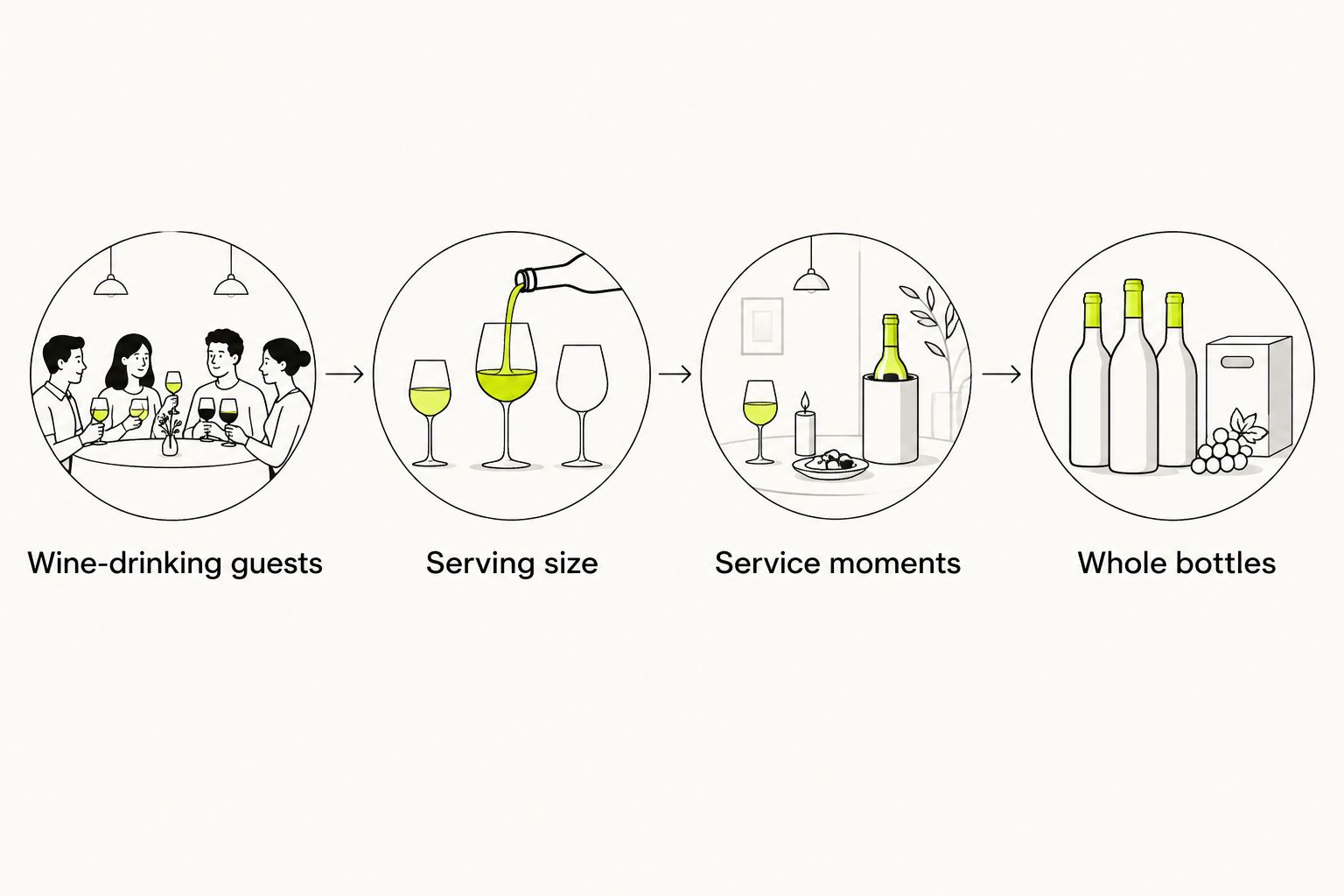
Build your estimate in a spreadsheet. Start with adult guests who expect to drink wine, then account for the other drinks offered and the agreed service format. Do not assume that every guest drinks wine or that a cocktail hour and seated dinner need identical allocations.
Use an explicit pour size, not a universal bottles-per-guest rule. A 750 mL bottle provides five 150 mL pours by volume. That is arithmetic, not a prediction of consumption; actual service also includes tasting pours, spills, and wine left in glasses.
For a worked planning example—not a recommended drinking allowance—60 wine-drinking guests receiving two planned 150 mL pours require 18,000 mL, or 24 bottles of 750 mL. Decide any reserve separately with the caterer. Split the total between styles using the couple’s preferences and the tasting decision, not an unsupported fixed ratio.
Use these inputs to make the estimate auditable:
- Count anticipated wine-drinking guests separately from attendance.
- Agree on the serving size with the bar lead.
- List planned wine-service moments.
- Separate the calculated requirement from the reserve.
- Round each wine’s requirement up to whole bottles.
Your 2026 worksheet should make each assumption visible. If the guest count, menu, or bar format changes, update the estimate instead of carrying forward the original bottle total.
5. Write a service brief the bar team can use
Create a short service sheet for each selected wine. Include the exact name, approved menu wording, supplier handling guidance, pouring sequence, and person responsible for replenishment. Staff should not have to improvise certification explanations while serving guests.
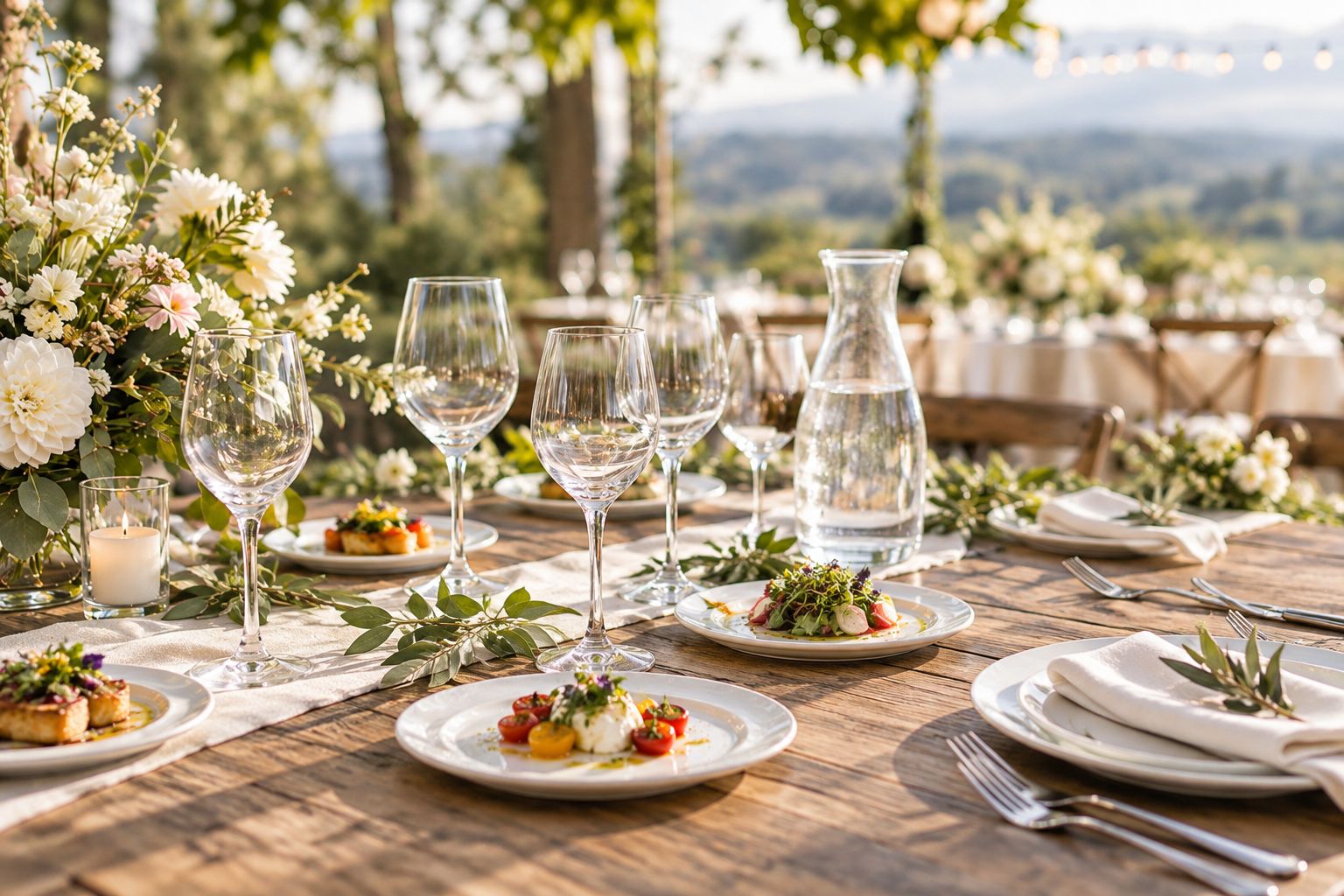
Taste the wine under the conditions you plan to use at the event. An outdoor reception, a warm indoor bar, and a refrigerated bottle at the tasting table are different service situations. Follow the producer’s guidance and agree on a handling plan with the caterer rather than applying one temperature to every wine.
Place water and alcohol-free choices within easy reach. Organic wine still contains alcohol; it is not a health claim or a substitute for a nonalcoholic drink. Give guests a straightforward choice without asking them to explain why they are not drinking.
Make the brief practical:
- Copy wine names and label claims accurately.
- Record producer guidance for storage and serving.
- Specify the agreed pour size.
- Assign responsibility for checking open bottles.
- Keep water and alcohol-free drinks easy to request.
A tasting-table rehearsal helps you spot physical problems before the reception: crowded glassware, no place for open bottles, or a service station exposed to heat. Test the layout with the people who will actually serve.
6. Confirm the final wines and control substitutions
Finish with a written handoff, not a verbal agreement. Match the approved tasting selection to the order and the receiving record. A familiar wine name does not justify transferring certification, grape, or winemaking claims from another vintage.
Require approval before any substitution. Define what makes a replacement acceptable: the required organic claim, its menu role, and the couple’s taste preferences. A substitute should pass those checks rather than simply matching the original wine’s color.
For a 2026 event, keep one final version of the wine brief accessible to the planner, venue, caterer, and service lead. Archive superseded drafts so staff do not use an old selection or outdated menu description.
Complete the handoff with these checks:
- Match the exact wines to the couple’s approval.
- Verify label claims for the wines being received.
- Confirm receiving and storage responsibilities.
- Require written approval for substitutions.
- Share the final service sheet with the bar lead.
Compare your wedding wine sourcing options
Choose the purchasing route before choosing the supplier. Each route solves a different coordination problem, and none removes the need to verify organic claims on the exact wines. The comparison below focuses on responsibility and limitations rather than changing prices.
| Option | Best for | Main advantage | Key limitation |
|---|---|---|---|
| Venue-managed wine program | Events where the venue controls alcohol service | Keeps purchasing and service responsibility with the venue | Your selection must fit the venue’s approved program |
| Caterer-managed sourcing | Planners coordinating wine around a catered menu | Connects the food tasting with the service plan | The caterer must confirm sourcing authority and venue approval |
| Local bottle shop | Planners seeking help assembling a tasting shortlist | Provides a retail route for evaluating candidates | Retail purchasing does not establish permission to serve at the event |
| Winery inquiry through Tinto Amorio | Planners exploring California natural wine | Provides a direct point of inquiry about the winery’s wines | Event purchasing eligibility and each wine’s organic claims require confirmation |
Choose the route with clear accountability. A direct winery inquiry is useful for product questions, but it does not replace a licensed service plan. Venue or caterer sourcing simplifies responsibility only when the contract clearly assigns it.
Ask every prospective supplier the same questions: Which exact wine is proposed? What supports its organic claim? Who receives it? Who approves a substitution? Comparable answers make the decision easier than a collection of enthusiastic tasting descriptions.
Common mistakes wedding planners make
Treating “natural” as proof of organic certification
Natural wine describes an approach to winemaking, not a substitute for checking organic labeling. Verify the exact claim before putting “organic” on the printed menu. Brand positioning alone is insufficient.
Approving the wine without the caterer’s food
A tasting without the wedding dishes answers only whether the couple likes the wine by itself. Repeat the decision with representative food, especially when the menu includes strongly flavored sauces, spice, or sweet courses.
Estimating from the full guest count
Total attendance includes people who will not drink wine. Build the estimate around anticipated wine drinkers and planned pours, then review it with the service lead. Keep the reserve visible rather than hiding it inside the calculation.
Making organic wine a wellness promise
Do not promise fewer headaches, a hangover-free reception, or safety for guests with sensitivities. Organic status does not remove alcohol. Handle dietary and medical concerns separately, and offer alcohol-free drinks without qualification.
Leaving substitution approval to event-day staff
A substitute can change both the flavor and the accuracy of your menu claims. Agree on the approval process before the event. Staff need a decision rule, not permission to describe an unverified replacement as equivalent.
FAQ
What's the best organic wine for wedding planners to choose?
The best organic wine for wedding planners is one with the required verified organic claim, an approved food pairing, and a purchasing route accepted by the venue. Taste the exact selection with the caterer before final approval.
Is natural wine the same as organic wine?
Natural wine and organic wine are not interchangeable terms. Natural wine describes a winemaking approach, while organic claims require checking the applicable labeling and certification requirements.
Can I serve orange wine at a wedding?
You can include orange wine when the couple approves it and the venue permits the purchasing and service arrangement. Taste its skin-contact texture with the menu and keep another choice for guests who prefer a different style.
How many glasses do you get from a wine bottle?
A 750 mL bottle provides five 150 mL pours by volume. Use the pour size agreed with your caterer, and account separately for tasting pours, spills, and any planned reserve.
Can wedding planners buy wine directly from a winery?
A planner must confirm the lawful purchasing route and the venue's outside-alcohol rules before buying directly from a winery. Shipping permission does not establish permission to serve wine at the event.
Is Tinto Amorio suitable for a wedding wine shortlist?
Tinto Amorio suits planners exploring California natural wine and orange-wine styles for a tasting shortlist. Confirm the exact wine's organic claims and the event's purchasing route before approving it.
Does organic wine mean sulfite-free wine?
Organic wine does not mean sulfite-free wine. Sulfites can occur naturally during fermentation, and US organic-wine labeling differs from the made-with-organic-grapes category.
One last thing
Give the bar team a plain-language description, not a speech. For an approved orange wine, “white grapes fermented with their skins” explains the category without promising a flavor or certification the bottle does not support.
Keep that explanation beside the exact wine name on your 2026 service sheet. Guests get a useful answer, and staff can return to pouring rather than improvising wine facts.