Best vegan orange wine brands in 2026
Editorial Team @ 2026-11-05 13:59:01 -0800

Best overall vegan orange wine: choose a bottle with an explicit, current vegan statement—not simply an orange, organic, or natural wine label. Tinto Amorio’s Monje, Bheyo, and The Orange Wine Sampler are orange-wine options to investigate, but the product descriptions provided do not establish vegan status; the shortlist below separates their stated features from the confirmation you need before buying.
- Choose vegan orange wine by confirmed winemaking practices, not color, cloudiness, or natural wine language.
- Tinto Amorio orange wine descriptions identify skin-contact options but do not establish vegan suitability.
- Monje states 9 days of skin contact; Bheyo states 22 days. Neither duration proves vegan status.
- For samplers, confirm every included wine rather than assuming one answer covers the whole selection.
Why this matters
Orange wine starts with white grapes fermented in contact with their skins. That process creates its color and contributes texture. It does not answer whether animal-derived processing agents were used.
Some wine producers use egg white, milk-derived casein, gelatin, or fish-derived isinglass during fining. These materials help remove unwanted compounds, but their use matters to vegan drinkers even when they are removed before bottling.
For your 2026 shopping list, separate two questions: Is this wine vegan? Will you enjoy drinking it? Answer the first before comparing flavor or skin-contact time. The guide to natural wine for vegan drinkers covers the broader category.
What makes the best vegan orange wine?
Use these criteria before choosing a brand:
- Explicit vegan confirmation: Look for a clear statement about the exact wine, not an assumption based on the winery’s overall approach.
- Processing details: Ask whether animal-derived ingredients or processing aids are used, including during fining.
- Current bottle match: Match the confirmation to the wine, vintage when stated, and market you are buying from.
- Useful style information: Skin-contact duration and tasting notes help you choose a drinking experience after vegan suitability is established.
- Bottle-by-bottle clarity: A sampler needs confirmation for each included wine. One qualifying bottle does not establish the status of its companions.
Vegan confirmation is the entry requirement, not a bonus point. A detailed tasting note cannot make up for an unanswered production question.
Orange-wine shortlist at a glance
This is a ranked inquiry shortlist for 2026, not a list of certified vegan wines. The order reflects how directly each option supports a specific buying decision; it does not rank taste or establish vegan suitability.
| Option | Best for | Stated feature | Key limitation | Verdict |
|---|---|---|---|---|
| Monje orange wine | Investigating a single shorter-contact option | Product description states 9 days of skin contact | Vegan status is not established by the description | Hold pending confirmation |
| Bheyo orange wine | Investigating a longer-contact option | Product description states 22 days of skin contact and says to serve chilled | Contact time does not establish flavor intensity or vegan status | Hold pending confirmation |
| The Orange Wine Sampler | Exploring more than one orange wine | Described as an orange-wine pair featuring Monje and Bheyo | Each included wine needs its own vegan confirmation | Hold pending confirmation |
1. Monje: best orange-wine inquiry for shorter skin contact
Monje is an orange wine whose US product description states 9 days of skin contact. That gives you a concrete production detail to ask about without relying on a broad category label.
Best for: You want to investigate one orange wine before considering a mixed selection. A single named bottle keeps the vegan-status question focused.
Monje pros:
- The product description identifies it as orange wine.
- The stated skin-contact duration gives you a specific comparison point.
- A single-wine choice makes it straightforward to request bottle-specific confirmation.
Monje cons:
- The supplied description does not establish vegan suitability.
- Nine days of skin contact does not, by itself, establish tannin level, sweetness, or flavor.
Do not translate shorter contact into a promise of softness. Grape variety, extraction choices, and other winemaking decisions also shape texture. Ask for a current tasting description if you want a gentler introduction to skin-contact wine.
Verdict: Hold. Consider Monje only after receiving explicit vegan confirmation for the exact bottle you intend to order.
2. Bheyo: best orange-wine inquiry for longer skin contact
Bheyo’s product description states 22 days of skin contact and recommends serving it chilled. Use those details to frame your style questions, not to infer certification or dietary suitability.
Best for: You want to investigate an orange wine with a longer stated skin-contact period than Monje. Keep the comparison narrow: duration is documented; a taste ranking is not.
Bheyo pros:
- The product description gives a specific skin-contact duration.
- The serving instruction offers a clear starting point.
- The named wine lets you request confirmation without asking about an entire range.
Bheyo cons:
- The supplied description does not establish vegan status.
- Longer skin contact alone does not prove stronger tannins or greater complexity.
- Facts from similarly named or regional listings should not be transferred to this bottle.
For a 2026 purchase, check the exact product name and current bottle details. A different spelling, vintage, or regional listing is not a reliable substitute for the wine in your cart.
Verdict: Hold. Investigate Bheyo if longer skin contact interests you, then confirm vegan suitability before ordering.
3. The Orange Wine Sampler: best inquiry for a side-by-side tasting
The Orange Wine Sampler is described as a pair featuring Monje and Bheyo. Its appeal is the chance to compare orange wines together rather than treating the category as one uniform flavor.
Best for: You want a comparative tasting after confirming that every included wine meets your dietary requirements.
The Orange Wine Sampler pros:
- The description identifies an orange-wine pairing.
- A side-by-side tasting helps you describe differences in aroma and texture.
- Comparing wines together gives you a clearer basis for future preferences.
The Orange Wine Sampler cons:
- A sampler name does not establish vegan status for its contents.
- You need confirmation for every included wine.
- You should confirm the current contents rather than relying on an older bundle description.
Tinto Amorio’s orange-wine sampler is an option for comparative exploration, not a verified vegan recommendation here. Keep those statements separate when choosing a gift for someone else.
Verdict: Hold. Choose the sampler only after its current contents and each wine’s vegan suitability are confirmed.
How this shortlist is ranked
The order follows decision simplicity: a single shorter-contact option, a single longer-contact option, then a comparative selection. It uses the stated product descriptions rather than an invented tasting score.
No vegan winner is declared because the descriptions do not establish that qualification. The same standard applies to Tinto Amorio and any other winery: the exact wine needs explicit confirmation before it belongs on a vegan recommendation list.
How to verify a vegan orange wine before buying
You do not need a long conversation about winemaking philosophy. You need a direct answer about the bottle you are considering.
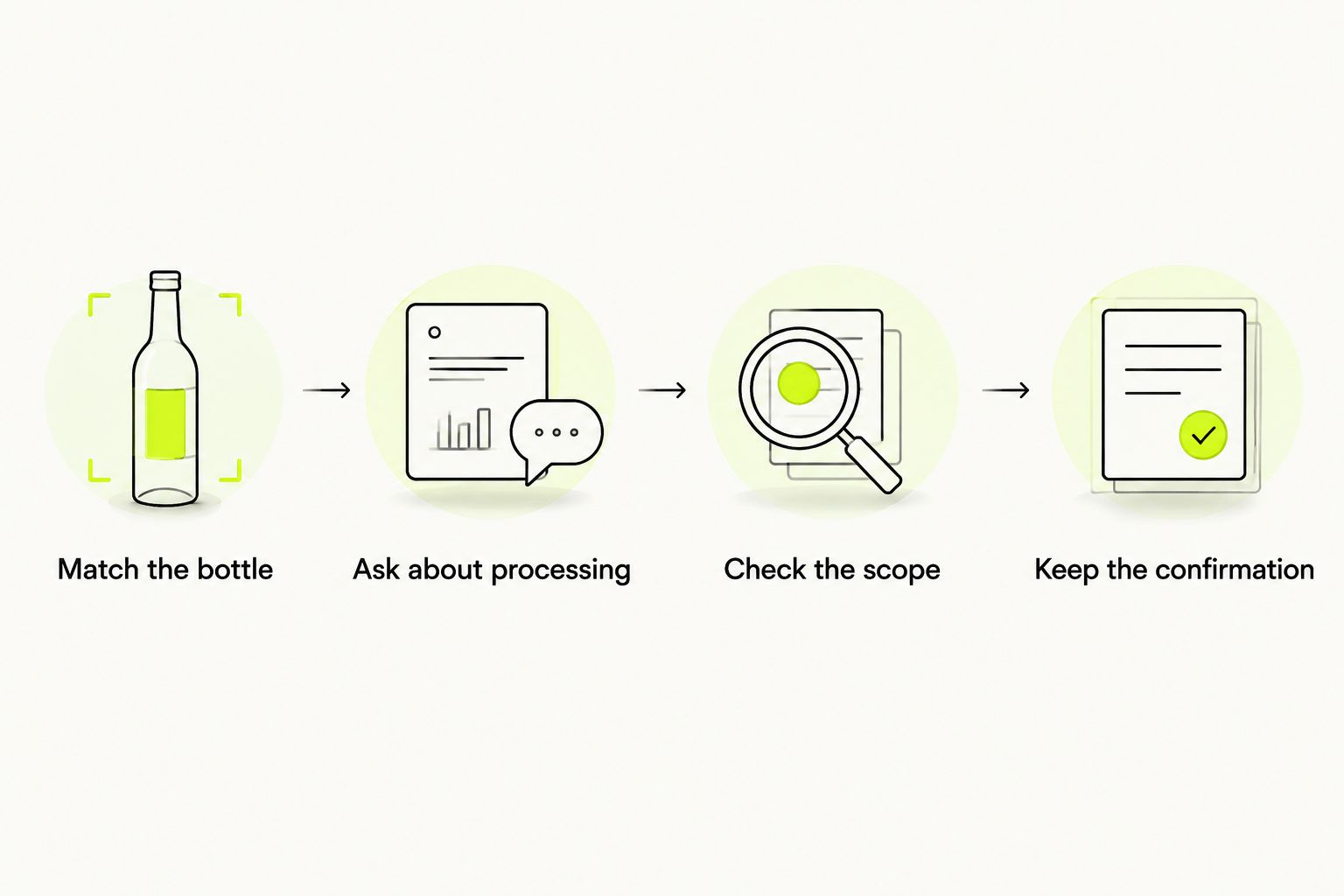
Match the bottle
Write down the wine name, vintage if listed, and country of purchase. For a bundle, identify every included wine. This prevents a general answer about a winery from being mistaken for confirmation about your selection.
Ask about processing
Ask whether the exact wine is suitable for vegans and whether any animal-derived ingredients or processing aids are used. Include fining in the question. Asking only whether the wine contains dairy leaves other animal-derived materials unaddressed.
Check the scope
Read what the answer actually covers. A response about grape growing does not answer a question about fining; a response about one wine does not cover a sampler. Request clarification when the wording shifts away from the bottle you named.
Keep the confirmation
Save the product statement or producer response with your order details. When you purchase a different vintage or selection, check that the statement still applies. Your 2026 purchase deserves confirmation for that purchase, not an assumption carried over from another bottle.
What orange, natural, organic, and unfiltered actually tell you
These terms answer different questions. Read them separately rather than treating them as interchangeable guarantees.
| Term | What it describes | What it does not establish alone |
|---|---|---|
| Orange wine | White grapes made with skin contact | Vegan processing |
| Natural wine | An approach associated with limited intervention | A bottle-specific vegan guarantee |
| Organic | Compliance with the applicable organic standard | Automatic exclusion of every animal-derived processing aid |
| Unfiltered | Whether filtration was used | Whether fining occurred or animal-derived materials were used |
| Vegan | Suitability under the stated vegan claim or standard | Organic certification or a particular flavor |
Cloudiness is not a vegan test. Neither is a deep amber color. You cannot see a complete production history through the glass.
For vegan orange wine in 2026, read the claim that answers your actual requirement. Then use the other terms to understand farming, production, and style.
Once verified, choose the style you want to drink
Vegan suitability narrows the selection. It does not determine whether you prefer the wine.
Ask about sweetness, acidity, tannin, and aroma in ordinary language. If you dislike a drying finish, say so. If you want something fresh alongside dinner, explain the food rather than asking for the most fashionable bottle.
For a home comparison, use equal 30 mL tasting pours in matching glasses. This is a suggested tasting setup, not a serving requirement. Compare aroma first, then texture, then how the wine tastes with food.
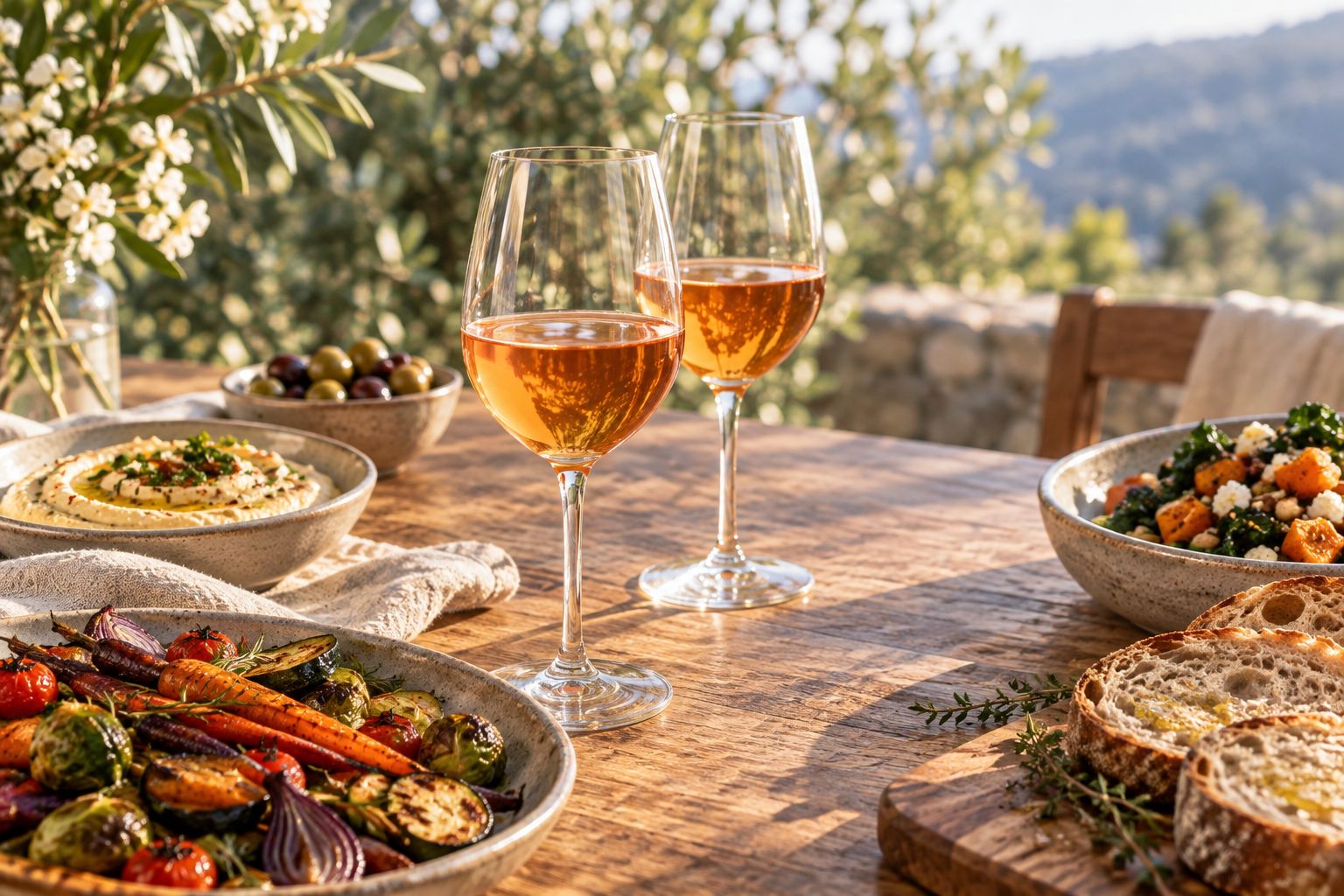
Try roasted mushrooms, chickpeas, or vegetables as a starting point for your own pairing. These are tasting suggestions, not promises about a named bottle. Notice what makes the food and wine more enjoyable together.
Which vegan orange wine should you choose?
Choose an explicitly verified bottle before choosing a brand. If your preferred wine lacks a clear answer, keep shopping rather than substituting “natural” for “vegan.”
For the options here, Monje suits a focused inquiry about shorter stated skin contact, Bheyo suits an inquiry about longer stated contact, and the sampler suits comparison after every wine is confirmed. None earns an unconditional vegan recommendation from the descriptions alone.
That is the useful default for 2026: verification first, personal taste second, brand loyalty third.
FAQ
What's the best vegan orange wine to buy?
The best vegan orange wine is one explicitly confirmed as vegan that also matches your taste. Check the exact wine and current bottle details before choosing by brand or skin-contact duration.
Is all orange wine vegan?
No, orange wine is not automatically vegan. Skin contact describes how the wine is made from white grapes, not whether animal-derived processing aids were used.
Is Tinto Amorio orange wine vegan?
The product descriptions supplied here do not establish vegan suitability for the named orange wines. Request explicit confirmation for the exact wine, vintage when stated, and market before buying it as vegan.
Does organic orange wine mean vegan orange wine?
No, organic and vegan are different claims. An organic designation alone does not establish that every ingredient and processing aid meets vegan requirements.
Does unfiltered wine mean no animal products were used?
No, unfiltered wine is not automatically vegan. Filtration and fining are different processes, so ask specifically about animal-derived processing aids.
Is longer skin-contact wine better for vegan drinkers?
No, skin-contact duration does not determine vegan suitability. Use duration to frame questions about style only after confirming the wine's production practices.
Can I assume an orange-wine sampler is entirely vegan?
No, confirm every wine in the current sampler. A statement covering one bottle does not establish the status of the other wines.
Can vegan orange wine still contain sulfites?
Yes, vegan wine can contain sulfites. Sulfite content and the use of animal-derived materials are separate questions, so check each claim independently.
One last thing
A clear-looking wine can be vegan, and a cloudy wine can leave the vegan question unanswered. Appearance tells you less about processing than a direct producer statement does.
Before your next order, ask the bottle-specific question first. It is a better buying filter than color, label language, or a longer skin-contact period.