Best Natural Sparkling Wine Styles Ranked for 2026
Editorial Team @ 2026-09-21 15:51:39 -0700

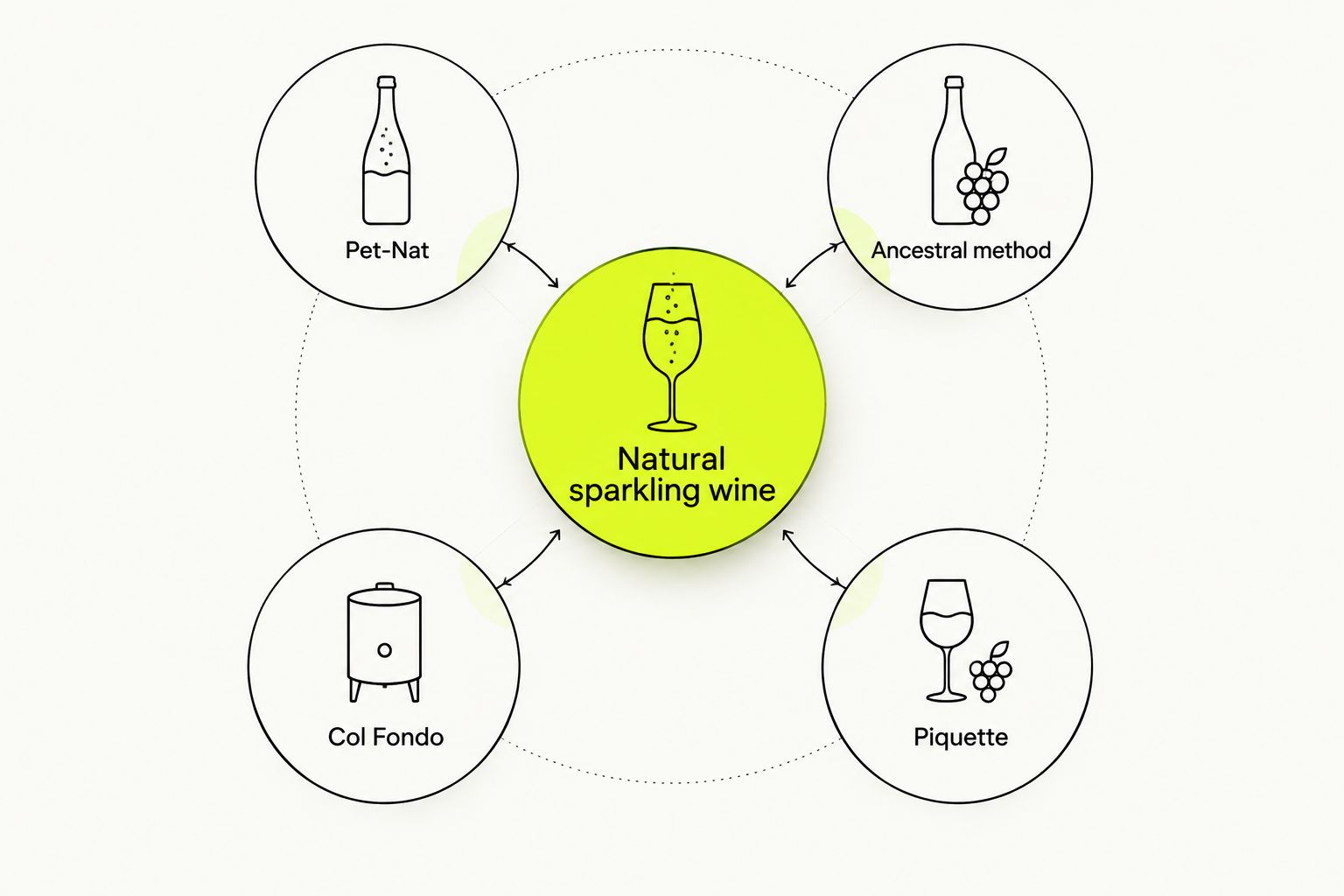
Best overall: Pét-Nat (Pétillant Naturel). Best for celebrations: Método Ancestral Cava. Best budget option: Piquette. If you want a casual, lightly sparkling natural wine spritz rather than a traditional bottle-fermented fizz, Tinto Amorio's Rebujito White Wine Spritz fits that slot instead of competing head-to-head with the methods above.
- Pét-Nat is the best natural sparkling wine overall in 2026 for cloudy, low-intervention character.
- Método Ancestral Cava beats standard Cava for a true single-fermentation natural sparkling wine at celebrations.
- Piquette is the budget natural sparkling wine, made from twice-pressed grape skins and typically under 10% ABV.
- Col Fondo Prosecco stays cloudy and undisgorged, so it needs a shake before pouring.
- Tinto Amorio's Rebujito White Wine Spritz covers casual sipping, not formal toasts.
Why this matters
"Natural sparkling wine" gets used loosely online, and that's a problem if you're trying to buy the right bottle. Some of what shows up under that label is made the traditional way, with a second fermentation trapped inside the bottle. Some of it is a spritz with added fizz and citrus. Neither is wrong, but they're not interchangeable at a dinner table.
Tinto Amorio works in low-intervention wine every day, mostly orange and red glou glou styles, which means the same production logic that defines a good orange wine applies to sparkling: minimal additives, native fermentation where possible, and honesty about what's actually in the bottle. That's the lens for this ranking.
What makes the best natural sparkling wine
- How the bubbles got there — natural secondary fermentation in the bottle, a single-fermentation ancestral method, or added carbonation.
- Sulfite level — low or no added sulfites versus standard commercial sparkling wine additions.
- Filtration — unfiltered and cloudy versus clear and polished.
- Grape farming — organic or minimal-spray fruit, native yeast fermentation.
- Occasion fit — a toast-worthy bottle versus an easygoing afternoon pour.
- Honesty in labeling — the bottle tells you which method made it fizzy, not just that it's "natural."
At a glance
| Style | Best for | Standout feature | Key limitation |
|---|---|---|---|
| Pét-Nat | Overall pick | Single natural fermentation finished in-bottle | Batch variation is normal, not a flaw |
| Método Ancestral Cava | Celebrations | Native Catalan grapes, no dosage | Harder to find outside specialty shops |
| Col Fondo Prosecco | Funky, unfiltered drinkers | Undisgorged, full of lees character | Sediment needs a shake before pouring |
| Piquette | Budget option | Made from pressed grape skins, low ABV | Thin body compared to full sparkling wine |
| Rebujito White Wine Spritz | Casual sipping | Lightly sparkling with lemon and mint | Not a traditional-method sparkling wine |
1. Pét-Nat: best natural sparkling wine overall
Pét-Nat (Pétillant Naturel) pros:
- Bottled before primary fermentation finishes, so bubbles are entirely natural, no injected CO2
- Usually unfiltered, with a hazy, cider-adjacent flavor profile
- No dosage added at the end, so the sugar level stays honest
- Widely available across natural wine shops in the U.S. in 2026
Pét-Nat cons:
- Bottle-to-bottle variation is common because there's no standardized secondary fermentation
- Sediment at the bottom can surprise drinkers used to filtered sparkling wine
- Corks can pop unpredictably if the bottle warms up before opening
Best for: drinkers who want the funkiest, most natural expression of sparkling wine on the shelf. Verdict: Buy.
2. Método Ancestral Cava: best for celebrations
Método Ancestral Cava comes out of Catalonia and uses the same single-fermentation approach as Pét-Nat, but built on native Spanish grapes like Xarel-lo, Macabeo, and Parellada. Standard Cava relies on a second fermentation and disgorgement; the ancestral version skips that step entirely.
Método Ancestral Cava pros:
- Made without a dosage, so it reads drier and more mineral than standard Cava
- Native-grape character that's distinct from Champagne-style sparkling wine
- Occasion-worthy without the higher production intervention of traditional method wines
Método Ancestral Cava cons:
- Smaller production runs make it harder to find outside specialty retailers
- Carbonation can be lighter than traditional method Cava, which some drinkers expect for a toast
Best for: weddings, anniversaries, and toasts where you still want a natural wine in the glass. Verdict: Buy.
3. Col Fondo Prosecco: best for funky, unfiltered character
Col Fondo is old-school Veneto production: secondary fermentation happens in the bottle, and the wine is never disgorged. The lees stay in the bottle, which is exactly what "col fondo" means — with the sediment.
Col Fondo Prosecco pros:
- Bready, tangy character you don't get from clarified Prosecco
- Genuinely low-intervention, since there's no dosage or filtration step
- A useful entry point if you already like Pét-Nat and want a Prosecco-region version
Col Fondo Prosecco cons:
- Needs a gentle shake before pouring to redistribute the sediment, which throws off drinkers expecting a clear pour
- Cloudiness reads as a flaw to anyone new to natural wine
Best for: natural wine regulars who already like sediment and funk. Verdict: Hold — great if you know what you're buying, confusing if you don't.
4. Piquette: best budget natural sparkling wine
Piquette is made by pressing grape pomace — the skins, seeds, and stems left over after the main pressing — a second time with water added, then fermenting that lighter juice. The result is a low-alcohol, lightly sparkling wine, typically under 10% ABV, built from what would otherwise be waste.
Piquette pros:
- Lower alcohol than most sparkling wine, easier for daytime drinking
- Low-waste production model, using grape material that's usually discarded
- Approachable price point relative to bottle-fermented sparkling wine
Piquette cons:
- Thinner body and shorter finish than a true sparkling wine
- Quality varies a lot by producer since it's a newer category with looser standards
Best for: budget-conscious drinkers who want something light and fizzy without the intensity of a full sparkling wine. Verdict: Buy, with realistic expectations.
5. Tinto Amorio's Rebujito White Wine Spritz: best for casual sipping
Rebujito is Tinto Amorio's white wine spritz, lightly sparkling with lemon and a hint of mint. It's not built on a secondary fermentation or ancestral method — it's a natural wine spritz meant for backyard afternoons, not formal toasts, and it belongs in this list as the low-fuss option rather than a competitor to Pét-Nat or Cava.
Rebujito pros:
- Bright, citrus-forward, and easy to pour by the glass for a group
- Fits the same casual-drinking occasions where a Pét-Nat might feel too serious
- Comes from a winery already working in low-intervention, organic and low-sulfite wine
Rebujito cons:
- Not a traditional-method sparkling wine, so it won't satisfy someone specifically shopping for Pét-Nat or Cava
- Best served chilled and soon after opening rather than cellared
Best for: casual gatherings where you want something bright and fizzy without the ceremony. Verdict: Buy for the occasion it's built for; skip if you want a true bottle-fermented sparkling wine.


How we ranked these
Each style was weighed against the criteria above: how the bubbles actually got there, sulfite and filtration transparency, grape farming, and which occasion it genuinely fits. Pét-Nat wins overall because the production method is the most consistently natural across producers in 2026. Rebujito earns its spot honestly, as a spritz-style option, not by pretending to be something it isn't — the same standard applied when hosting a natural wine tasting matters more than the label on the bottle.
Which natural sparkling wine should you choose?
Default to Pét-Nat if you want the most natural expression of sparkling wine and don't mind sediment or batch variation. Pick Método Ancestral Cava for a toast-worthy occasion where you still want single-fermentation honesty. Grab Piquette if budget and low ABV matter more than complexity. Choose Rebujito if the occasion is a backyard afternoon, not a formal toast — it's a natural wine spritz, not a stand-in for a bottle-fermented sparkling wine, and that distinction is the whole point of this list in 2026.
FAQ
What is natural sparkling wine?
Natural sparkling wine gets its bubbles from a low-intervention fermentation process, most often Pét-Nat or ancestral method, rather than industrial carbonation. It's typically made with minimal additives and little to no added sulfites.
Is Pét-Nat the same as Champagne?
No. Champagne uses the traditional method with a second fermentation and dosage after disgorgement, while Pét-Nat is bottled before the first fermentation finishes and usually skips dosage entirely. Pét-Nat is also typically unfiltered and cloudy.
How is Piquette different from regular sparkling wine?
Piquette is made from grape pomace pressed a second time with water added, not from fresh-pressed juice. The result is lighter-bodied and lower in alcohol, typically under 10% ABV, than most sparkling wine.
Is Método Ancestral Cava the same as traditional Cava?
No. Traditional Cava uses the méthode champenoise with a second fermentation and disgorgement, while Método Ancestral Cava uses a single fermentation with no dosage added at the end.
Why is Col Fondo Prosecco cloudy?
Col Fondo Prosecco is never disgorged, so the yeast sediment from its bottle fermentation stays in the wine. Giving the bottle a gentle shake before pouring redistributes that sediment.
Does Tinto Amorio make a sparkling wine?
Tinto Amorio does not bottle a traditional bottle-fermented sparkling wine. Its Rebujito White Wine Spritz is a lightly sparkling, natural wine spritz built for casual sipping instead.
Does natural sparkling wine have sulfites?
Most natural sparkling wine uses low or no added sulfites, relying on the small amount naturally present in grapes. Exact levels vary by producer, so check the label if sensitivity is a concern.
What's the best natural sparkling wine for a wedding toast?
Método Ancestral Cava is the strongest pick for a toast in 2026 because it carries occasion-appropriate character without the industrial dosage of mass-market sparkling wine.
One last thing
Col Fondo bottles are traditionally rolled or gently inverted right before opening, not shaken hard, to lift the sediment without over-agitating the wine — do it too roughly and you'll get foam over your countertop instead of a glass. That one habit is the clearest sign someone actually knows this category instead of just reading the label.