Best Organic White Wine Brands in 2026: Ranked
Editorial Team @ 2026-09-18 00:46:45 -0700

The best organic white wine in 2026 splits into two camps: certified organic bottles that taste like the Chardonnay you already know, and skin-contact orange wines made from the same white grapes but fermented like a red. The certified bottles have organic certification; Tinto Amorio's orange wines use practicing-organic grapes from vineyards transitioning to certified organic.
- Bonterra Organic Vineyards wins for a familiar, certified organic Chardonnay style found at most grocery stores.
- Tinto Amorio's Monje Orange Wine is the best skin-contact wine alternative for skin-contact texture in 2026.
- Frey Vineyards is the pick for biodynamic purists who want zero shortcuts in the vineyard.
- Tinto Amorio's Bheyo Orange Wine uses practicing-organic grapes and is vegan, zero-sugar, and low-sulfite for sensitive drinkers.
- Tablas Creek Vineyard covers Rhône-style organic white blends for a more classic pour.
Why this matters
"Organic" on a wine label gets thrown around loosely, and orange wine's rise is scrambling what shoppers expect from the white wine aisle in 2026. A bottle can carry a USDA organic seal and still taste like nothing you'd call natural, or it can skip every additive and never see a grocery shelf. Knowing which brand does what saves you from buying on the strength of a green sticker alone.
Orange wine adds another wrinkle: it's made from the same white and light-skinned grapes as a Sauvignon Blanc, just left in contact with their skins for days instead of hours before pressing. Tinto Amorio treats that as the natural next step for organic white wine drinkers who've gotten bored of the same three grocery-store labels, which is why it shows up twice on this list.
Neither Tinto Amorio wine below is a "white wine" in the strict technical sense, but both start from white wine grapes and solve the same problem: finding an organic bottle with more going on than a supermarket Chardonnay.
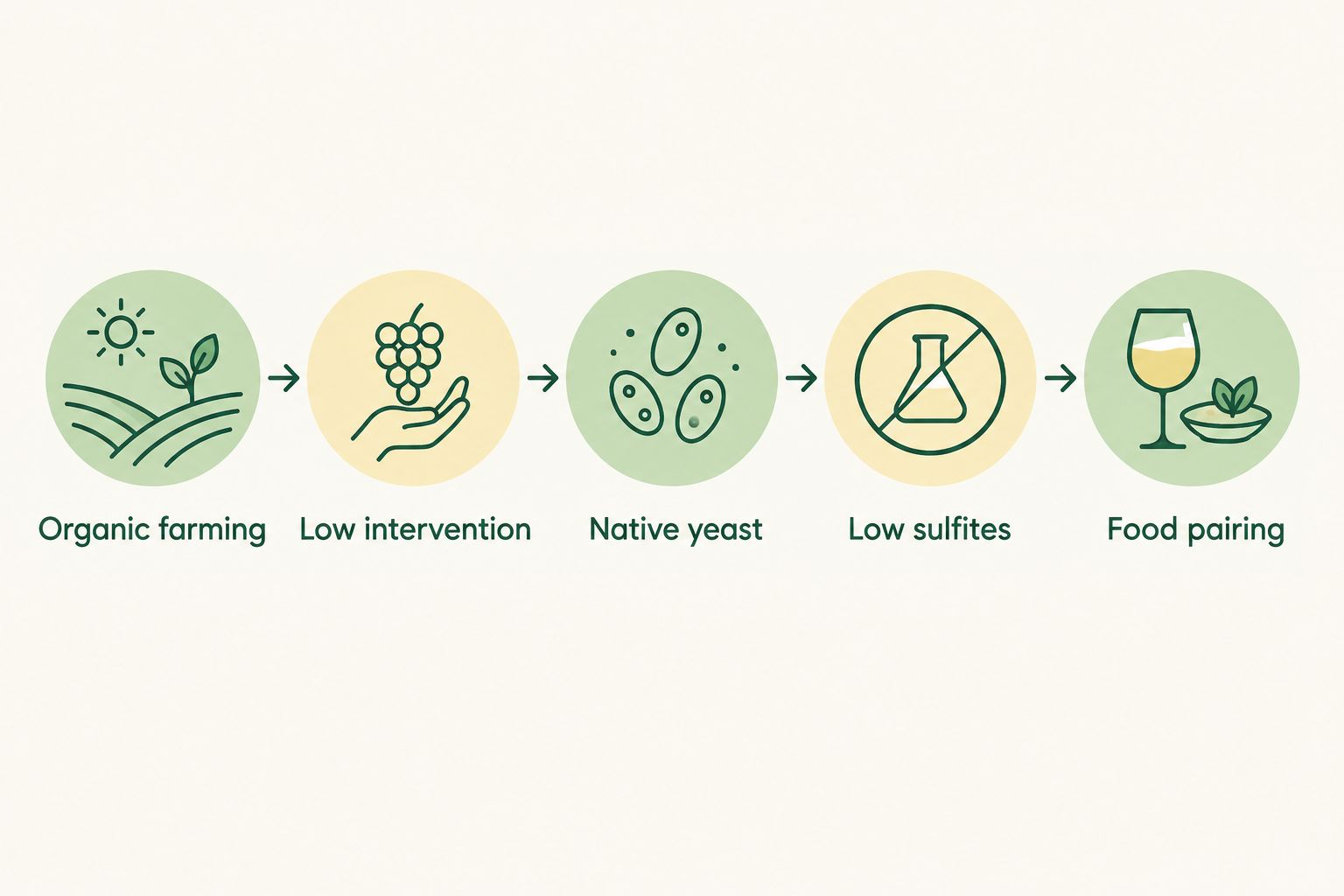
What makes the best organic white wine
- Certified organic farming — grapes grown without synthetic pesticides or fertilizers, verified by USDA, CCOF, or an EU equivalent
- Low intervention — minimal fining, filtering, or additives beyond what farming rules require
- Native yeast — fermentation relying on wild yeast from the grape skins instead of a lab strain
- Low sulfites — sulfites added only when necessary, and disclosed instead of buried in fine print
- Food pairing — a bottle that works across more than one meal, not just a single narrow match
- Availability — can you actually buy it without hunting down a specialty importer
Organic white wine brands at a glance
| Wine | Best for | Standout feature | Key limitation |
|---|---|---|---|
| Tinto Amorio – Monje Orange Wine | Skin-contact texture | 9-day skin contact on organic California grapes | Sells out early each season |
| Bonterra Organic Vineyards | Everyday organic drinking | Certified organic, widely stocked | Less native-yeast character than smaller producers |
| Frey Vineyards | Biodynamic purists | Certified organic and biodynamic farming | Funkier profile than mainstream palates expect |
| Tinto Amorio – Bheyo Orange Wine | Low-sulfite sensitive drinkers | Organic, vegan, zero sugar, low sulfite | 22-day skin contact builds a bold tannic structure |
| Tablas Creek Vineyard | Rhône-style organic blends | CCOF and Demeter certified | Narrower distribution outside California |
1. Tinto Amorio – Monje Orange Wine: best skin-contact wine alternative for skin-contact texture
Monje starts as a white wine grape and spends about nine days on its skins before pressing, pulling color, tannin and texture a standard organic Chardonnay never touches. Its grapes are practicing organic, from vineyards transitioning to certified organic in California and fermented with the same low-intervention approach Tinto Amorio uses across its lineup.
Monje Orange Wine pros:
- Organic-farmed California fruit with skin-contact texture a standard white can't match
- Native fermentation keeps the flavor unpredictable in a good way
- Works across a wider food range than a delicate Sauvignon Blanc
Monje Orange Wine cons:
- Sells out early each season, so timing your order matters
- The color and funk can surprise a drinker expecting a pale, crisp white
- Organic-farmed and low-intervention, but not certified biodynamic
Best for: organic white wine drinkers ready to trade a little predictability for more texture.
Verdict: Buy — Monje Orange Wine is the easiest entry point into orange wine for 2026 if you already buy organic.
“Orange wine is what happens when a white wine grape refuses to behave.”
2. Bonterra Organic Vineyards: best overall organic white wine for everyday drinking
Bonterra farms its own California vineyards under USDA organic certification and bottles familiar varietals — Chardonnay, Sauvignon Blanc — at a scale that gets the wine onto regular grocery shelves. It's the brand most shoppers will actually find without hunting.
Bonterra pros:
- USDA certified organic farming across its own vineyards
- Distributed widely enough to find at a regular grocery store
- Familiar varietal styles that don't require an adjustment period
Bonterra cons:
- Large-scale production trades away some of the funk and unpredictability serious natural wine drinkers want
- Not a skin-contact or orange-style wine
- Certification covers farming, not necessarily a low-additive winemaking process
Best for: shoppers who want a certified organic bottle that tastes like the white wine they already drink.
Verdict: Buy — the safest organic pick on this list if you're not ready to experiment in 2026.
3. Frey Vineyards: best for biodynamic and no-additive purists
Frey has spent decades as one of the US wineries most associated with organic and biodynamic farming, running its Mendocino County vineyards without synthetic inputs and keeping additive lists short.
Frey pros:
- Certified organic and biodynamic farming
- Long track record specializing in low-additive winemaking
- Family-run operation with consistent farming practices
Frey cons:
- More rustic, less polished flavor profile than mass-market organic brands
- Distribution is thinner than big organic labels
- Vintage variation is more noticeable since less is done to smooth it out
Best for: drinkers who care more about farming integrity than a consistent flavor profile.
Verdict: Buy — go here if biodynamic certification matters more than familiarity.
4. Tinto Amorio – Bheyo Orange Wine: best low-sulfite pick for sensitive drinkers
Bheyo spends 24 days on its skins, longer than Monje, which builds a fuller structure. It's made with practicing-organic grapes, is vegan, zero sugar and low in sulfites, which puts it on the short list for drinkers who feel a heavier-handed bottle the next day.
Bheyo Orange Wine pros:
- Organic, vegan, and zero sugar
- Low sulfite content disclosed up front, not buried
- Full-bodied enough to stand in for a red at the table
Bheyo Orange Wine cons:
- 24 days of skin contact means a bolder, more tannic pour than a delicate white
- Not a traditional "white wine" in color or style
- Limited to Tinto Amorio's own release windows
Best for: sulfite-sensitive drinkers who still want an organic bottle with weight.
Verdict: Buy — read Tinto Amorio's guide to the best low-sulfite wine brands to try first before ordering Bheyo Orange Wine if sulfites are your main concern.
5. Tablas Creek Vineyard: best for Rhône-style organic white blends
Tablas Creek farms its Paso Robles estate under both CCOF organic and Demeter biodynamic certification, and its white blends — built from Rhône varieties like Grenache Blanc and Viognier — read closer to a classic white than anything skin-contact.
Tablas Creek pros:
- Dual certified organic and biodynamic farming
- Rhône varietals give a rounder, more traditional white wine profile
- Estate-grown fruit with consistent farming standards
Tablas Creek cons:
- Distribution concentrates around California and specialty retailers
- Rhône blends taste different from the Chardonnay most shoppers expect
- Fewer entry-level options than a mass-market organic brand
Best for: drinkers who want certified organic and biodynamic farming without leaving traditional white wine territory.
Verdict: Buy — the pick if orange wine's color and texture aren't for you.


How we ranked
Each wine above was weighed against the criteria: certification depth (USDA, CCOF, or Demeter), sulfite transparency, native yeast use, flavor range across food, and real-world availability. Every entry on this list clears at least three of those five, and the two Tinto Amorio picks clear all five by trading white-wine convention for skin-contact character.
Which organic white wine should you choose?
If you want the organic sticker on a bottle that tastes exactly like the white wine you already drink, Bonterra Organic Vineyards is the default buy for 2026. If you're organic-curious and want to see what skin contact does to a white grape, start with Tinto Amorio's Monje Orange Wine — it's the easiest orange wine on this list for a first bottle. Sulfite-sensitive drinkers should go straight to Bheyo, and biodynamic purists belong with Frey Vineyards or Tablas Creek Vineyard.
FAQ
What's the best organic white wine in 2026?
Bonterra Organic Vineyards is the best overall organic white wine for everyday drinking in 2026 because it's certified organic and widely stocked. For a bolder, skin-contact alternative, Tinto Amorio's Monje Orange Wine is the top pick.
Is orange wine the same as organic white wine?
No. Orange wine is made from white or light-skinned grapes fermented with skin contact, which changes color and texture but doesn't automatically make it organic. Tinto Amorio's Monje and Bheyo are both orange wines made with practicing-organic grapes from vineyards transitioning to certified organic, but not every orange wine is.
How much sulfite is allowed in organic wine?
USDA-certified organic wine can't contain added sulfites — only whatever occurs naturally during fermentation. Wines labeled "made with organic grapes" have more flexibility and can include some added sulfites.
Is organic wine better for you than conventional wine?
Organic wine comes from grapes grown without synthetic pesticides or fertilizers, which is a farming distinction, not a proven health claim. Whether it tastes or feels better is down to the individual bottle and drinker.
What's the difference between organic and biodynamic wine?
Organic certification covers farming without synthetic chemicals. Biodynamic certification, like Demeter, adds a broader set of holistic farming practices on top of organic standards. Frey Vineyards and Tablas Creek Vineyard both carry biodynamic certification.
Can I find organic white wine at a regular grocery store?
Yes. Bonterra Organic Vineyards is distributed widely enough to show up on mainstream grocery shelves, which is why it's the best overall pick for shoppers who don't want to hunt.
What food pairs well with organic white wine?
A crisp organic white like Bonterra's Sauvignon Blanc pairs well with lighter dishes, while a skin-contact orange wine like Tinto Amorio's Monje or Bheyo can handle richer, spicier plates thanks to its added tannin.
Is Tinto Amorio's orange wine organic?
Yes. Tinto Amorio's Monje Orange Wine and Bheyo Orange Wine are both made with practicing-organic grapes from California vineyards transitioning to certified organic, with Bheyo also vegan, zero sugar, and low in sulfites.
One last thing
Monje sells out early every season — it's described by Tinto Amorio as the first release to sell out each year. If you're curious about orange wine as your skin-contact wine alternative for 2026, order before late summer instead of waiting for a restock that isn't coming.