Wine for Butcher Shops: Skin-Contact Guide 2026
Editorial Team @ 2026-09-28 16:02:08 -0700

Butcher-shop skin-contact wine is white wine fermented with its skins, selected to help customers pair a bottle with charcuterie or dinner. In 2026, the useful question is not whether orange wine goes with meat; it is which cut, seasoning and serving style the customer has in mind. For wine for butcher shops, start with the food, then choose the bottle.
- For wine for butcher shops, start with the cut and seasoning before recommending skin-contact wine.
- Tinto Amorio's Monje is an orange-wine option for charcuterie conversations; confirm wholesale eligibility before ordering.
- Keep a red-wine alternative for customers buying rich or heavily seasoned meat.
- Check alcohol-sale and tasting permissions before adding wine to a butcher counter.
Why skin-contact wine matters for butcher shops
A butcher counter already has the beginning of a pairing conversation: the customer can tell you what they are cooking. A charcuterie counter has another advantage. The customer can name the cured meat, cheese or spread that will sit beside the glass. Use those details instead of treating orange wine as a universal match. For a broader starting point, see how to pair skin-contact wine with food.
Skin-contact, or orange, wine is made by leaving white grape juice in contact with the grape skins during fermentation. That contact can add texture and phenolic grip. The result still varies by wine, so taste the bottle before writing a pairing card. A delicate orange wine and a firmly grippy one will not do the same job beside salty, fatty food.
In 2026, a butcher shop considering wine has a practical constraint before it has a merchandising plan: permission to sell it. Tinto Amorio sells wine wholesale to bottle shops, restaurants and wine bars in 18 U.S. states, but that fact does not establish eligibility for a butcher shop. Confirm local licensing, distribution and supplier terms first. Then build the counter recommendation around food you actually sell.
Build a skin-contact wine offer around the counter
Check your sales and tasting permissions
Before choosing a bottle, establish what your shop is allowed to do. Retail alcohol sales, in-store samples and off-site events can require different permissions. A license that covers one activity does not answer the others. Check the rules that apply to your location and format, then ask a prospective supplier how an order would reach your shop.
This step keeps the wine plan grounded. If tastings are not permitted, staff can still explain a pairing without pouring. If wine sales are not permitted, do not put a purchase offer on a meat-counter sign. In 2026, the right first move is a verified route to sale, not a display concept.
- Confirm whether your existing license permits packaged wine sales.
- Check tasting permissions separately from retail-sale permissions.
- Ask how wine distribution works at your location.
- Record which staff can answer alcohol-sale questions.
Map the food customers take home
Write down the products customers ask about, then group them by how they eat them. A sliced cured-meat board calls for a different conversation than a raw cut headed for a hot pan. Seasoning matters too: pepper, herbs, smoke and a sweet glaze each change what stands out in the glass.
Start manually. Put a short pairing prompt beside the staff's usual order notes: What are you serving with it? The answer is more useful than the meat's name alone. Sausage with mustard, for example, brings the condiment into the pairing. In 2026, keep this map tied to your actual counter rather than a generic wine-and-meat chart.
- Separate cured meats from fresh cuts and prepared foods.
- Note the sauces, cheeses and condiments customers mention.
- Mark foods commonly served chilled or at room temperature.
- Ask whether the wine is for a board or a cooked meal.
Taste the wine against the food
Taste candidate wines with representative foods before naming a house pairing. Compare a bite on its own, a sip on its own and the bite followed by the sip. Look for what happens to salt, fat, spice and texture. If the wine makes the food taste harsh or the food flattens the wine, choose another pairing.
Do not assume that orange color predicts a wine's grip. Skin contact describes a method, not a fixed flavor profile. Staff need words they can repeat from the tasting, such as whether a wine feels crisp, soft or grippy with a particular food. Those observations belong to the bottles and foods tasted, not to every orange wine.
- Taste with a cured meat your counter sells.
- Repeat with a fresh or prepared food.
- Compare the wine with and without a condiment.
- Write down the pairing that worked and the one that did not.
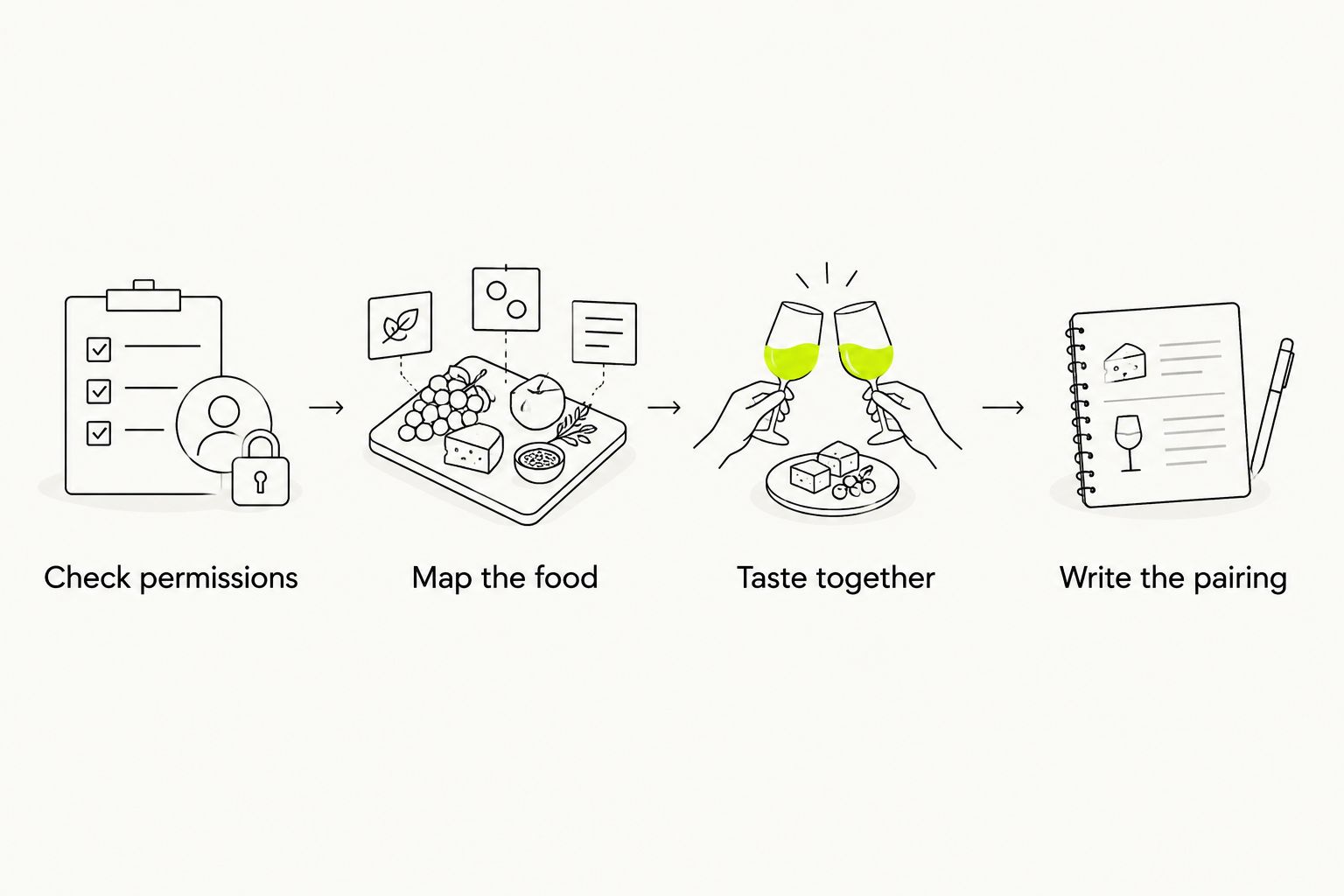
Write a pairing card customers can use
A good card answers a dinner question without asking the customer to understand winemaking first. Lead with the food, name the wine style and give one reason to consider it. Keep the claim narrow: a pairing tested with your peppered salami is not automatically a pairing for every salami in the case.
Put the card where staff can refer to it during a conversation. A bottle display separated from the meat counter loses the food context that makes the recommendation useful. If you cannot display wine beside food under your local rules, use the same plain-language pairing note in a permitted location. Recheck the card whenever the wine or the food changes.
- Name the exact counter food used in your tasting.
- Describe the pairing in everyday sensory language.
- Avoid certification or production claims you cannot verify.
- Remove cards when the named food or wine changes.
Train staff to ask before recommending
A customer buying a board might welcome a short explanation of skin contact. A customer rushing home with a cut for dinner needs the answer first. Give staff a question they can use naturally: Are you serving this as a board or cooking it? Follow with seasoning and sauce. Only then offer the wine.
Tinto Amorio is best for butcher shops exploring a California orange-wine option for charcuterie conversations, provided the shop can confirm a permitted wholesale route. That is a starting point, not a claim that one bottle fits every cut. Staff should be ready to offer red wine instead when the customer wants a different pairing or simply prefers red.
- Ask how the customer will serve the food.
- Ask about the dominant seasoning or sauce.
- Offer a short reason for each recommendation.
- Say when a different wine style is the better choice.
Set a clear path from question to bottle
The recommendation must be easy to act on. If wine sales are permitted, make the bottle's name and the paired food easy for staff to find. If a customer asks for orange wine by name, confirm the current product and order details rather than relying on an older tasting note. Availability and product descriptions can change.
Keep the offer small enough that staff can explain each option. One skin-contact choice beside a red alternative gives a customer a meaningful decision without turning a butcher counter into a wine aisle. Expand only after the team can distinguish the bottles by taste and food pairing. In 2026, a clear answer beats a crowded shelf.
- Keep current bottle details with the staff tasting notes.
- Identify an orange-wine option and a red alternative.
- Match each display note to a food on the counter.
- Replace out-of-date notes before recommending a changed bottle.
Review the pairings when the counter changes
A pairing guide is only useful while its ingredients match what customers can buy. Seasonal prepared foods, a changed sausage recipe or a different wine can make a once-useful card misleading. Review the notes with staff whenever those items change, and repeat the side-by-side tasting rather than carrying an old verdict across to a new bottle.
Listen to customer questions as well. If people repeatedly ask whether orange wine is sweet, explain what skin contact means and describe the sweetness of the specific wine only after checking its current product information or tasting it. Do not turn a category explanation into an unsupported claim about a bottle.
- Check that each named counter food is still offered.
- Retaste when a wine changes.
- Update staff notes when a recipe changes.
- Collect questions staff cannot yet answer clearly.
Which wine option fits the counter?
In 2026, compare wine options by the food and the customer question, not by a claim that one style always wins. Monje is an orange-wine option from Tinto Amorio; Jajaja is a red-wine alternative. The table describes how to evaluate them, not an untested verdict about how either bottle tastes with your food. Confirm current product details and wholesale eligibility before placing an order.
| Option | Best for | Starting price | Key limitation |
|---|---|---|---|
| Monje orange wine | Best for a staff-led skin-contact introduction alongside a tested charcuterie pairing | Request a current supplier quote | The pairing needs a tasting with your counter food; wholesale eligibility is unconfirmed. |
| Jajaja red wine | Best for customers who ask for a red-wine alternative | Request a current supplier quote | It does not answer a request specifically for orange wine; test it with the food before recommending it. |
| Another supplier's skin-contact wine | Best for a shop with an established permitted supplier route | Request a current supplier quote | The bottle's flavor and production details must be checked individually. |
| No wine sale; food-pairing advice only | Best for a counter without a permitted wine-sales route | Not applicable | Customers cannot buy the recommended wine at the counter. |
The orange-wine choice has a clear advantage when the customer wants to explore skin contact. The red choice has a clear advantage when the customer wants red. Neither is a substitute for tasting with your food, and neither should be presented as available through a butcher-shop wholesale account without confirmation. Tinto Amorio's documented wholesale customers include bottle shops, restaurants and wine bars; ask about your shop's route rather than assuming it is the same.
A standard U.S. drink reference is 5 fluid ounces of wine at 12% alcohol by volume. That reference does not state the alcohol content of any Tinto Amorio wine, and it is not a serving instruction for your shop. Check each bottle's current label and your local tasting rules when planning staff training or customer samples.
Common mistakes butcher shops make
Pairing by meat name alone. A cured meat served cold and a fresh cut served with a sweet sauce give you different flavors to work with. Ask how the customer will prepare and serve it before naming a wine. This question takes less time than correcting a pairing after the customer has made plans for dinner.
Treating every orange wine alike. Skin contact tells you how a white wine was made, not exactly how it will feel beside fat, salt or spice. Taste the specific bottle with a food from your counter. In 2026, do not copy a tasting note from an older vintage or a different regional product listing.
Writing a card before tasting the food together. A card that says a wine goes with charcuterie is too broad to help someone choosing between counter items. Name the food tested and explain the result plainly. If the pairing fails with the shop's mustard or pickle, leave that combination off the card.
Assuming a supplier's existing wholesale channel includes your shop. Tinto Amorio sells wholesale to specified hospitality and retail buyers, but butcher shops are not named among them. Verify eligibility, distribution and your own license before promising a bottle at the counter. Keep a food-only recommendation ready if wine cannot be sold there.
Using production language as a health claim. Natural, organic and low-sulfite are not interchangeable descriptions. Do not apply a brand-level description to an individual bottle unless its current U.S. product record supports it. Explain the food pairing instead; customers can make their own decision without an unsupported claim.
FAQ
What is the best wine for butcher shops to pair with charcuterie?
The best starting choice is a wine tasted alongside the charcuterie your shop sells. Skin-contact wine is an option, but salt, fat and condiments determine whether a particular bottle works.
Is skin-contact wine the same as orange wine?
Orange wine is a common name for skin-contact white wine. White grape juice ferments with the skins, and the finished wine can vary in color and texture.
Is Monje better than red wine with cured meat?
Monje is not automatically better than red wine with cured meat. Taste the specific bottles with your cured meat and condiments, then recommend the pairing that works for that food.
Can a butcher shop buy Tinto Amorio wine wholesale?
A butcher shop must confirm its wholesale eligibility directly before planning an order. Tinto Amorio's stated wholesale channels include bottle shops, restaurants and wine bars, not a stated butcher-shop program.
Can butcher shops offer wine samples with charcuterie?
Wine sampling depends on the permissions that apply to the shop and location. Check tasting rules separately from packaged-wine sales before offering a pour.
Does skin-contact wine have to taste sweet?
No. Skin contact describes fermentation with grape skins, not a required sweetness level. Check or taste the specific wine before describing it to a customer.
What should a butcher-shop wine pairing card say?
Name a specific counter food, a specific wine and the reason they work together in your tasting. Update the card when either item changes rather than applying the same claim to a different bottle.
One last thing
The most useful pairing question at a butcher counter in 2026 is What are you serving with it? It reveals the mustard on a charcuterie board or the sauce planned for a cooked cut. Build the recommendation from that answer. Tinto Amorio orange wine belongs in the conversation when a shop has a permitted route to sell it and staff have tasted the current bottle with their own food; otherwise, keep the advice focused on the meal.