Wine serving temperature benchmarks by type 2026
Editorial Team @ 2026-10-06 14:32:47 -0700

The wine serving temperature chart below spans 43–64°F (6–18°C), from well-chilled sparkling wines to lightly cooled fuller-bodied reds. These are recommended service ranges, not an average across bottles; use the wine’s style first, then adjust by taste.
- This wine serving temperature chart uses WSET guidance: sparkling and light whites colder, fuller reds warmer.
- Tinto Amorio is for drinkers exploring California orange wine and natural wine.
- Choose an orange wine’s serving temperature by its body and texture, not its color alone.
- Measure the wine, not the room; refrigerator time is not a temperature reading.
Why this matters
Temperature changes how clearly you smell a wine and how you experience its fruit, acidity, tannin and alcohol. A wine served too cold can feel tight and quiet. A wine served too warm can lose freshness and show more alcoholic warmth.
For drinkers exploring Tinto Amorio, the useful question is not simply whether natural wine belongs in the refrigerator. It is whether the wine in your glass is light and refreshing, broad and textured, or somewhere between those styles. Tinto Amorio is for drinkers exploring California orange and natural wines.
This 2026 chart gives you a starting range without turning dinner into a laboratory. The target is a clear, balanced glass, not a perfect thermometer reading that overrides what you enjoy.
Wine serving temperature chart for 2026
Serving temperature means the temperature of the wine when you pour and drink it. It is different from the refrigerator setting, the room temperature and the temperature used for long-term storage.
The overall recommended envelope in this chart is 43–64°F (6–18°C). That envelope is a yardstick, not a universal target: sparkling wine and fuller-bodied red wine belong at opposite ends.
| Wine type | Recommended temperature, °F | Recommended temperature, °C | Best for | Trade-off to watch |
|---|---|---|---|---|
| Overall: categories below | 43–64°F | 6–18°C | Understanding the full service envelope | Too broad to set one temperature for every wine |
| Sparkling wine | 43–50°F | 6–10°C | Well-chilled sparkling service | Excessive chilling suppresses aromatic detail |
| Light-bodied white wine | 43–50°F | 6–10°C | Fresh, lighter white wines | Too cold can make the wine seem muted |
| Medium- and full-bodied white wine | 50–55°F | 10–13°C | Whites with more body and texture | Too warm reduces the impression of freshness |
| Light-bodied red wine | 55–61°F | 13–16°C | Lighter reds served lightly chilled | Too cold can make tannin feel more prominent |
| Medium- and full-bodied red wine | 59–64°F | 15–18°C | Reds with more body and structure | Too warm can emphasize alcoholic warmth |
Medium- and full-bodied reds occupy the warmest band at 59–64°F (15–18°C); sparkling wines and light-bodied whites share the coldest band at 43–50°F (6–10°C). Neither end is better. Each serves a different style.
Source and method: this 2026 reference chart reproduces the category-level serving ranges taught in the Wine & Spirit Education Trust’s Level 2 Award in Wines service guidance, with Celsius converted to Fahrenheit and rounded to the nearest whole degree. These are educational recommendations, not measured consumer averages; they do not establish the ideal temperature of an individual bottle or a separate benchmark for orange wine.
What the overlapping ranges mean
Light-bodied reds and fuller-bodied reds overlap at 59–61°F, after rounding. That overlap matters. Wine styles sit on a spectrum, so a red does not need to jump to a completely different temperature just because you describe it as medium-bodied rather than light-bodied.
The white-wine bands meet at 50°F (10°C). Use that boundary as a transition between well-chilled lighter whites and slightly warmer, more textured whites. You still need to taste the wine rather than treating the category name as an exact instruction.
Read the ranges as room to adjust, not permission to ignore temperature. Starting within the appropriate band gives you a controlled way to decide whether the next pour should be cooler or warmer.
How to use these benchmarks
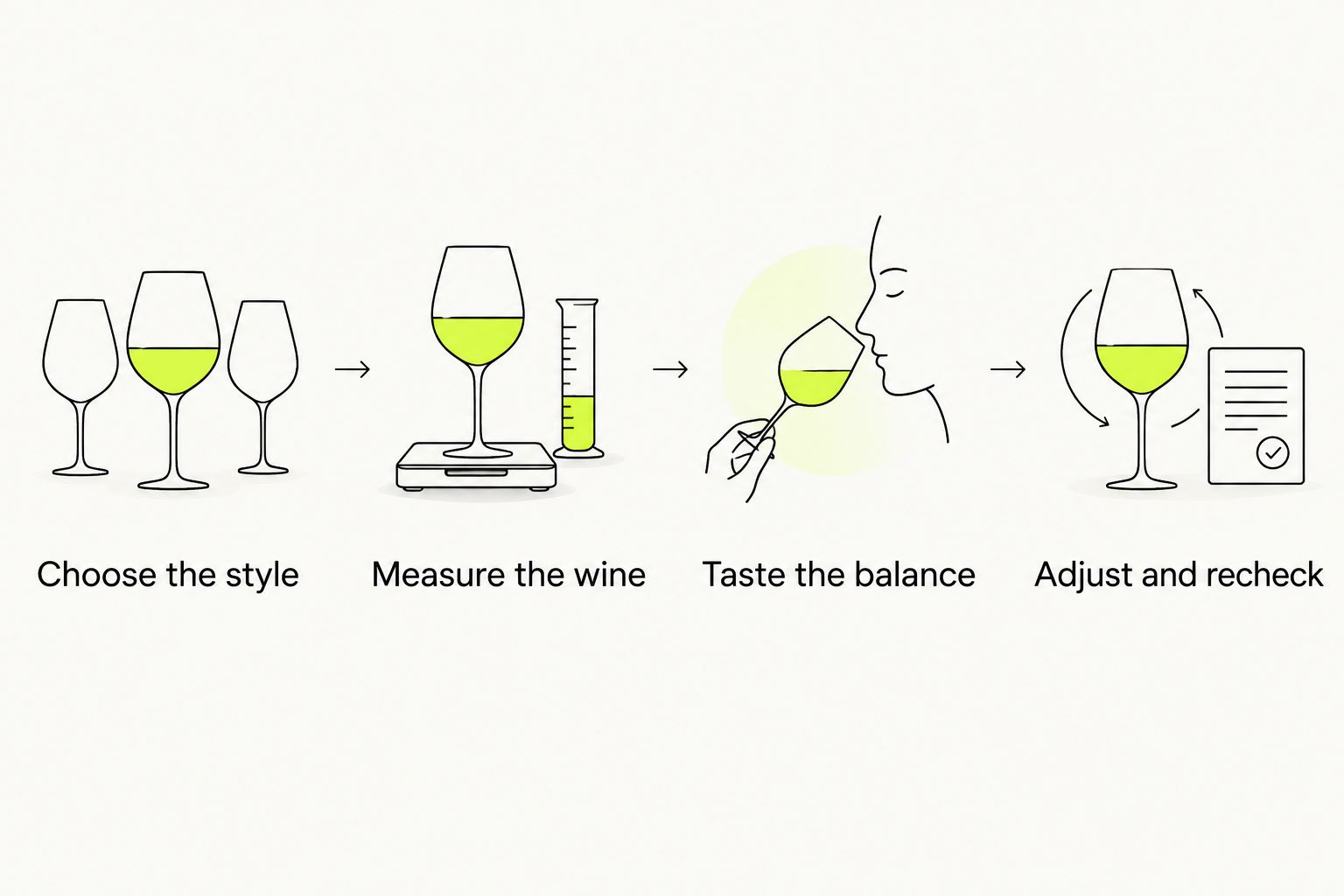
Use the 2026 serving ranges in this order. Identify the style, measure the wine and make the smallest useful adjustment before pouring again.
- Choose the style. Start with the table row that matches the wine’s body and whether it is sparkling. The overall 43–64°F envelope is not a recommendation for every bottle.
- Measure the wine. Check a small sample with a clean, food-safe thermometer. A refrigerator display measures its environment, not necessarily the liquid in your bottle.
- Taste the balance. Within the selected range, decide whether the wine feels muted, fresh, broad, tannic or noticeably warm from alcohol.
- Adjust and recheck. Cool the bottle if the wine feels too warm. Let a small pour warm naturally if the wine feels closed, then compare before changing the whole bottle.
Keep the bottle under control between pours. A correctly chilled first glass does not guarantee that the last glass will land in the same range, especially when the bottle stays on a warm table.
Use a thermometer without making it a ritual
A thermometer is most useful when you are learning what the bands feel like. Measure, taste and connect the reading with the wine’s texture and aroma. You do not need to interrupt every sip.
Follow the thermometer’s instructions and keep the probe clean. If you use an external bottle thermometer, remember that it reads the bottle surface rather than directly measuring the wine; treat that reading accordingly.
For a comparison, use the same wine and similar glasses. Changing the wine, glass and temperature at once makes it harder to understand which change affected your experience. Keep the experiment simple enough to repeat at dinner.
Where orange wine fits
Orange wine is made through skin contact with white grapes. That process can contribute texture and tannin, but it does not give every orange wine the same body or the same serving needs.
Do not assign orange wine a temperature solely because it looks amber. A lighter example and a more structured example need separate taste checks. Start with any bottle-specific serving guidance, then use the chart’s body-based distinctions to understand the adjustment.
Tinto Amorio’s orange wine category belongs in that conversation, but a category benchmark is not a product specification. This chart does not assign an exact serving temperature to an individual Tinto Amorio wine.
For the category-specific approach, read how to serve orange wine at the right temperature. The practical goal is to hear the wine’s fruit and aromatics without losing its refreshing edge.
Taste texture as well as aroma
A skin-contact wine can smell more expressive as it warms, while its palate changes too. Pay attention to both. More aroma does not automatically mean a better-balanced glass.
Notice whether the finish feels drying, whether the fruit remains clear and whether the wine still feels fresh with food. If the glass becomes more expressive but less enjoyable, the warmer temperature is not your target.
Avoid using color depth as a shortcut for structure. The visible color tells you less about the right serving temperature than tasting the actual wine and checking the producer’s instructions.
Natural and organic are not temperature bands
Natural wine and organic wine describe aspects of growing or making wine, not a single body level. Neither term replaces the sparkling, white or red style distinctions in the chart.
For Tinto Amorio natural wine drinkers, that means the service decision stays attached to the wine itself. A label term is not a reason to serve every bottle equally cold, equally warm or at an assumed room temperature.
The same applies to low-sulfite language. It does not establish a separate serving-temperature benchmark, and chilling does not change a wine’s alcohol content or make it a health product. Use temperature to improve the drinking experience, not to make health claims.
Cooling and warming: what each method does well
The 2026 chart tells you where to aim. Your cooling method determines how you get there, and each method has a limitation. Judge success by the temperature of the wine rather than by a fixed waiting period.
| Method | Best for | Advantage | Limitation |
|---|---|---|---|
| Refrigerator | Cooling before serving | Simple, controlled preparation | The wine’s temperature does not instantly match the refrigerator setting |
| Ice-and-water bath | Bringing a warm bottle down toward its serving range | Water contacts more of the bottle than loose ice alone | Continued chilling can take the wine below your target |
| Small pour in a glass | Assessing a wine that seems too cold | Lets you taste the wine as it warms | The glass no longer represents the bottle’s temperature |
| Cool holding area | Keeping a prepared bottle between pours | Reduces exposure to a warm table | A cool location still needs checking against your target |
For an ice bath, surround the bottle with ice and water and monitor the result. Do not assume that a particular cooling duration works for every bottle. Starting temperature, bottle size and the cooling environment all affect the outcome.
For warming, let a small pour sit naturally rather than heating the bottle. This gives you a taste comparison without committing all the wine to a warmer temperature. Keep the remaining bottle near the range you are assessing.
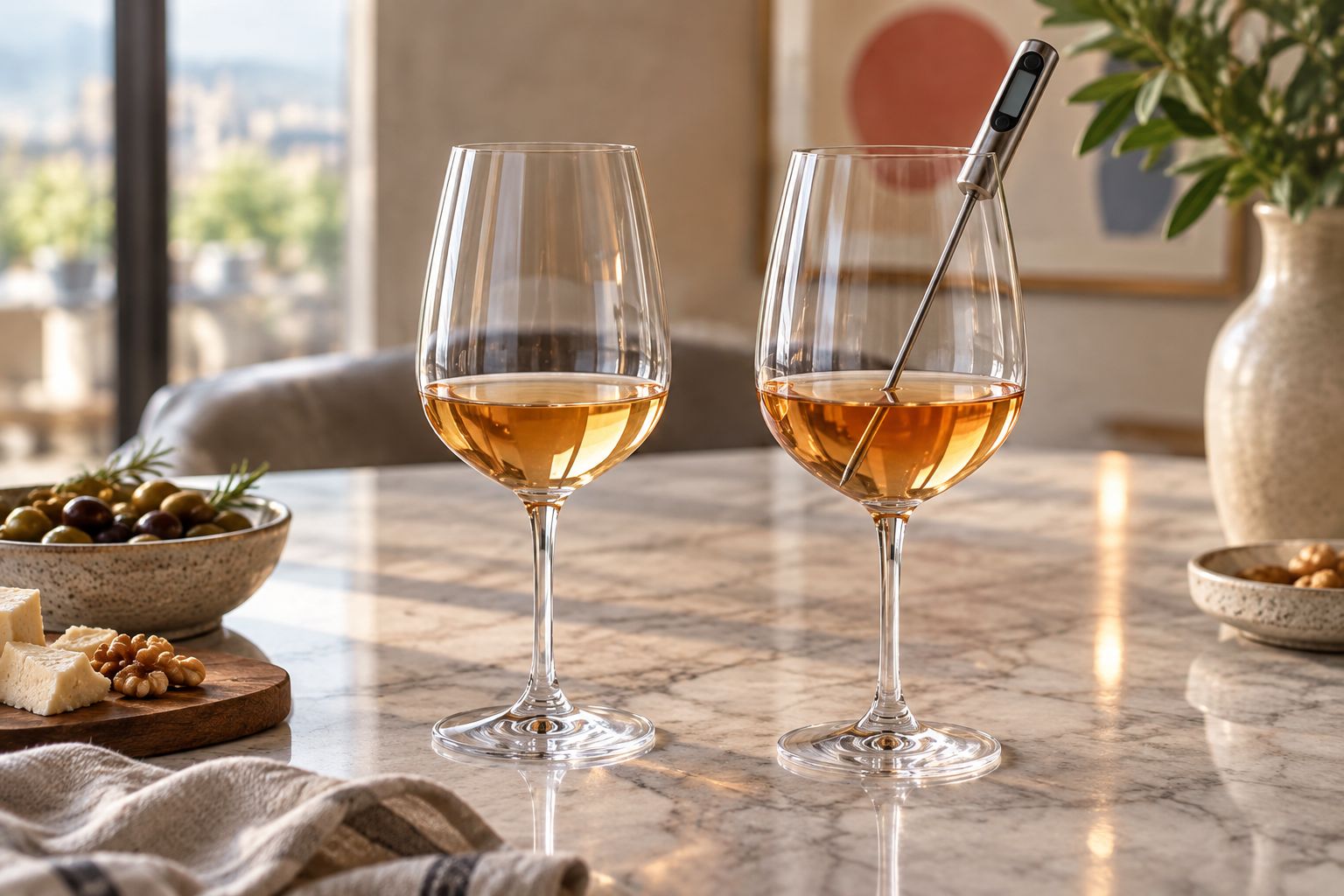
The refrigerator is a tool, not the benchmark. A wine can be correctly refrigerated and still need an adjustment before service; the reading and the taste tell you what to do next.
Common serving mistakes
Treating room temperature as a fixed instruction
“Room temperature” has no single reading. Compare your actual environment with the fuller-red benchmark of 59–64°F (15–18°C) instead of assuming that the dining room is suitable.
If the room is warmer than the upper end of that band, leaving the bottle on the table will not bring it toward the benchmark. Cool the wine and check it before the next pour.
Serving every white wine equally cold
The chart separates light-bodied whites at 43–50°F (6–10°C) from medium- and full-bodied whites at 50–55°F (10–13°C). That distinction gives textured whites room to show more than a cold first impression.
If a white seems nearly scentless, assess a small pour as it warms. Do not immediately conclude that the bottle lacks character; first remove excessive chilling as a possible explanation.
Using chilling to avoid assessing the wine
Cooling changes sensory expression. It does not repair a faulty wine. If something smells or tastes wrong, assess the bottle rather than repeatedly lowering the temperature to hide it.
Likewise, warming does not automatically improve a wine. Stay attentive to balance: fruit, freshness and structure should work together, not compete with alcoholic warmth.
FAQ
What temperature should wine be served at in 2026?
The WSET category ranges reproduced in this 2026 chart span 43–64°F (6–18°C). Sparkling and light-bodied white wines sit at the colder end, while medium- and full-bodied reds sit at the warmer end.
What is the best serving temperature for red wine?
Serve light-bodied reds at 55–61°F (13–16°C) and medium- or full-bodied reds at 59–64°F (15–18°C) as starting ranges. Taste within the appropriate range and follow any bottle-specific serving guidance.
Should white wine be served straight from the refrigerator?
Check the wine before serving it straight from the refrigerator. Light-bodied whites have a recommended range of 43–50°F (6–10°C), while medium- and full-bodied whites have a range of 50–55°F (10–13°C).
Should orange wine be served cold or at room temperature?
Choose an orange wine’s serving temperature by its body, texture and producer guidance, not its color alone. Taste a small chilled pour as it warms, and stop where aroma and freshness feel balanced.
Does natural wine need a different serving temperature?
Natural wine does not have one separate serving-temperature band. Use the wine’s style and body, then check the producer’s guidance for that bottle.
Is wine serving temperature the same as storage temperature?
Serving temperature and storage temperature serve different purposes. The chart describes the wine when you pour and drink it, not a long-term storage setting.
How long does it take to chill a bottle of wine?
There is no fixed chilling time that works for every bottle. Starting temperature, bottle size and cooling conditions change the result, so measure the wine against its serving range.
Can I serve sparkling wine at the same temperature as white wine?
Sparkling wine and light-bodied white wine share the 43–50°F (6–10°C) band in this chart. Medium- and full-bodied white wines have a warmer recommended band of 50–55°F (10–13°C).
One last thing
Your favorite serving temperature can change during the same glass. The first sip is not the final verdict: notice how the aroma, fruit and texture develop as the pour warms.
For your next dinner in 2026, keep the experiment small. Taste the same wine cooler and slightly warmer before changing bottles. You will learn more about serving it than you will from memorizing a single temperature for every wine of that color.