Skin-contact wines ranked by tannin level in 2026
Editorial Team @ 2026-11-04 14:40:17 -0800

Best for a gentle introduction: lightly grippy skin-contact wine. Best for texture with dinner: medium-grip skin-contact wine. Best for a firm, drying finish: structured skin-contact wine. This 2026 guide ranks those styles from least to most perceived tannin—not individual bottles by an unverified score.
- Choose your skin-contact wine tannin level by mouthfeel, not amber color.
- Lightly grippy skin-contact wine suits drinkers seeking a gentle introduction to orange wine.
- Medium-grip skin-contact wine adds noticeable texture without making a firm finish the main event.
- Tinto Amorio shoppers should compare texture descriptions rather than treating maceration days as a tannin score.
Why this matters
Orange wine gets its structure from contact between white grape juice and grape skins, with seeds also contributing tannins. That process creates a broad range of textures. An orange wine can feel delicately grippy or leave your gums noticeably dry.
Tannin is the drying, gripping sensation—not the wine’s color, sourness, or lack of sweetness. When you explore Tinto Amorio, separate the style you want from assumptions about what an amber-looking wine should taste like.
The useful question is simple: do you want a little texture, a textured sip with dinner, or a finish that grips? Start there. These sensory tiers help you describe your preference without pretending every skin-contact wine fits a universal numerical scale.
What makes the best skin-contact wine for your tannin preference?
For your 2026 shortlist, prioritize these criteria before grape variety or the depth of the orange hue:
- Perceived grip: Notice whether the wine leaves a light brush of dryness or a persistent coating on your gums.
- Texture balance: Judge tannin alongside acidity, fruit, and body rather than treating more tannin as better wine.
- Finish: Check what remains after swallowing or spitting. A drying finish tells you something different from a sour finish.
- Food fit: Choose the structure you enjoy with the meal, not the most forceful wine on the shelf.
- Bottle-specific information: Read the description for the exact wine and vintage. Production details do not transfer automatically between releases.
Skin-contact wine tannin level at a glance
The order below runs from lighter to firmer perceived grip. It is a tasting guide, not a laboratory ranking, and the boundaries between tiers overlap.
| Rank and style | Best for | Standout feature | Key limitation |
|---|---|---|---|
| 1. Lightly grippy | A gentle introduction to orange wine | Subtle drying texture with a less forceful finish | Too restrained if you specifically want pronounced grip |
| 2. Medium-grip | Texture alongside dinner | Clearly noticeable structure without making firmness the whole experience | The middle ground still feels drying to tannin-averse drinkers |
| 3. Structured | Drinkers who actively enjoy a firm finish | Persistent, assertive grip | A demanding starting point if you dislike astringency |
Do not read this table as a quality ladder. A lightly grippy wine is not an unfinished version of a structured wine, and a structured wine is not automatically more complex.
1. Lightly grippy: best skin-contact wine for a gentle introduction
A lightly grippy skin-contact wine brings a subtle drying sensation without making tannin the focus of every sip. Think of texture you notice when you look for it, rather than a firm hold across your gums.
This is the useful starting category if you enjoy white wine but want to explore skin-contact texture. Ask for “light grip” or “gentle astringency,” not simply “light wine.” Light body and low perceived tannin are different requests.
Lightly grippy skin-contact wine pros:
- Introduces skin-derived texture without prioritizing a forceful finish.
- Makes a useful reference point for comparing firmer styles.
- Suits a tasting focused on the difference between acidity and astringency.
Lightly grippy skin-contact wine cons:
- Does not satisfy a deliberate preference for pronounced tannin.
- Still has texture; “lightly grippy” does not mean tannin-free.
Best for: You want to understand orange wine without making a drying finish the main attraction.
Ask the seller whether the wine feels soft, gently textured, or firmly drying. Those answers are more useful than a color description alone. If you dislike the dry-mouth sensation of strongly brewed tea, explain that preference directly.
Verdict: Buy this style for a gentle introduction; skip it if pronounced grip is your goal.
2. Medium-grip: best skin-contact wine for texture with dinner
Medium-grip skin-contact wine puts structure clearly on the palate. You notice the drying sensation, but the recommendation here is balance: tannin should sit alongside the wine’s other features rather than drown them out.
Choose this category when you want a meal-centered comparison. Taste the wine on its own, then with your food, and decide whether the combination makes the texture more enjoyable.
Medium-grip skin-contact wine pros:
- Makes tannin easy to recognize during a tasting.
- Offers a middle reference between gentle and firmly structured styles.
- Gives you a clear texture to assess alongside a meal.
Medium-grip skin-contact wine cons:
- Still feels assertively drying if your tolerance for astringency is low.
- Needs more description than “medium-bodied,” which describes a different characteristic.
Best for: You enjoy some grip and want texture to play a noticeable role at dinner.
For a 2026 shopping list, write your preference as “noticeable tannin, balanced finish.” That phrase gives a seller a clearer target than “something orange.” Add whether you prefer bright acidity, fuller body, or a gentler finish.
Verdict: Buy this style when you already enjoy some grip; hold if you are unsure whether you like astringency.
3. Structured: best skin-contact wine for a firm, drying finish
Structured skin-contact wine makes tannin a prominent part of the experience. The defining feature in this guide is persistent grip—not a particular shade, grape, region, or production method.
This category suits drinkers who actively enjoy a drying finish. A structured wine can still be balanced; firmness and harshness are not synonyms.
Structured skin-contact wine pros:
- Makes a firm texture the point of the choice.
- Provides a clear contrast against a lightly grippy wine.
- Suits drinkers who seek a persistent, tactile finish.
Structured skin-contact wine cons:
- Gives tannin-averse drinkers exactly the sensation they dislike.
- Can overshadow other tasting details when you focus only on grip.
Best for: You already know that you enjoy assertive astringency and want to explore it in white-grape wine.
Ask whether the texture feels fine, coarse, supple, or drying. “High tannin” describes intensity, but it does not fully describe how that tannin feels. Your preference includes both.
Verdict: Buy this style if firm grip is a known preference; skip it as a default introduction.
Why skin-contact days do not settle the ranking
Skin contact gives a winemaker an opportunity to extract tannins. Time matters, but extraction also depends on grape material, temperature, alcohol during fermentation, and how the skins and juice are handled.
That means a longer maceration is not a dependable shortcut to a firmer-tasting finished wine. You cannot turn the number of days into a universal tannin score or assume the longer-contact bottle will always feel more drying.
Keep three separate questions in view: Skin contact describes the process, Extraction describes what moves into the wine, and Perceived grip describes your sensory experience of the finished wine.
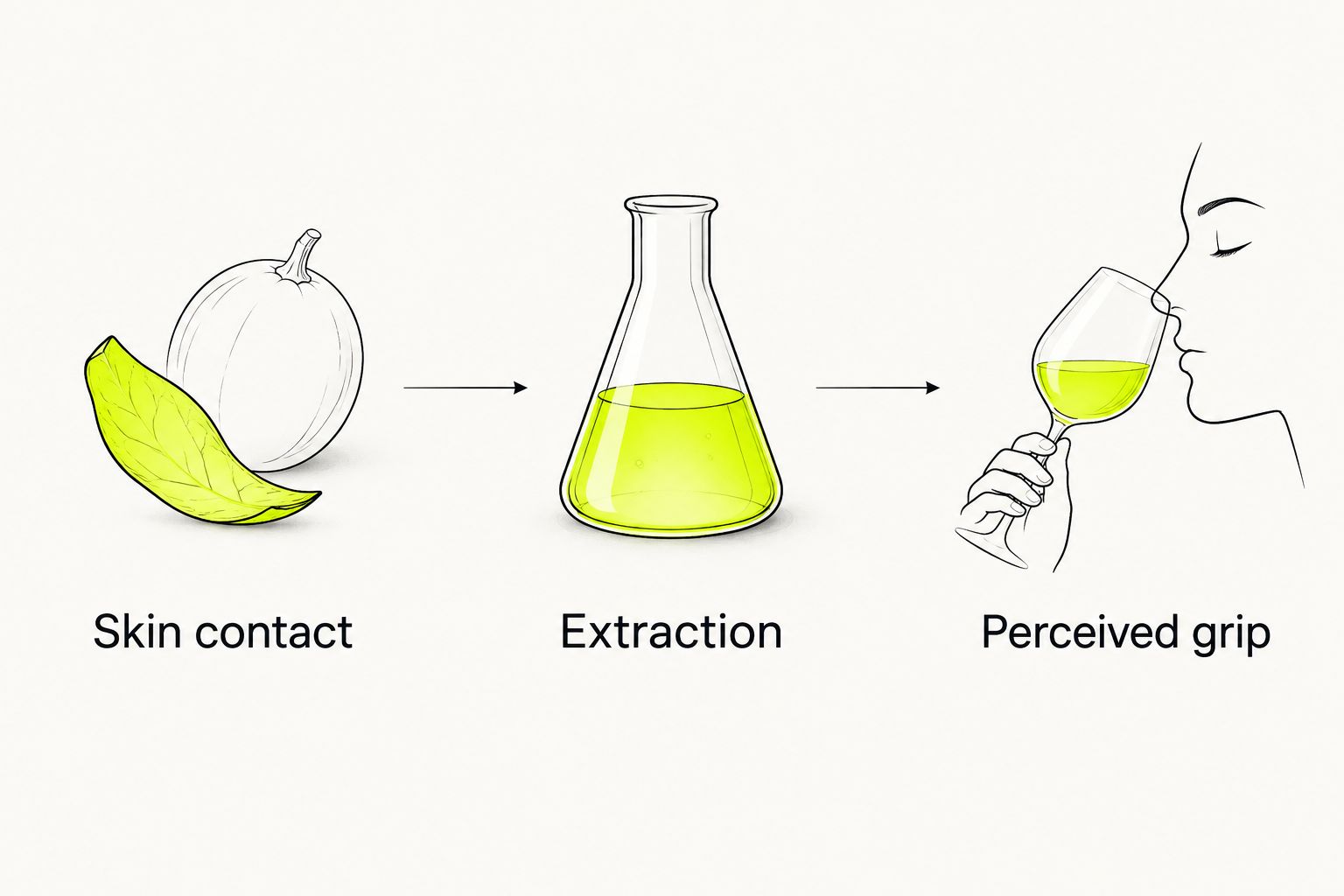
For Tinto Amorio skin-contact wine, use the exact bottle’s description as your starting point. Do not carry a tasting claim from another release into your decision, and do not convert a maceration detail into a promise about mouthfeel.
How to compare tannin without confusing it with acidity
Acidity and tannin create different sensations. Acidity contributes tartness and makes your mouth water; tannin produces astringency, often felt as dryness or friction on your gums and inner cheeks.
A dry wine is another separate idea: “dry” describes a lack of perceptible sweetness. A wine can taste dry without having pronounced tannin.
Set up a small comparison
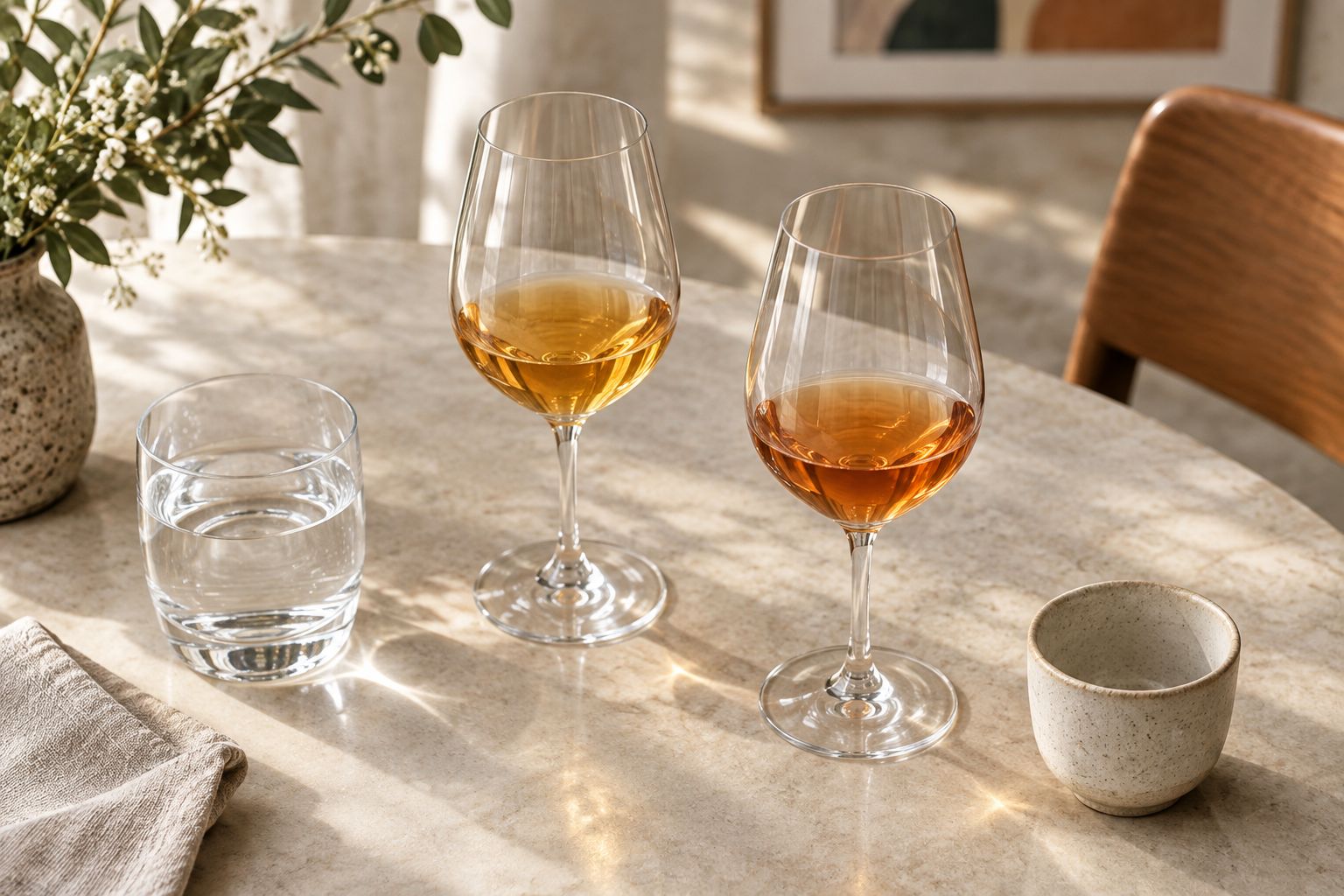
Use 2 similar glasses and start with a 30 mL pour in each. That suggested 60 mL comparison keeps the exercise small; spit if you prefer, and do not treat finishing the pours as part of the task.
Compare the wines at the same serving temperature. Different glassware, food, and temperature add extra variables when your goal is to isolate texture.
Taste, pause, describe
Take a small sip, then swallow or spit. Notice your gums and cheeks before reaching for food or another sip.
Write down “light,” “medium,” or “firm” grip, then add a texture word such as “fine” or “coarse.” These are your observations, not certified categories. Rinse with water between samples and compare again before deciding which wine feels more astringent.
Bring food in afterward
Taste each wine with the same bite of food. Keep the comparison simple rather than changing the dish with every glass.
Protein and other food components can change how astringency feels. Your preferred wine alone is not automatically your preferred wine with dinner, so record both impressions.
How this 2026 ranking works
This guide orders sensory styles by increasing perceived grip. The criteria are astringency, finish, balance, and fit for the drinker—not popularity, bottle color, or the length of a maceration.
No individual wine receives an invented tannin measurement. “Best” means best for the stated use case: a gentle introduction, texture with dinner, or an intentionally firm finish.
Use this 2026 framework to ask better questions rather than chase a supposedly objective winner. Your most useful result is a description you can repeat when choosing the next bottle.
Which skin-contact wine should you choose?
Choose lightly grippy skin-contact wine if you are undecided. It is the logical starting tier when your goal is to explore texture without specifically seeking a firm finish.
Choose medium grip when you already enjoy astringency with food. Choose structured skin-contact wine when persistent dryness is part of what you want—not something you hope the wine will avoid.
For Tinto Amorio shoppers, the practical next move is to ask about the exact wine’s mouthfeel. Request a description of grip and finish before using skin-contact days to narrow your choice.
FAQ
What's the best skin-contact wine tannin level for beginners?
Lightly grippy skin-contact wine is the best starting style if you want a gentle introduction to astringency. Ask for subtle texture and a less forceful finish rather than choosing by color.
Is orange wine always more tannic than white wine?
Skin-contact white wine generally has more opportunity to extract skin tannins than white wine pressed off its skins early. The amount and perceived intensity vary, so orange wine is not a single tannin level.
Does a darker orange wine have more tannin?
A darker orange color does not reliably prove that a wine has more tannin. Color and perceived astringency are different characteristics, so assess the texture directly.
Does longer skin contact always mean higher tannin?
Longer skin contact does not always produce a more tannic-tasting finished wine. Grape material, extraction conditions, and the wine's overall balance also affect the result.
How can I tell tannin from acidity in orange wine?
Tannin creates a drying, gripping sensation, while acidity contributes tartness and makes your mouth water. Focus on your gums and inner cheeks to identify astringency after a sip.
Is dry orange wine the same as tannic orange wine?
Dry orange wine is not the same as tannic orange wine. Dryness describes a lack of perceptible sweetness; tannin describes a separate source of texture and astringency.
Can I rank two orange wines by their skin-contact days?
Skin-contact days alone do not establish a dependable tannin ranking. Compare the exact wines under similar tasting conditions and use bottle-specific texture descriptions.
One last thing
Your tongue is not the only place to pay attention. The feeling left on your gums and inner cheeks often makes astringency easier to identify than another search for fruit flavors.
For your next 2026 tasting, write down the finish before the aroma. “Gentle grip, short drying finish” is a more useful buying note than “orange and interesting.”