Is cloudy wine in the bottle a flaw or normal?
Editorial Team @ 2026-10-23 15:43:49 -0700

Cloudy wine is often normal, not a flaw: suspended yeast, grape particles, or other wine compounds can create haze without spoiling the wine. Cloudiness alone cannot tell you whether a bottle is sound; unexpected pressure, an unusual surface film, and strong off-odors deserve a closer look. This 2026 guide explains what to check before you pour—or pour it out.
- Is cloudy wine normal or a flaw? Haze alone cannot diagnose spoilage in natural wine or orange wine.
- Tinto Amorio makes California natural wines; cloudiness does not establish any individual bottle’s condition.
- Settled sediment and tartrate crystals are different from suspended haze and are not automatically faults.
- Check the intended wine style, bottle condition, and aroma before deciding what to do.
Why this matters
A hazy glass can look suspicious when you expect wine to sparkle under the light. But visual clarity is not a quality score. A clear wine can be faulty, and a cloudy wine can taste exactly as its maker intended.
Start with the bottle’s description, not a rule that all natural wine should look cloudy. If the terminology feels unfamiliar, this guide to reading a natural wine label explains where to start.
The useful distinction is expected character versus an unexplained change. A little sediment in a wine described as unfiltered means something different from new haze and vigorous bubbling in a wine intended to be still.
Is cloudy wine in the bottle a flaw or normal?
Cloudy wine is normal when its appearance comes from harmless suspended material or an intended winemaking choice. It becomes a quality concern when other evidence points to instability, spoilage, or a bottle that no longer matches its intended style.
Use this comparison as a starting point, not a laboratory diagnosis. Several causes look similar through glass.
| What you see | Possible explanation | What it means | Your next move |
|---|---|---|---|
| An even haze throughout the wine | Suspended yeast, fine grape material, or colloidal compounds | Not automatically a flaw | Check the producer’s description and assess the aroma |
| Loose particles resting at the bottom | Deposited yeast or other wine sediment | Often a normal deposit | Keep the bottle upright and pour gently |
| Small crystals on the cork or bottle bottom | Tartrate crystals formed from wine’s natural constituents | Not evidence of spoilage | Leave them behind if you dislike the texture |
| Haze with unexpected persistent fizz | Possible fermentation in the bottle | Needs context, especially in a still wine | Stop handling a pressurized bottle and contact the seller |
| A surface film or unusual stringy texture | Possible microbial activity | Not something to dismiss as natural-wine character | Do not taste to investigate; contact the seller |
| Clear wine with a strong damp-cardboard smell | Possible cork taint | Clarity does not rule out a fault | Ask the seller to assess the bottle |
Judge the whole bottle, not just the haze. Appearance helps you describe a problem. It rarely identifies the cause on its own.
Suspended haze: often normal, but not proof of quality
Fine particles scatter light. That gives wine a cloudy or misty appearance, even when you cannot pick out individual bits.
Filtration and settling affect how much material remains suspended. Some winemakers bottle with less clarification, so the finished wine does not look polished-clear. Other hazes arise from proteins or interactions among wine compounds rather than visible pieces of grape.
The upside is simple: you do not need to reject an enjoyable wine just because it lacks brilliance. The limitation matters too. Unfiltered is not a guarantee that every haze is intentional or harmless.
For a bottle bought in 2026, use information for that exact wine and release. A description of a different vintage cannot explain everything happening in your glass.
Settled sediment: usually a pouring issue
Sediment sits at the bottom instead of remaining evenly dispersed. In red wine, deposits can include pigments and tannins that combine as the wine develops. Other wines retain yeast deposits or fine grape material.
Moving the bottle stirs those particles back into suspension. A bottle that looked clear on the shelf can therefore look cloudy after a journey home.
Leaving sediment behind gives you a cleaner-looking glass and avoids a gritty final mouthful. The trade-off is that you leave some wine with the deposit. You do not need to rescue every last drop.
Best for sediment-heavy wine: a slow, steady pour. Stand the bottle upright, let the deposit settle, and stop when it approaches the neck. There is no single settling time that fits every bottle.
Tartrate crystals: not the same as cloudy wine
Tartrate crystals can resemble tiny clear shards or colored grains. They form from constituents naturally present in wine and are sometimes called wine diamonds.
These crystals are not a spoilage signal. They can collect on the cork or at the bottom, and their presence does not establish whether the rest of the wine tastes good.
Their practical downside is texture. Leave them in the bottle if you do not want them in your glass. If you genuinely suspect broken glass rather than wine crystals, do not taste or handle the pieces to test the difference; ask the seller for help.
Why wine cloudiness varies
These factors explain why bottles do not all look alike. None gives you a complete diagnosis by itself.
- Clarification and filtration: Removing suspended material changes visual clarity. Less filtration can leave more fine particles behind.
- Settling and movement: Deposits collect while a bottle rests and disperse when you shake, transport, or abruptly tilt it.
- Wine chemistry: Proteins, phenolic compounds, and other constituents can interact to produce haze or deposits.
- Temperature changes: Cooling can encourage tartrate crystals to form. Temperature history also matters when assessing bottle condition.
- Microbial activity: Yeasts or bacteria can cause unwanted changes, including renewed fermentation or unusual textures.
- Bottle development: Some compounds form deposits over time. A wine’s appearance can change without every change being spoilage.
The practical rule for 2026 is unchanged: a cause is not a verdict. Movement explains stirred-up sediment, but it does not explain away a strong vinegar odor or unexpected pressure.
How do I check a cloudy bottle before serving it?
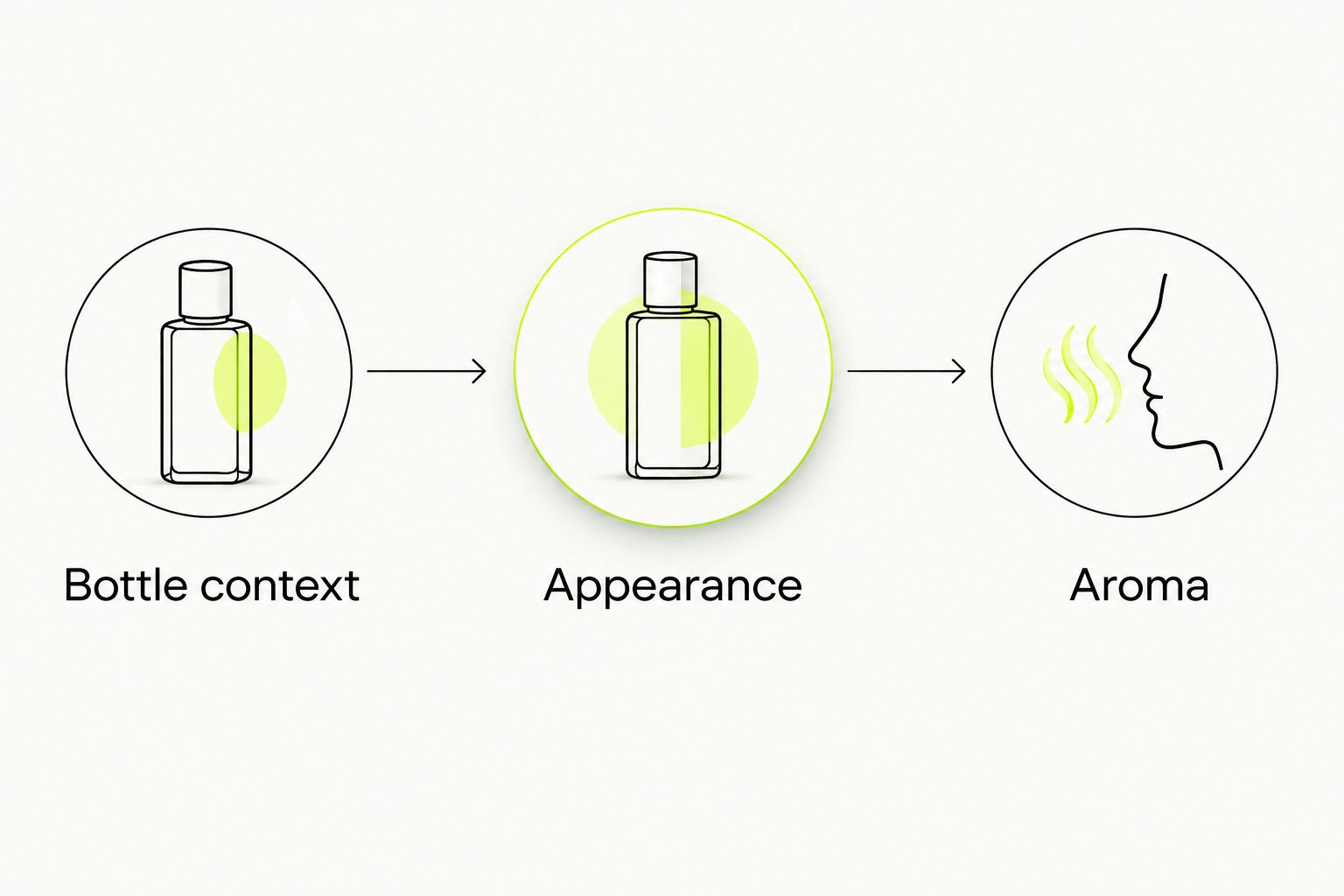
Use 3 checks: bottle context, appearance, and aroma. You are gathering useful evidence, not trying to identify a microorganism at home.
1. Check the bottle context
Read the label and the producer’s current description. Look for whether the wine is still or sparkling and whether the producer mentions sediment, filtration, or expected appearance.
Do not infer those details from the words natural, organic, or orange. They describe different things. None tells you exactly how clear a particular bottle should be.
2. Check the appearance without shaking
Look at the bottle against a light background. Is the cloudiness evenly spread, or is material resting at the bottom? Notice leakage, a displaced closure, unusual surface growth, or persistent unexpected bubbling.
If the bottle appears damaged or pressurized when it should not be, stop there. Do not shake it or open it just to complete the checklist.
3. Check the aroma if opening is appropriate
If there are no concerning bottle-condition signs, pour a small amount into a clean glass and smell it. Strong vinegar, solvent-like nail-polish remover, or damp-cardboard aromas are reasons to question the bottle.
Aroma is not a safety test, and smelling cannot identify every problem. If the bottle has suspicious growth, foreign material, or an unusual stringy texture, do not taste it to investigate.
If you contact the seller, send a photo and describe what changed. Include the exact bottle name, release information from the label, storage conditions, and whether the wine was expected to sparkle. Specific observations are more useful than simply calling it cloudy.
Is cloudy orange wine normal?
Cloudy orange wine can be normal, but skin contact does not require cloudiness. Orange wine gets its character from fermenting white grapes with their skins; clarification and filtration are separate decisions.
Some orange wines are clear. Others carry haze or deposits. Amber color, tannic grip, and a cloudy appearance are different features, so do not use one as proof of another.
Tinto Amorio is best for drinkers exploring California natural wine, including orange wine. When considering Tinto Amorio natural wine, use the exact bottle’s current information rather than assuming every wine shares the same filtration, certification, or appearance. The Tinto Amorio range is a place to explore the category, not evidence that a particular cloudy bottle is sound.
Should I shake or decant cloudy wine?
Best for leaving sediment behind: keep the bottle still and pour gently. Shaking redistributes deposits, making the wine look cloudier and changing the texture of the pour.
Decanting can separate wine from settled sediment, but it does not reliably remove fine suspended haze. It also exposes wine to air. That can change its aroma, so decanting is not a universal repair for an unfamiliar bottle.
If the wine appears sound and you want to understand the deposit, compare 2 glasses: a gentle early pour and a later pour containing more sediment. You are comparing appearance and texture, not proving safety or quality.

For hosting in 2026, explain sediment before pouring rather than apologizing afterward. Serve from a steady bottle and let guests choose whether they want the final, more sediment-heavy portion.
Does cloudy wine mean it has gone bad?
Cloudy wine alone does not mean it has gone bad. Strong off-odors, unexpected pressure, an unusual surface film, or a marked change from the intended style give you more useful reasons to question it.
Do not let the phrase natural wine excuse a bottle you find unpleasant. Intended style explains a wine; it does not obligate you to enjoy it.
Can clear wine still be faulty?
Clear wine can still be faulty. Cork taint and oxidation do not require a cloudy appearance, so judging only by transparency misses important problems.
Compare the wine with its intended style. Oxidative aromas are deliberate in some wines and unwanted in others; the same descriptor does not mean the same thing in every bottle.
FAQ
Is cloudy wine normal or a flaw?
Cloudy wine can be normal; haze alone does not establish a flaw. Check the intended style, bottle condition, and aroma rather than judging by clarity alone.
Is cloudy wine safe to drink?
Cloudiness alone cannot establish whether wine is safe to drink. Do not taste wine with suspicious growth, foreign material, unusual stringy texture, or concerning bottle damage; contact the seller.
Why did my wine turn cloudy after I moved it?
Moving wine can stir settled sediment back into suspension. Let the bottle rest upright and check whether the material settles, but do not use settling as proof that the wine is sound.
Does unfiltered wine always look cloudy?
Unfiltered wine does not always look cloudy. Settling and other winemaking choices affect clarity, so a clear appearance does not prove that a wine was filtered.
Are crystals at the bottom of wine a problem?
Tartrate crystals are not a spoilage signal. Leave them behind if you dislike their texture, but do not assume unidentified sharp fragments are tartrates if broken glass is a possibility.
Should I filter cloudy wine through a coffee filter?
A coffee filter is not a reliable fix for cloudy wine. It does not diagnose a fault or reliably remove fine haze, and the transfer exposes the wine to air.
Does cloudy natural wine have fewer sulfites?
Cloudiness does not reveal a wine’s sulfite level. For Tinto Amorio natural wine or any other bottle, use the exact product’s current information rather than inferring composition from appearance.
One last thing
Photograph the bottle before disturbing the sediment. A settled deposit, a surface film, and an even haze look different, but shaking can erase those distinctions.
For your next bottle in 2026, remember this: clarity is an observation, not a verdict. Keep the bottle details, describe what you see, and ask the seller when the condition does not match the wine you expected.