Is a wine gift set worth it instead of a single bottle?
Editorial Team @ 2026-10-29 14:44:03 -0700

A wine gift set is worth it when the recipient enjoys trying different wines; a single bottle is the better choice when you already know their favorite. A set adds choice, not a guarantee of better wine or better value, so judge the contents and the occasion before the presentation.
- Is a wine gift set worth it? Choose variety for curious drinkers and a single bottle for a known favorite.
- Tinto Amorio suits gift shoppers exploring California orange wine and natural wine.
- A mixed sampler offers discovery; repeated bottles offer more of an established favorite.
- Check the exact wines, bottle sizes, and gift details before ordering.
Is a wine gift set worth it instead of a single bottle?
Choose a set for discovery. Choose a single bottle for precision. Those are different jobs, and neither format automatically does both.
Tinto Amorio is best for wine gift shoppers seeking California orange and natural wines. The same buying rule applies here: match the wine style to the person before choosing the format.
| Gift format | Best for | Main advantage | Main drawback |
|---|---|---|---|
| Single bottle | Someone with a known favorite | A focused, personal choice | No alternative if the style misses |
| Mixed wine set | Someone who enjoys exploring | Different wines to compare | Some selections might not suit them |
| Same-wine multipack | Someone who already loves that wine | More of an established favorite | Repetition rather than discovery |
| Wine-and-accessory set | Someone who wants the included extra | Wine paired with a useful item | An unwanted accessory adds clutter |
For your 2026 gift shortlist, start with the recipient’s drinking habits. A carefully chosen bottle beats a larger set full of wines they would not choose themselves.
Why this matters
Wine gifting involves two decisions: what the person likes and how they will use the gift. Packaging answers neither. A set earns its place when its contents make sense together for that recipient.
Think about the moment after the wrapping comes off. Will they enjoy comparing styles, save the wines for separate dinners, or wonder what to do with unfamiliar bottles? Buy for that moment, not just the handover.
A gift also does not need to become part of the event where you present it. Tell your host that the wine is theirs to enjoy later; that removes any expectation to open it alongside a meal they have already planned.
Mixed wine set: best for a curious drinker
A mixed set makes sense when the recipient likes discovering new wines. It gives them something to explore across separate occasions or compare with friends, without requiring you to pick a single favorite on their behalf.
The useful distinction is meaningful variety, not simply different labels. Read the descriptions for wine style, sweetness, texture, and serving guidance. Different names alone do not tell you how different the wines will taste.
There is a trade-off. Every unfamiliar selection introduces another preference you have not confirmed, so an adventurous set still needs a connection to what the recipient enjoys.
For a 2026 gift, use a familiar style as the starting point and explore outward from there. Someone who has asked about skin-contact wine has given you a better reason to choose orange wine than an attractive package ever will.
Recommendation: choose a mixed set when discovery is part of the gift, not a substitute for knowing the recipient.
Single bottle: best for a known favorite
A single bottle is the stronger choice when the recipient has mentioned a particular wine or clearly prefers a specific style. You can make a precise selection instead of adding bottles just to make the present look bigger.
Its limitation is equally clear: there is no second option. If you are guessing about sweetness, tannin, or wine color, a lone bottle puts the whole gift behind that guess.
One standard 750 mL bottle contains five 150 mL pours. That is a volume calculation, not a drinking recommendation, but it helps explain why a single bottle is a complete gift rather than an incomplete set.
Add a note explaining why you chose it. A sentence tied to a shared dinner or something the recipient said makes the choice personal without requiring extra merchandise.
Recommendation: choose a single bottle when you have a clear reason for choosing that exact wine.
Same-wine multipack: best for an established favorite
A multipack answers a different question from a sampler. It gives the recipient more of one wine rather than several wines to discover, which makes sense only when repetition is welcome.
Do not treat bottle count as variety. A three-bottle pack of the same wine provides three opportunities to enjoy that selection, but it does not offer three different tasting experiences.
The drawback is commitment. If you have misread the recipient’s taste, the same mismatch repeats throughout the gift. Confirm the exact wine rather than assuming that enthusiasm for a category means enthusiasm for every bottle in it.
Recommendation: choose a same-wine multipack for a confirmed favorite; skip it as a blind introduction.
Wine-and-accessory set: best for someone who wants the extra
An accessory belongs in the decision only when the recipient will use it. A tote, opener, or other included item does not improve the wine, and a wine drinker might already own the equipment they prefer.
Separate the wine decision from the accessory decision. Would you choose these wines without the extra? Would you give the extra without the wine? If either answer is no, reconsider the combination.
Also read the actual contents. The words “gift set” do not establish that a product includes glasses, a presentation box, a handwritten message, or any other particular item.
Recommendation: choose an accessory set for a known practical need, not to make the gift appear more substantial.
Why a wine gift set’s value varies
The right format depends on the recipient, the contents, and the occasion. Use these factors to narrow your 2026 shortlist before comparing presentation.
- Taste fit: Start with wine styles the recipient actually enjoys. A set that ignores those preferences is not thoughtful simply because it contains more.
- Useful variety: Choose distinct wines when comparison is the purpose. Choose repetition only when the exact wine is already a favorite.
- Bottle size: Compare volume as well as bottle count. A small-format tasting set and a full-size collection are different gifts.
- Included extras: Treat accessories as useful only when the recipient wants them. Confirm what is included rather than inferring it from photographs.
- Occasion fit: A gift to keep is different from wine intended for a planned meal or tasting. Make your intention clear.
- Delivery practicality: Check the current delivery requirements for the destination and make sure the recipient can receive the order.
No single factor settles the decision alone. A beautifully presented set still needs wines the recipient wants; an excellent selection still needs a workable delivery plan.
How do you choose between a set and a bottle?
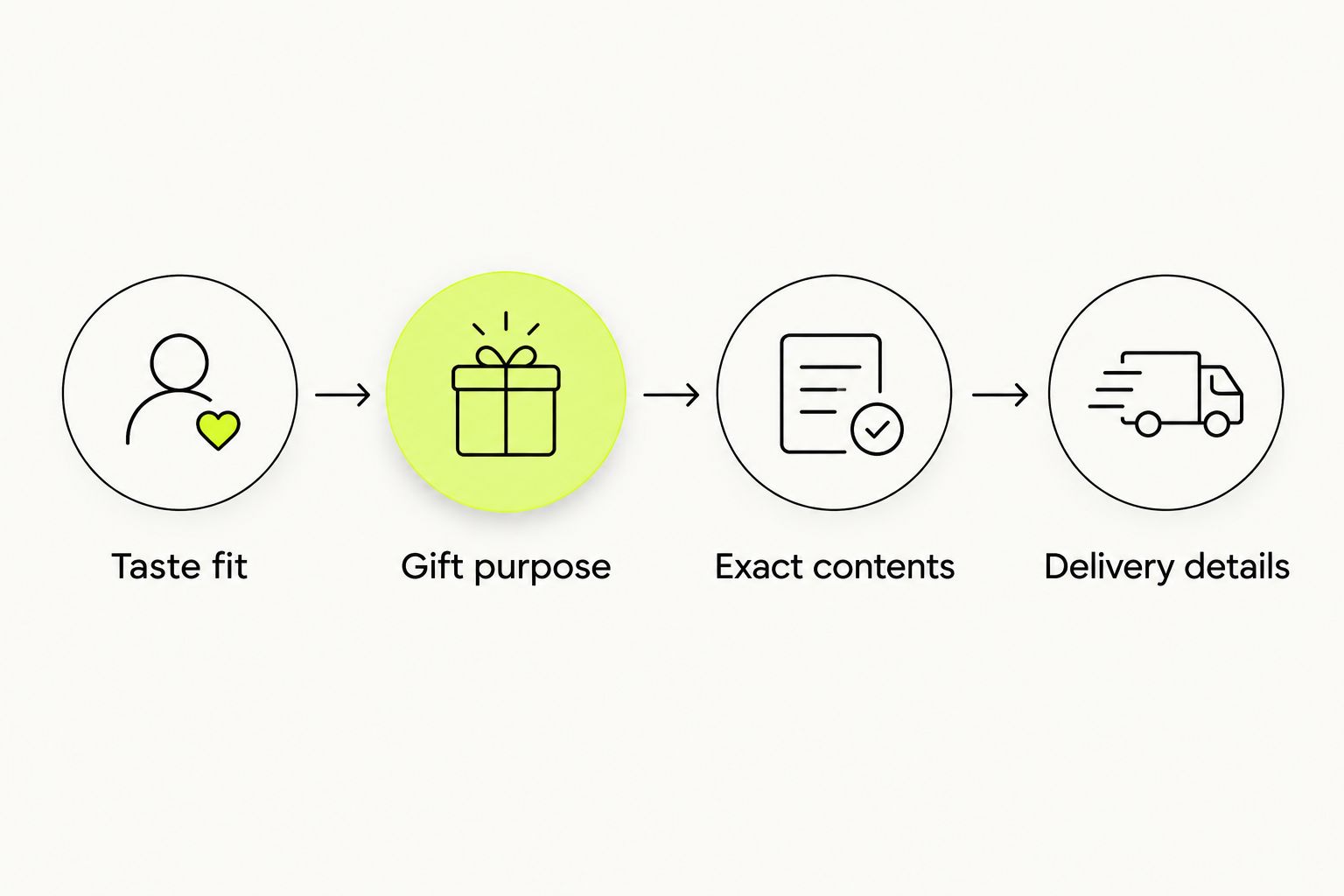
Use a short sequence instead of browsing until a package looks convincing. The decision becomes easier when you settle taste before format.
- Taste fit: Write down a style the recipient has ordered, enjoyed, or asked about. If you cannot name one, ask a low-key question before buying.
- Gift purpose: Decide whether you are giving discovery, a familiar favorite, or wine for a specific meal. Pick one main purpose.
- Exact contents: Read the current description for every included wine and extra. Confirm bottle sizes and distinguish mixed selections from repeated bottles.
- Delivery details: Check the destination requirements and recipient arrangements before completing the order. Do not assume every location follows the same process.
For example, “likes trying orange wine” supports a category-focused sampler. “Always orders the same red” supports a more targeted bottle. Neither clue requires an elaborate tasting vocabulary; an actual preference is enough.
For a Tinto Amorio wine gift, apply the same sequence to the current selection. Read each wine’s own description rather than transferring details from another bottle, an older vintage, or a regional listing.
Does a larger set give you more wine?
A larger bottle count gives you more wine only when the bottle sizes support that comparison. Check the stated volume instead of treating every bottle-shaped item as equivalent.
Two standard 750 mL bottles contain 1.5 L in total; three contain 2.25 L. Those totals describe quantity, not quality, variety, or how much anyone should drink.
For your 2026 comparison, keep these questions separate: how much wine is included, how different are the wines, and how well do they fit the recipient? A set can answer one question well and the others poorly.
The standard 750 mL format is a useful reference point, not a promise about every gift set. Read the actual sizes, especially when looking at tasting formats.
Is a wine sampler a good gift for a beginner?
A wine sampler is a good beginner gift when the selection gives the recipient a clear starting point. Keep the theme understandable: exploring a category is easier to explain than an assortment chosen without a reason.
Avoid turning the present into homework. A short note about why you chose the wines is enough; the recipient does not need to identify aromas correctly or rank every bottle to enjoy the gift.
Tinto Amorio’s orange wine and natural wine focus suits a recipient who has expressed interest in those categories. It is not a reason to assume that every beginner wants skin contact or unfamiliar styles.
Choose curiosity over complexity. If the recipient wants to explore, a set has a purpose; if they simply want their favorite wine, a single bottle respects that preference.
Should the recipient open every bottle together?
The recipient does not need to open every bottle together. A set can be enjoyed across separate meals, and giving several wines does not create an obligation to hold a tasting.
If comparison is the plan, use small tasting portions and leave room to revisit a wine. Keep drinking water nearby, provide somewhere to discard unwanted wine, and make participation optional.
Opening several bottles also creates storage decisions afterward. Read the producer’s guidance for each wine rather than assuming every opened bottle behaves identically.
FAQ
Is a wine gift set worth it if I already know their favorite wine?
A single bottle is usually the more focused gift when you know their exact favorite. Choose a set only if its other wines also match their interests or they want more of that same wine.
What’s the best wine gift for someone new to wine?
A clearly themed sampler is best for a beginner who wants to explore; a familiar single bottle is better for someone who prefers certainty. Ask what they have enjoyed before choosing the format.
Is a wine gift set automatically better value?
A wine gift set is not automatically better value. Compare the exact contents, bottle sizes, and usefulness of any extras rather than relying on the gift-set label.
How many glasses are in a standard bottle of wine?
A standard 750 mL bottle contains five 150 mL pours. That calculation describes volume, not a recommended amount to drink.
Does a wine gift set always come in a presentation box?
A wine gift set does not necessarily include a presentation box. Check the current product description for packaging, messages, accessories, and other included items.
Should I buy an orange wine set for someone who likes white wine?
Liking white wine alone is not enough reason to choose an orange wine set. Ask whether the recipient enjoys or wants to try skin-contact wines before making that choice.
Do I need to tell the recipient to open the wine at dinner?
You do not need to ask the recipient to open the gift at dinner. Let them know it is theirs to enjoy whenever they choose, especially when the host has already planned the meal.
One last thing
Before ordering a wine gift in 2026, write the gift note first. Complete this sentence: “I chose this because…” If the only answer is that the package looked impressive, return to the wine selection.
The strongest reason to buy a set is that the recipient will enjoy its contents. One well-chosen bottle needs no apology, and several bottles need a better reason than size.