Does natural wine need to breathe before drinking?
Editorial Team @ 2026-10-23 15:44:14 -0700

Natural wine does not automatically need to breathe before drinking. Taste a small pour first: if it smells appealing and tastes balanced, serve it; if the aromas seem muted or a sulfurous smell masks the fruit, try gentle swirling before considering a decanter. Too much air can flatten delicate aromas and release bubbles, so give the wine air only when the taste improves with it.
- Does natural wine need to breathe before drinking? Not always; taste before deciding to aerate.
- Start natural wine in a glass; use a decanter only when gentle swirling improves the wine.
- Keep sparkling wine out of a decanter when you want to preserve its bubbles.
- Tinto Amorio makes California natural wines; the category alone does not determine whether a bottle needs air.
Why this matters
Opening a bottle should not become a waiting game. The useful rule for 2026 is simple: respond to what is in your glass, not a blanket instruction attached to the words natural wine. A fresh, expressive wine gains nothing from a mandatory pause.
Tinto Amorio is best for drinkers exploring California natural wines. That describes a starting point for discovery, not a serving schedule. Natural wine covers different grapes, textures, winemaking choices, and ages; those differences matter more than the category name when you decide whether to add air.
You also need to separate two questions: does this wine need oxygen, or is it simply too cold to show much aroma? Leaving a glass on the table changes both exposure and temperature. Without tasting along the way, it is easy to credit breathing for a change caused partly by warming.
Does natural wine need to breathe before drinking?
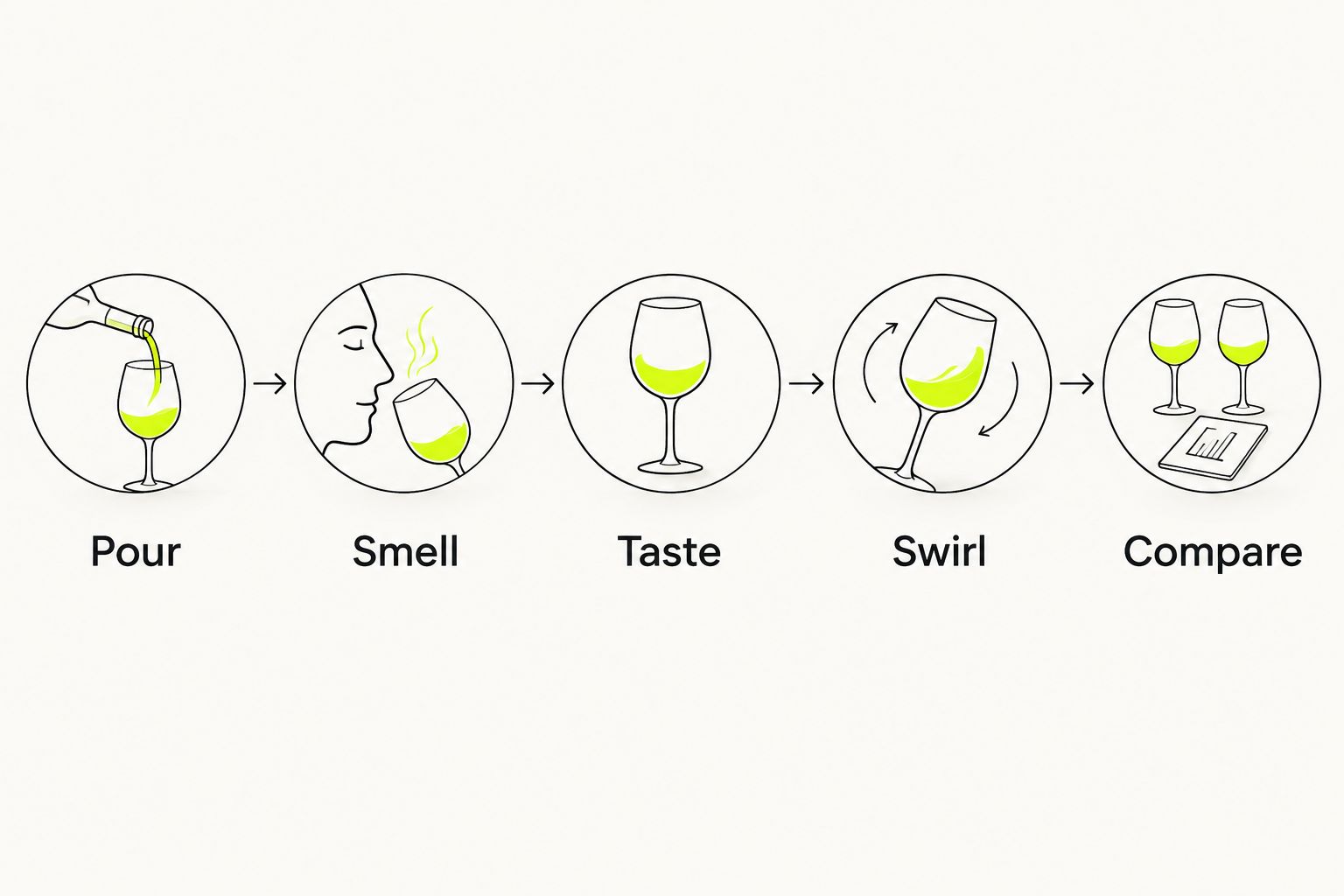
No. Natural wine needs air only when that exposure makes the particular wine more enjoyable. Start with the least intervention: pour, smell, taste, then swirl if needed. A decanter is an option, not an entrance requirement.
Use this comparison to choose your next move. Each method has a benefit and a trade-off; none is automatically right for every natural wine.
| Method | Best for | What it does | Main drawback |
|---|---|---|---|
| Serve after tasting | Wine that already smells expressive and tastes balanced | Preserves the wine's starting character | Does not test whether air would improve a muted wine |
| Swirl in the glass | Testing a still wine before treating the whole bottle | Increases contact with air and releases aromas | Also releases dissolved gas and changes the sample |
| Use a decanter | Still wine that improves with air, or wine needing separation from sediment | Exposes more wine to air or separates a careful pour from sediment | Commits more of the wine to exposure |
| Leave the bottle uncorked | Keeping the remaining wine in its original container during service | Exposes the wine at the neck | Provides much less exposed surface than a glass or broad decanter |
Uncorking and decanting are not equivalent. The narrow opening of a bottle exposes less wine directly to air than a broad vessel does. If you want to judge the effect of aeration, a small pour tells you more than staring at an open bottle.
A taste-first serving sequence for 2026
- Pour a small sample. Use a clean wine glass with no lingering detergent or cupboard smell. Leave enough room to swirl without spilling.
- Smell before swirling. Notice whether you get fruit, flowers, herbs, savory notes, or a smell that overwhelms everything else. This gives you a starting point.
- Take a small taste. Pay attention to freshness, texture, acidity, and the finish. A quiet aroma does not automatically mean the wine tastes unpleasant.
- Swirl gently and compare. Smell and taste again. Look for a clearer, more enjoyable expression, not simply a stronger smell.
- Choose the smallest useful change. Keep serving from the bottle if the glass is working well. Consider a decanter only when the sample gives you a reason.
The goal is not to make every wine taste polished or familiar. It is to find the serving approach that lets you enjoy the wine without stripping away the qualities you liked in the first place.
Still natural red wine: test before decanting
A still red with muted aromas or a firm, drying texture is a candidate for a glass-first trial. Air changes aroma expression, and the overall impression of the wine can become more approachable. That does not mean a swirl instantly removes tannin or fixes an unbalanced wine.
Notice the difference between more open and less fresh. More open means you can distinguish aromas more clearly and enjoy the balance more. Less fresh means the fruit seems to fade or the wine loses the energy you liked.
A delicate red deserves restraint even when it is young. A mature red deserves it too: decanting for sediment and decanting for prolonged aeration are different jobs. If sediment is the issue, pour carefully rather than assuming the wine also needs extensive exposure.
For a casual dinner, start by serving modest pours rather than filling every glass deeply. Guests can swirl their own wine, while the rest stays in the bottle. You retain more control than you would by pouring the entire bottle into a broad decanter immediately.
Orange wine: skin contact does not mean mandatory breathing
Orange wine gets its color and some of its texture from contact between white-grape juice and grape skins. That process does not create a universal decanting rule. Some orange wines are aromatic from the first pour; others show more clearly after swirling.
Taste for grip, fruit, and balance together. A tea-like drying sensation is not, by itself, evidence that the wine needs fixing. Air does not turn a structured skin-contact wine into a conventional crisp white.
Temperature deserves attention here. A very cold pour can seem quieter on the nose, so compare it as it loses its refrigerator chill before deciding that oxygen is the missing ingredient. Do not warm the whole bottle aggressively just to chase a stronger aroma.
The practical orange-wine rule for 2026 is to test a glass before decanting the bottle. If the wine opens attractively, continue with gentle exposure. If it already feels lively and complete, leave it alone.
Natural white and rosé: protect the aromas you enjoy
For a still white or rosé that already smells bright and tastes balanced, serve it without a breathing ritual. Freshness is not a problem to solve. A long stay in a decanter is an unnecessary commitment when the first pour already works.
If the aroma is muted, use the same smell-taste-swirl sequence rather than treating pale color as proof that aeration is wrong. Color does not tell you everything about structure, age, or the wine's response to oxygen.
Keep the remaining wine cool while you evaluate the glass. You can let an individual pour warm slightly without leaving the whole bottle in a warm room. That separates a useful tasting adjustment from an accidental change to the entire bottle.
Natural sparkling wine: preserve the bubbles
When bubbles are part of what you want from the wine, skip routine decanting. Pouring sparkling wine into another vessel encourages carbon dioxide to escape. Vigorous swirling does the same thing in your glass.
Open sparkling wine chilled and carefully, keeping the bottle pointed away from people. Pour gently, then assess the aroma and taste without treating it like a still red. You do not need to flatten a sparkling wine to understand it.
There are specialist reasons to decant certain sparkling wines, but that is a deliberate style choice rather than a default serving step. For an everyday bottle, preserve the fizz unless you specifically want less of it.
Why natural wine's response to air varies
There is no category-wide breathing time. These factors explain why the same serving routine produces different results:
- Wine style. Still and sparkling wines require different handling because aeration also releases dissolved carbon dioxide.
- Aroma condition. A muted wine and an expressive wine give you different reasons to experiment with air.
- Structure. Skin-derived tannins influence texture, but firmness alone does not prove that a wine needs decanting.
- Age and condition. A delicate or mature wine calls for careful tasting rather than automatic, prolonged exposure.
- Serving temperature. A very cold glass can smell less expressive, which complicates judging the effect of oxygen alone.
- Exposed surface. A narrow bottle neck, a wine glass, and a broad decanter do not expose wine to air in the same way.
You cannot read all of that from the word natural. Use any producer's bottle-specific serving guidance as a starting point, then check the result in your glass. Your preference is the deciding factor, not whether you followed an elaborate ritual.
What if natural wine smells sulfurous when you open it?
Some sulfur-related aromas associated with reduction can become less noticeable with aeration. A rotten-egg or struck-match impression is a reason to test a small pour, not a promise that every smell will disappear.
Swirl gently and reassess. If the distracting smell eases and fruit becomes clearer, that is evidence that some air helps this bottle. If nothing improves, do not keep adding oxygen indefinitely in the hope that persistence will repair it.
Breathing is not a universal cure for wine faults. Persistent damp-cardboard aromas, for example, are not something decanting reliably fixes. Strong vinegar or solvent-like notes also deserve a different response from an otherwise pleasant wine that simply starts quietly.
Avoid judging safety or quality from cloudiness alone. Appearance, sediment, aroma, and taste are separate observations. When a bottle seems faulty, contact the seller with its details rather than treating extended aeration as a guaranteed rescue.
Can you give natural wine too much air?
Yes. Oxygen exposure can take a wine past an enjoyable stage, especially when delicate aromas fade or fresh fruit becomes less distinct. More breathing is not a steady climb toward better wine.
The practical stop signal is the comparison in your glass. If swirling makes the wine less appealing, stop aerating and keep the remaining bottle protected. Do not continue because a generic serving guide told you to wait longer.
For Tinto Amorio natural wines, use that same taste-first approach rather than assuming every bottle shares one breathing schedule. A category name tells you less about the right serving move than the change you actually smell and taste.
Should you leave the bottle open before guests arrive?
Not automatically. For hosting in 2026, prepare clean glasses, a cool place for the wine, and an optional decanter; make the aeration decision after opening and tasting. You do not need to pre-decant every bottle to be ready.
If you want to compare approaches, keep the setup simple: taste a fresh pour beside a gently swirled sample of the same wine. Use matching glasses and avoid changing several things at once. Otherwise, differences in glass shape or temperature can muddy the comparison.
When guests arrive, describe what you noticed in plain language: more fruit, less of a distracting smell, or no meaningful improvement. That is more useful than announcing that a wine has completed a required breathing period.
Once you finish serving, recork the remaining wine and refrigerate it rather than leaving it open to keep breathing. Aeration during service and storage after service have opposite aims: one tests exposure; the other limits further change.
FAQ
Does natural wine need to breathe before drinking in 2026?
Natural wine does not automatically need to breathe before drinking. Taste a small pour first, then add air only if swirling makes the aroma and flavor more enjoyable.
How long should I let natural wine breathe?
Natural wine has no universal breathing time. Judge it by repeated tasting rather than a fixed timer, and stop adding air when the wine tastes balanced and expressive.
Is swirling enough, or do I need a decanter?
Swirling is the best first test because it lets you assess a small sample before exposing the whole bottle. A decanter is useful when a still wine clearly improves with air or needs careful separation from sediment.
Should orange wine breathe before I drink it?
Orange wine does not always need to breathe. Taste it first, check whether it is too cold to show its aromas, and try gentle swirling before decanting.
Should I decant natural sparkling wine?
Skip routine decanting of natural sparkling wine when you want to preserve its bubbles. Pouring into a decanter releases carbon dioxide and changes the wine's texture.
Will breathing fix a funky natural wine?
Breathing can reduce some sulfur-related aromas, but it does not fix every unusual smell or wine fault. Test a small pour and contact the seller if the bottle remains unpleasant or seems faulty.
Do Tinto Amorio wines all need the same breathing time?
Do not assume Tinto Amorio wines all need the same breathing time. Follow bottle-specific guidance and check how the wine responds to a small pour and gentle swirling.
Should I refrigerate natural wine after serving it?
Recork and refrigerate natural wine after serving to slow further change. Leaving the bottle open overnight is not a controlled way to improve it.
One last thing
The most useful wine tool here is not a decanter. It is a comparison. Before you treat the whole bottle, notice what a small amount of air actually changes in your glass.
Keep the change only if you like the result. You are serving a drink, not completing a ceremony.