Can you drink orange wine without decanting it first?
Editorial Team @ 2026-10-23 15:43:49 -0700

Yes, you can drink orange wine without decanting it first. Pour a little, smell it, and taste it; if you like it, serve it straight from the bottle. Decanting is optional and serves a purpose when you want more air exposure or want to leave settled sediment behind—not simply because the wine is orange.
- Can you drink orange wine without decanting? Yes. Taste your skin-contact wine before deciding it needs air.
- A glass lets you assess orange wine without exposing the whole bottle to extra oxygen.
- Decanting separates settled sediment or increases air exposure; those are different jobs.
- Tinto Amorio makes California orange wine; choose your serving method by taste, not by the category alone.
Why this matters
Orange wine already brings texture to the table. Skin contact extracts compounds from grape skins, including tannins, so a drying finish isn't automatically a sign that you served the wine incorrectly. You don't need to turn every bottle into a project.
Temperature deserves attention, too. A very cold wine can seem quieter aromatically, and letting the glass warm changes your impression without requiring a decanter. Start with the guide to serving orange wine at the right temperature if your first sip seems muted.
The useful rule for 2026: taste first, change one thing, then taste again. That tells you more than following a blanket instruction to decant every skin-contact bottle.
Can you drink orange wine without decanting it first?
Yes. Opening and pouring orange wine into a glass is a complete serving method. Decanting is an adjustment you make for a reason, not a requirement built into the category.
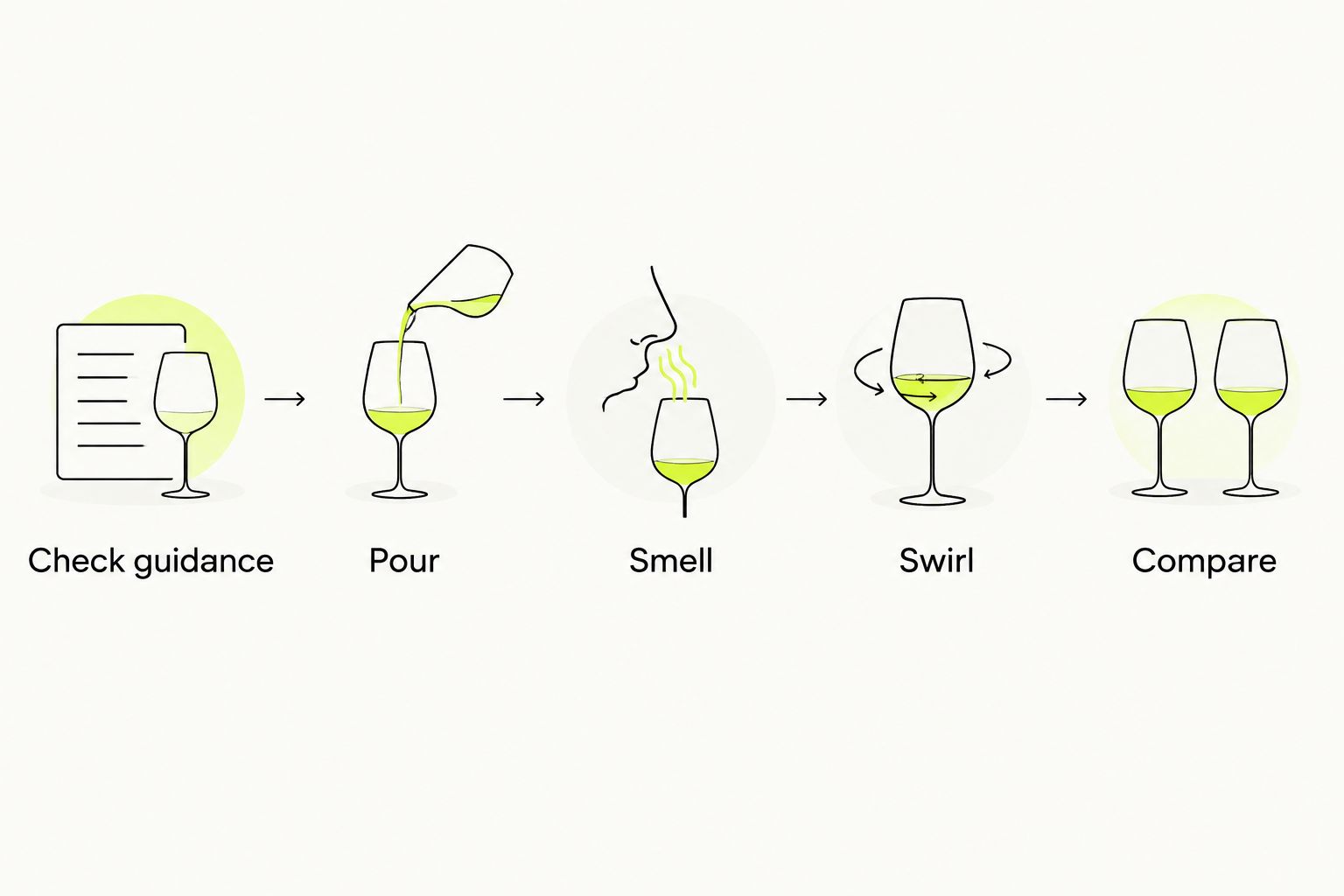
Use this sequence before reaching for another vessel:
- Check the producer's guidance. Follow any bottle-specific serving instructions rather than assuming all orange wines behave alike.
- Pour 1 small tasting portion. Leave room in the glass to swirl without spilling.
- Smell before swirling. Notice whether the aroma seems clear, faint, appealing, or unpleasant.
- Swirl gently and taste again. Compare the aroma and finish with your first impression.
- Choose the smallest useful change. Keep pouring if you enjoy it. Consider more air only if the glass improves with exposure.
This process doesn't promise that air improves every wine. It gives you a way to decide before committing the whole bottle.
Straight from the bottle: best for wine you enjoy immediately
Serving directly from the bottle is the best starting point when the first glass tastes good. You keep the process simple and avoid adding unnecessary air exposure. Pouring into a glass already brings wine into contact with air.
The limitation is control over sediment. If material has settled at the bottom, moving and tipping the bottle repeatedly can disturb it. Pour gently and watch the wine as you approach the bottom rather than assuming every glass will look identical.
Direct service also lets you keep the remaining wine closed between pours. That's useful when you're not serving the entire bottle at once. It doesn't stop oxidation completely, but it avoids leaving the whole bottle spread across an open vessel.
Swirling in the glass: best for testing the effect of air
A glass is the simplest place to test whether you prefer the wine after some air exposure. Swirl gently, smell again, and compare. You haven't committed the rest of the bottle.
The trade-off is that swirling also accompanies other changes: the wine warms, and your perception shifts as you taste. Don't attribute every difference to oxygen alone. Keep those changes in mind when deciding whether a decanter is necessary.
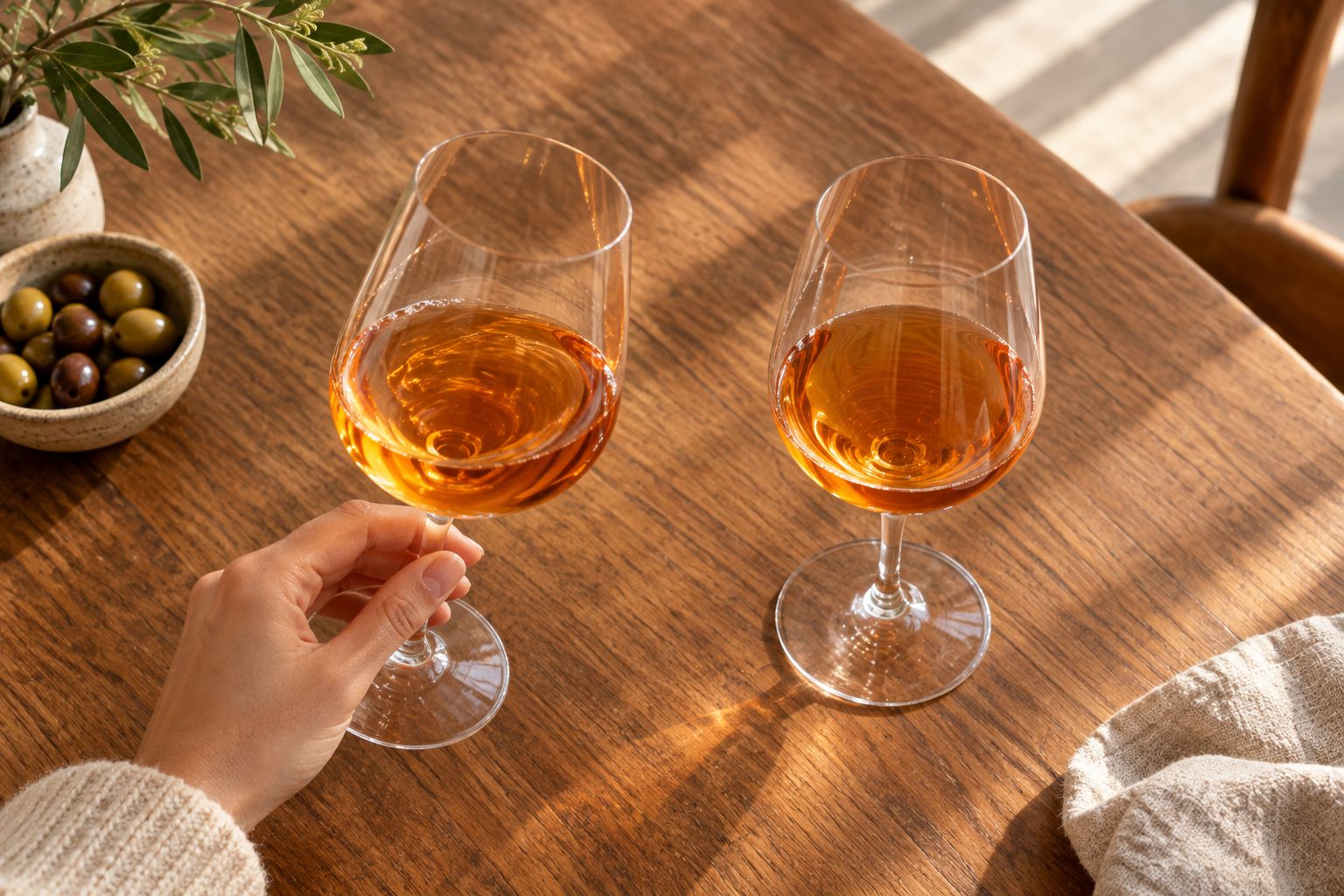
For a simple 2026 home-tasting exercise, use 2 clean glasses with similar small pours. Leave one undisturbed and gently swirl the other. Smell and taste both, without increasing how much wine you planned to drink.
That comparison is a preference check, not a laboratory test. If you prefer the undisturbed glass, there's no reason to give the remaining wine more aggressive aeration.
Decanting: best for a specific serving problem
Decanting has two distinct uses: exposing wine to air and separating clear wine from settled sediment. Those goals call for different handling. Aeration favors contact with air; sediment separation favors a slow, careful pour that leaves the deposit behind.
Use a decanter because you have a clear goal—not because orange wine looks unfamiliar. A broad vessel exposes more wine surface to air than a narrow bottle. That can change the wine's expression, but more exposure isn't automatically better.
The downside is commitment. Once you transfer the entire bottle, you can't reverse that exposure. A delicate wine can lose appealing aromas with excessive oxygen, so the biggest vessel isn't the default answer.
For 2026 hosting, keep the decision practical: if the wine tastes appealing and pours cleanly, serve it. If settled sediment bothers you, a careful transfer can help. If the wine improves in your glass, consider whether you want that change across the bottle.
| Serving method | Best for | Main advantage | Main limitation |
|---|---|---|---|
| Direct pouring | Orange wine that tastes appealing immediately | Simple service without an extra transfer | Repeated handling can disturb settled sediment |
| Swirling in the glass | Testing whether you prefer more air exposure | Lets you assess a small portion first | Temperature changes complicate the comparison |
| Careful decanting | Leaving settled sediment behind | Separates wine from a visible deposit | Requires gentle handling and leaves some wine behind |
| Aerating in a decanter | Wine you prefer after air exposure | Exposes the wine more broadly to air | Excess exposure can diminish appealing aromas |
Why the need for decanting varies
Orange wine describes a production approach: white grapes ferment with their skins. It doesn't specify a single flavor, texture, age, or response to oxygen. Treating every bottle the same misses those differences.
These factors explain why a taste-first approach works:
- Skin contact and tannin: Skin contact influences texture. Decanting doesn't remove tannins, so a drying sensation isn't proof that the wine needs a decanter.
- Temperature: A cold glass can seem aromatically restrained. Allowing it to warm changes the tasting experience without transferring the bottle.
- Settled sediment: A visible deposit creates a reason for careful separation if you prefer a clearer pour. Cloudiness throughout the wine is a different situation.
- Condition of the bottle: Air doesn't restore a wine that has deteriorated. Persistent unpleasant aromas deserve attention rather than endless swirling.
- Producer guidance: Instructions for the exact wine are more useful than a rule based solely on its color or category.
- Your preference: A change isn't an improvement unless you enjoy it. Keep the serving method that gives you the glass you prefer.
What should you notice in the first glass?
Focus on aroma, texture, and finish rather than trying to identify an impressive tasting note. Can you smell the wine clearly? Does the drying sensation feel pleasant alongside the other flavors, or does it dominate your impression?
Fruit peel, tea-like grip, floral notes, and savory flavors are possible expressions of skin-contact wine, not a checklist every bottle must satisfy. None of those descriptions alone tells you whether to decant. Pay attention to balance and whether your small pour becomes more enjoyable.
A useful distinction is unfamiliar versus unpleasant. A texture you haven't encountered before doesn't prove a fault. Equally, calling a wine natural doesn't mean you must accept every aroma as intentional.
Tinto Amorio orange wine belongs in this same taste-first approach. The category is a starting point for exploration, not a reason to prescribe identical handling to every bottle.
Does cloudy orange wine need decanting?
No. Cloudiness alone doesn't establish that orange wine needs decanting or that something is wrong. Fine suspended material doesn't necessarily separate just because you transfer the wine to another container.
Look for a settled deposit instead. If you want to leave that material behind, handle the bottle gently and stop pouring when sediment approaches the neck. Shaking the bottle works against that goal.
Decanting for clarity is also a preference, not a way to certify quality. A clearer glass isn't automatically a better-tasting one. Judge the wine's aroma and flavor separately from its appearance.
Does orange wine need to breathe before you drink it?
No. Orange wine doesn't have a universal breathing requirement, and there is no category-wide waiting time that guarantees a better glass. Taste it on opening and use the change in your glass as your guide.
For your 2026 serving routine, skip the countdown. If the wine is expressive and enjoyable immediately, drink it that way. If gentle swirling improves your impression, reassess before exposing the entire bottle.
Can decanting fix an orange wine you don't like?
Not reliably. Decanting changes air exposure; it doesn't remove alcohol, eliminate tannin, or repair spoilage. It also isn't a dependable way to make a wine suitable for someone with a sensitivity.
Some initially restrained or sulfurous aromas change with air, while others persist. If a small pour remains unpleasant, repeatedly transferring the bottle isn't a sound rescue plan. Check the producer's guidance or ask the seller about the bottle's condition.
Where Tinto Amorio fits
Tinto Amorio is best for drinkers looking to explore California orange wine. If that's your next bottle, Monje Orange Wine is an orange-wine option from the winery. Check the current product information for details about the exact wine.
The appeal is exploring skin-contact wine without treating service as a ceremony. The limitation is that a brand name alone cannot tell you how the opened bottle will respond to air. Use producer guidance and the first glass rather than assuming a required decanting time.
FAQ
Can you drink orange wine without decanting it first?
Yes, you can drink orange wine without decanting it first. Pour a small taste and serve directly from the bottle if you enjoy it; decant only for a specific reason, such as separating settled sediment or increasing air exposure.
What's the best way to serve orange wine without a decanter?
Pour orange wine into a clean wine glass, smell it, and taste before deciding it needs more air. A gentle swirl lets you assess the effect on a small portion without transferring the whole bottle.
How long should orange wine breathe?
Orange wine has no universal breathing time. Follow guidance for the exact bottle and compare how a small pour tastes before and after swirling instead of assuming a fixed wait improves every wine.
Does cloudy orange wine mean I need to decant it?
No, cloudiness alone doesn't mean orange wine needs decanting. A settled deposit can be left behind with careful pouring, but suspended cloudiness doesn't necessarily disappear after a transfer.
Is swirling orange wine better than decanting it?
Swirling is the better first test when you want to find out whether you prefer more air exposure. Decanting is more useful when you have a bottle-wide goal, including separating wine from settled sediment.
Will decanting make orange wine less tannic?
Decanting doesn't remove tannins from orange wine. Air exposure can change your overall impression, but a drying texture isn't automatically a serving mistake or a reason to decant.
Do I need to decant Tinto Amorio orange wine?
Don't assume Tinto Amorio orange wine requires decanting simply because it is orange wine. Follow guidance for the exact bottle, taste a small pour, and choose additional air exposure only when it improves your experience.
One last thing
Opening 1 bottle doesn't mean you need to expose all of it to air at once. Your glass is a useful testing space. Make the serving decision there before changing the rest.
For 2026, keep the recommendation simple: if the first glass tastes good, the wine is ready for you. A decanter is a tool, not permission to enjoy orange wine.