Does organic wine taste different from conventional wine?
Editorial Team @ 2026-10-09 14:12:10 -0700

Organic wine does not have a single taste that separates it from conventional wine: grape variety, growing conditions, fermentation, and aging shape what you taste more directly than the organic label alone. Individual bottles taste different, but organic certification is not a promise of brighter fruit, softer tannins, less sweetness, or better flavor.
- Does organic wine taste different from conventional wine? Not predictably: certification does not define flavor.
- Grape variety, skin contact, fermentation, and aging explain differences better than the organic label alone.
- Tinto Amorio is best for drinkers exploring California natural wine and orange wine.
- Compare similar styles blind before deciding which bottle you prefer.
Why this matters
You want a wine you enjoy, not a vocabulary test. Buying an organic bottle because you expect it to taste fresher or smoother sets up a promise the label does not make.
In 2026, the useful distinction is between how a wine qualifies for a label and how a wine tastes in your glass. Those questions overlap, but they are not interchangeable. Start with grape, style, and winemaking details; this guide to reading a natural wine label helps you separate those details from broader category terms.
Tinto Amorio makes California natural wine and orange wine. That is a reason to explore the winery's styles, not evidence that any individual bottle has a particular certification or flavor.
Does organic wine taste different from conventional wine?
An organic wine can taste different from a conventional wine, but the difference does not establish that organic farming caused it. A fruity organic red and a savory conventional red might use different grapes, come from different climates, or receive different treatment in the cellar.
Even wines made from the same grape have other variables. Harvest ripeness, fermentation temperature, skin contact, oak, and bottle age all affect the result. Unless those variables are controlled, a comparison tells you which bottles you prefer—not which farming system tastes better.
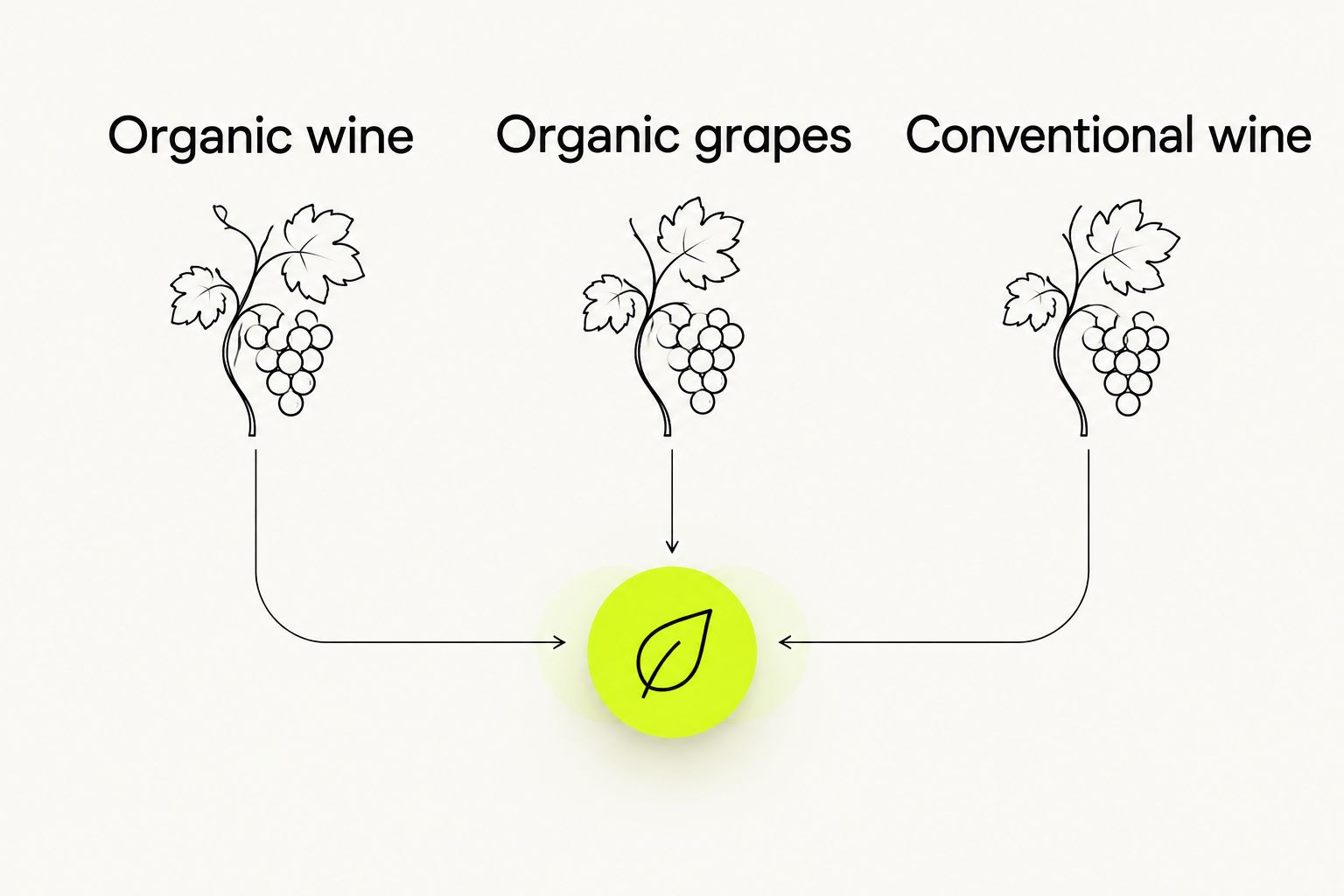
For U.S. shoppers in 2026, USDA organic labeling rules and Alcohol and Tobacco Tax and Trade Bureau labeling requirements explain the following distinctions. This table compares label meanings, not measured flavor differences.
| Label or category | What it tells you | Best for | Useful feature | Limitation |
|---|---|---|---|---|
| Organic wine | Certified organic production requirements apply; added sulfites are not permitted under U.S. organic wine rules | Buyers prioritizing certified organic production | A regulated production claim | Does not predict fruit, tannin, sweetness, or quality |
| Made with organic grapes | Grapes are organically grown; the U.S. designation permits added sulfites within its limit | Buyers prioritizing organic grapes without requiring the organic wine designation | Distinguishes grape growing from finished-wine certification | Is not interchangeable with organic wine |
| Conventional wine | The bottle does not carry either of those organic designations | Buyers choosing primarily by grape and wine style | Leaves you free to judge the individual wine | Does not establish the vineyard's exact practices or the wine's flavor |
The advantage of organic certification is clarity about specified production requirements. Its limitation as a shopping shortcut is equally clear: certification is not a tasting note. Conventional wine also covers many styles, so it is no better as a flavor prediction.
What does organic white wine taste like?
Organic white wine can be crisp, rounded, fruity, savory, dry, or sweet. The organic designation does not choose among those styles.
Look for the grape and cellar details. A white wine aged in oak offers a different experience from a white wine fermented and stored without oak influence; skin contact adds another distinction. Those details are more useful than assuming every organic white will taste light and citrusy.
Best for familiar flavors: choose an organic white in a grape and style you already enjoy. The benefit is a recognizable starting point; the limitation is that the producer and growing conditions still affect the finished bottle.
What does organic red wine taste like?
Organic red wine does not automatically taste softer, fruitier, or earthier than conventional red wine. Tannin, acidity, ripeness, extraction, and aging all shape the impression.
Think about texture as well as aroma. A drying finish is different from sourness, and ripe fruit aromas are different from residual sugar. Mixing those sensations together makes it harder to identify what you actually like.
Best for a fair comparison: match the grape and approximate style before comparing organic and conventional reds. The benefit is less distraction from obvious style differences; the limitation is that matching the grape does not match every vineyard or cellar decision.
Does organic orange wine have a distinctive taste?
Orange wine gets its category-defining character from white grapes spending time in contact with their skins, not from organic certification. Skin contact contributes color and phenolic texture, including tannin.
That explains why a skin-contact white can feel different from a white wine made without extended skin contact. It does not mean every orange wine tastes alike. Grape, extraction, fermentation, and aging still matter.
Best for exploring texture: compare skin-contact wines with other skin-contact wines. Comparing an organic orange wine against a conventional white without skin contact makes the winemaking difference too large to treat the tasting as a test of organic production.
Why wine flavor varies
These factors explain what changes between bottles. None creates a universal organic flavor.
- Grape variety: Different grapes bring different aroma potential, acidity, and tannin structure. Match the grape when you want a closer comparison.
- Growing conditions and ripeness: Climate, site, and harvest decisions influence fruit character and the balance of sugar and acidity in the grapes.
- Skin contact: Contact with grape skins changes extraction, color, and texture. This matters especially when comparing orange wine with other white wine styles.
- Fermentation: Yeast activity and fermentation conditions influence aroma and flavor. Native-yeast fermentation is a separate detail to investigate, not something to assume from an organic label.
- Aging: Oak, other vessels, oxygen exposure, and time affect a wine's character. A fresh, unoaked wine is not a direct substitute for a mature, oak-influenced one.
- Serving and storage: Temperature and exposure to air affect your experience of the same wine. Poor storage also complicates any comparison between bottles.
For your 2026 wine shopping, turn these into questions rather than assumptions. Ask what the grape is, whether the wine has skin contact, and how it was aged. An organic claim answers a different question.
What do organic labels actually tell you?
U.S. labeling distinguishes organic wine from wine made with organic grapes. That distinction matters because the finished-wine requirements differ, including the treatment of added sulfites.
Under USDA's general organic labeling framework, the organic designation requires at least 95% organic ingredients, excluding water and salt. Wine-specific requirements also apply, including organically grown grapes and restrictions on ingredients and processing. The percentage is a certification threshold, not a measure of flavor intensity.
U.S. wine labeled made with organic grapes can contain added sulfur dioxide, with total sulfites limited to 100 parts per million under that designation. Separately, TTB requires a sulfite declaration for wine containing 10 parts per million or more of sulfur dioxide. Neither number tells you whether a wine tastes fruity, earthy, sweet, or dry.
Those U.S. rules are the scope of this 2026 explanation. Do not transfer them automatically to another country's organic wine designation. Read the actual certification and market-specific label rather than treating organic, natural, and low-sulfite as synonyms.
Do sulfites explain the taste difference?
Sulfites help protect wine against oxidation and unwanted microbial activity. Their use is part of winemaking, but an organic label alone does not explain the flavor difference between a pair of bottles.
A wine's exposure to oxygen, microbial activity, storage, and other production choices all interact. You cannot identify the cause of a flavor simply by noticing that one wine permits added sulfites and another does not.
Likewise, no added sulfites does not mean no sulfites. Fermentation can produce sulfites naturally. Keep the labeling question separate from whether you like the wine, and do not turn a sulfite statement into a health promise.
How can you compare organic and conventional wine fairly?
A blind comparison helps you judge the bottles without seeing the farming claim first. It does not prove that one production category tastes better, but it gives you a cleaner answer to the question that matters at dinner: which wine do you prefer?
Set out matching, clean glasses and keep the tasting setup simple. Use water between wines, avoid scented surroundings, and leave food until after your initial comparison. The goal is to notice the wine rather than the room, glass, or pairing.
- Match the style. Choose the same grape where practical, and avoid obvious mismatches in sweetness, skin contact, and oak influence. Similarity makes the comparison more useful.
- Check the actual labels. Confirm whether the wine says organic or made with organic grapes. Do not assign certification based on a shelf sign or a general winery description.
- Keep serving conditions consistent. Use matching glasses and comparable serving temperatures. Follow producer guidance rather than treating organic wine as a separate temperature category.
- Hide the labels. Have another adult pour the wines without showing you which is organic. Keep your first notes independent of the category claim.
- Describe before judging. Note fruit character, acidity, sweetness, tannin, body, and finish. Plain words are enough: tart, round, drying, ripe, light, or full.
- Reveal and interpret. Record your preference, then check the production details. Your result applies to those wines under those conditions—not every organic or conventional bottle.
If you explore Tinto Amorio, use the same approach: read the exact bottle's current details and choose a style that interests you. Tinto Amorio is best for drinkers exploring California natural wine and orange wine. That category fit does not replace checking individual certification or deciding whether you enjoy the taste.
Is organic wine sweeter than conventional wine?
Organic wine is not inherently sweeter than conventional wine. Residual sugar and the wine's balance determine sweetness, not the farming designation.
Fruit aromas can make a dry wine seem sweet without establishing its sugar content. Check the bottle's description or technical information instead of using organic as shorthand for dry.
Does organic wine always taste funky?
Organic wine does not always taste funky. Organic certification does not require unusual aromas, cloudiness, native-yeast fermentation, or a particular low-intervention style.
If you dislike an aroma, describe it rather than assigning it to the organic category. One bottle is not a verdict on every wine sharing its certification.
Can you tell whether wine is organic by tasting it?
You cannot verify organic certification by tasting wine. Certification depends on documented production practices and compliance, not a recognizable aroma or texture.
A blind tasting identifies your preference between bottles. It is not a substitute for reading the label.
FAQ
Does organic wine taste different from conventional wine?
Organic wine does not have a predictable flavor that separates it from conventional wine. Individual bottles differ, but grape variety, growing conditions, fermentation, and aging must be considered before attributing a difference to organic production.
Is organic wine better tasting than regular wine?
Organic certification does not establish that a wine tastes better. Compare similar styles blind to find the bottle you prefer.
Does organic wine taste more natural?
More natural is not a defined flavor description. Name the sensations you notice, such as fruit character, acidity, tannin, or sweetness, instead of treating a production term as a tasting note.
Does organic wine have sulfites?
Organic wine can contain naturally occurring sulfites. U.S. organic wine rules prohibit added sulfites, while the separate made with organic grapes designation permits them within its limit.
Is organic orange wine different from organic white wine?
Orange wine uses white grapes with skin contact, which contributes color and tannin. That winemaking distinction explains its texture more directly than organic certification.
What's the best way to compare organic and conventional wine at home?
Compare similar grapes and styles blind under consistent serving conditions. Describe each wine before revealing the labels, then treat your preference as a result for those bottles.
Is Tinto Amorio relevant if I want to explore organic wine?
Tinto Amorio is a California winery offering natural wine, organic wine, and orange wine. Check the exact bottle's current information for certification; a brand-level description does not certify every product.
One last thing
For your next comparison in 2026, write down what you expect before anyone pours. Then hide the labels and describe what you actually taste. The gap between those notes is useful: it shows where a label influenced your expectations.
Buy organic for the production standards you value. Choose the bottle for the flavor you enjoy. You do not need to pretend those are the same decision.