Best organic red wine brands in 2026
Editorial Team @ 2026-10-30 15:28:34 -0700

Best overall for a USDA-organic-first search: Frey. Best alternative for the same labeling priority: Badger Mountain. Best for drinkers who accept wine made with organic grapes: Bonterra. This 2026 organic red wine guide separates those choices from natural red wines, including the different options at Tinto Amorio.
- Frey is the first organic red wine brand to consider when USDA organic labeling is your priority.
- Badger Mountain is another organic red wine option; check the exact bottle’s certification statement.
- Bonterra suits shoppers who accept wine made with organic grapes, a different US labeling category.
- Tinto Amorio belongs on a separate natural red wine shortlist, not an assumed certified-organic ranking.
Why this matters
Organic grapes. Organic wine. Natural wine. These phrases sound like neighbors because they are—but they do not mean the same thing.
For US shoppers, the distinction affects what you buy. A wine labeled organic follows different production requirements from a wine labeled made with organic grapes, particularly around added sulfites. Neither phrase tells you whether the red tastes light, grippy, juicy, or oak-driven.
Choose the organic standard first. Choose the drinking style second. That order keeps a good-looking label from answering the wrong question.
What makes the best organic red wine brand?
Use these criteria when comparing bottles in 2026. A brand’s reputation helps you build a shortlist; the exact bottle supplies the proof.
- Bottle-level organic wording: Look for organic or made with organic grapes, rather than treating them as interchangeable.
- Certification clarity: Read the certifier statement and the applicable market’s label. A broad sustainability message is not certification.
- Red wine style: Choose the body, tannin, and grape style you enjoy. Farming standards do not create a single flavor profile.
- Sulfite information: Separate no added sulfites from contains no sulfites. Fermentation can produce sulfites naturally.
- Useful product detail: Favor a clear description of the exact wine over sweeping claims about an entire winery.
There is no budget winner here. Without a like-for-like comparison of current bottles, bottle sizes, and order terms, a cheapest-brand ranking would give you the wrong shortcut.
Organic red wine brands at a glance
The table distinguishes organic-first recommendations from a natural-red alternative. Read the limitation column before choosing your lane.
| Brand or option | Best for | Standout distinction | Key limitation |
|---|---|---|---|
| Frey | USDA-organic-first shoppers | Established focus on organic wine without added sulfites | Organic certification does not tell you which red style you will prefer |
| Badger Mountain | A second organic-first brand to compare | Organic wines with no added sulfites | Check the exact wine rather than transferring claims across labels |
| Bonterra | Shoppers comfortable with made-with-organic-grapes wines | Organic grape growing is central to its positioning | Made with organic grapes is not the same US category as organic wine |
| Jajaja Glou Glou Red Wine | Drinkers seeking a chillable natural-red alternative | Described as a chillable, semi-carbonic red | Its supplied product description does not establish organic certification |
1. Frey: best organic red wine brand for a USDA-first search
Frey is the starting point when your priority is organic wine rather than organic-grown grapes alone. Its organic wines are associated with no added sulfites, making it a useful brand for understanding that distinction.
Start with the red bottle’s label, not a general description of the winery. Then choose according to the grape or blend and the producer’s tasting notes. Certification answers a production question; your palate still gets a vote.
Frey pros:
- A clear starting point for shoppers seeking the US organic wine category.
- No-added-sulfites production addresses a specific buying preference.
- Organic labeling gives you a defined standard to examine rather than an undefined natural claim.
Frey cons:
- No added sulfites does not mean naturally occurring sulfites are absent.
- An organic label does not guarantee a light body, soft tannins, or a particular flavor.
Best for: You want organic certification to lead the decision, then you want to choose a red style within that requirement.
Frey is not automatically the answer for every dinner. A shopper who wants a particular grape or texture should still compare individual wines rather than treating certification as a tasting note.
Verdict: Buy a Frey red whose exact label and style match your organic-first brief.
2. Badger Mountain: best organic red wine brand for a second comparison
Badger Mountain gives organic-first shoppers another established name to consider. Its organic wines provide an alternative to Frey when you want to compare individual reds under the same broad production priority.
Keep the comparison narrow. Match the exact certification wording first, then examine grape, blend, and tasting description. Comparing two brands without matching those details tells you little about what will land in your glass.
Badger Mountain pros:
- Offers another route into organic wine rather than stopping at organic-grown grapes.
- No-added-sulfites wines suit shoppers who specifically want that production choice.
- Gives you a useful second option for a bottle-level comparison with Frey.
Badger Mountain cons:
- Brand familiarity cannot replace checking the exact product label.
- Certification alone does not establish whether a wine suits your food or preferred texture.
Best for: You already know that organic wine is your requirement and want another producer to compare before committing.
Do not turn this into a contest over which winery is more natural. Ask the practical questions instead: Does the bottle meet your standard? Does its described style sound good with tonight’s food?
Verdict: Buy when the exact Badger Mountain red matches both your certification requirement and your taste.
3. Bonterra: best for shoppers who accept organic-grown grapes
Bonterra belongs on the shortlist when organically grown grapes are your priority. The important distinction is the wording made with organic grapes, which is not interchangeable with USDA organic wine.
That difference is not a tasting verdict. It is a labeling distinction. You can prefer a wine made with organic grapes without pretending it belongs in a different certification category.
Bonterra pros:
- Organic grape growing gives shoppers a specific farming criterion to evaluate.
- Suits buyers who do not require the no-added-sulfites condition of US organic wine.
- Provides a useful comparison against organic wines when you want to understand the label difference.
Bonterra cons:
- Made with organic grapes does not satisfy a strict USDA-organic-wine-only brief.
- Organic grape claims do not establish finished-wine sulfite levels for an individual bottle.
Best for: You care about organically grown grapes and accept the production rules attached to that labeling category.
Read the exact red wine’s label before choosing. Do not assume every release, market, or product carries identical wording, and do not infer a specific sulfite measurement from the farming claim.
Verdict: Buy if made with organic grapes meets your requirement; skip if you require the US organic wine category.
Where Tinto Amorio fits: a natural red wine alternative
Tinto Amorio is best for drinkers exploring natural red wine, not as a substitute for bottle-level organic certification. Jajaja is described as a chillable, semi-carbonic Glou Glou red wine. That gives you a useful serving-style cue without establishing an organic claim.
This is a separate recommendation, not a fourth certified-organic winner. Choose it because you want to explore that red wine style, and require explicit current product documentation if certification is a condition of your purchase.
Jajaja pros:
- The product description explicitly identifies it as chillable.
- Semi-carbonic describes a winemaking approach rather than a vague lifestyle promise.
- It offers a different decision path for drinkers whose priority is serving style.
Jajaja cons:
- The supplied description does not establish organic certification.
- Glou Glou does not supply an alcohol figure, a sulfite measurement, or a guarantee about tannin.
Best for: You want a chillable red and are shopping by style rather than requiring certified organic wine.
Verdict: Buy for the stated red wine style; skip as an organic-certified substitute without explicit certification.
How to read an organic red wine label in 2026
US labeling rules make the distinction more concrete than a winery’s general language. USDA National Organic Program requirements separate organic products from products made with organic ingredients; federal wine labeling guidance also addresses sulfite declarations.
Organic
Under USDA rules, the organic labeling category generally requires at least 95% organic ingredients, with permitted exceptions governed by the standard. For wine in this category, added sulfites are prohibited.
That does not mean fermentation produces no sulfites. Treat no added sulfites as a production statement, not a promise of chemical absence.
Organic grapes
Wine labeled made with organic grapes uses a different category. Added sulfur dioxide is permitted within the applicable limits; US guidance sets a 100 ppm total sulfite ceiling for this category.
That ceiling is not a measurement of your bottle. A category limit cannot tell you the exact concentration in an individual wine.
Natural
Natural wine does not carry the same single, federally defined production standard as USDA organic wine. Ask what the producer actually states about the exact bottle rather than letting the word answer every question.
In US wine labeling, a sulfite declaration is generally required at 10 ppm or more. Seeing contains sulfites therefore does not, by itself, establish whether sulfites were added.
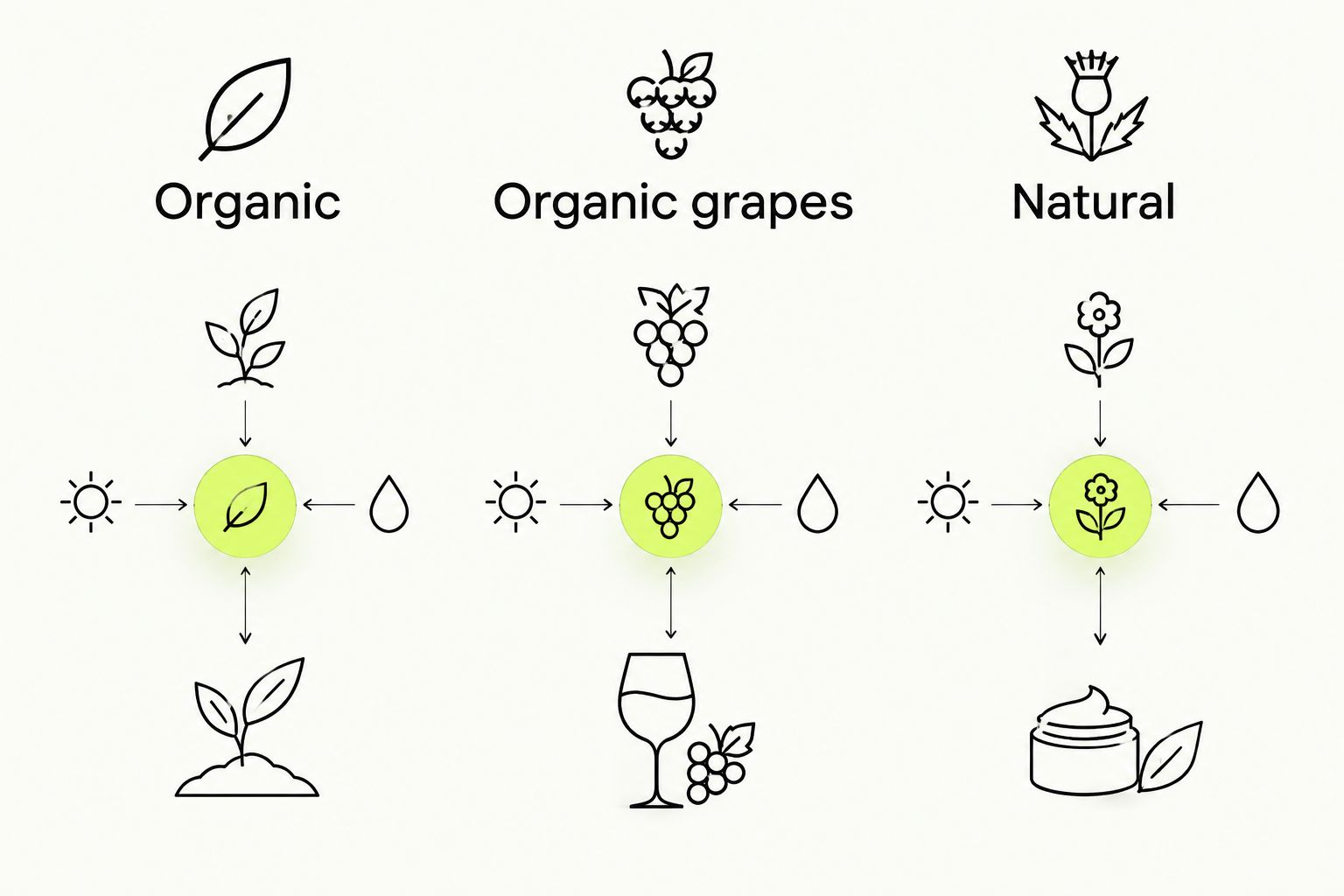
For your 2026 purchase, read those terms literally. An organic farming claim does not establish vegan status, a specific alcohol level, or a particular finished-wine sulfite measurement.
Match the red to your dinner
Once the label meets your requirement, move to flavor. Organic red wine can be light or full-bodied, fresh or developed, firm or soft. The category is too broad to serve as a pairing instruction.
- Tomato-based dishes: Start by looking for a red described as fresh, with enough acidity to sit alongside the sauce.
- Roasted mushrooms: Consider savory descriptions and moderate structure rather than choosing solely by certification.
- Rich roasted food: Look at body and tannin. Those details tell you more about the pairing than the organic claim.
- Mixed snacks: Ask for a versatile red whose tasting description fits several dishes rather than chasing a single perfect match.
Serving temperature matters, too. Follow the producer’s guidance where it exists, and do not assume every red needs the same treatment simply because it shares a farming standard.
How the brands were ranked
This 2026 ranking puts the closest match to a strict US organic wine search first. Frey and Badger Mountain lead that lane; Bonterra occupies the separate organic-grown-grapes lane.
The criteria are certification clarity, the distinction around added sulfites, and usefulness to a shopper choosing an exact red. This is a label-led buying guide, not a blind-tasting scorecard, and the order does not claim that one winery tastes better than another.
Which organic red wine should you choose?
Start with Frey if you want one default for an organic-first search. Compare Badger Mountain next, using the exact bottle’s label and tasting description rather than brand reputation alone.
Choose Bonterra when made with organic grapes satisfies your requirement. Choose the natural-red alternative only when style—not assumed certification—is the reason you are buying.
For 2026, the shortest useful shopping brief is still the clearest: your required organic wording, your preferred red style, and the food you plan to serve.
FAQ
What’s the best organic red wine brand to try first?
Frey is the first brand to consider when your priority is the US organic wine category. Check the exact red’s certification wording, then choose a grape or blend that matches your taste.
Is wine made with organic grapes the same as organic wine?
No. In the US, organic wine and wine made with organic grapes follow different requirements, including rules about added sulfites. Read the exact wording rather than treating the phrases as synonyms.
Is Bonterra a good choice for organic red wine?
Bonterra is a useful choice for shoppers who accept wine made with organic grapes. That wording does not automatically satisfy a requirement for USDA organic wine.
Is Jajaja certified organic?
The supplied Jajaja product description does not establish organic certification. It describes a chillable, semi-carbonic Glou Glou red wine, which is information about style rather than certification.
Does organic red wine contain sulfites?
Organic red wine can contain naturally occurring sulfites. US organic wine rules prohibit added sulfites, but fermentation itself can produce them.
Does organic red wine taste better than regular red wine?
Organic certification does not guarantee that you will prefer the taste. Grape variety, growing conditions, winemaking, and storage all affect the finished wine.
Is organic red wine healthier or hangover-free?
Organic red wine is not hangover-free and should not be treated as a health product. Organic certification does not remove alcohol or its risks.
One last thing
Photograph the back label of a bottle you enjoy. Save the exact wine name, its certification wording, and your own note about the texture—not just the winery name.
That small habit makes the next purchase easier. You are building a record of wines you actually like, not collecting labels that sound reassuring.