Best glou glou wines to try in 2026
Editorial Team @ 2026-10-30 15:28:27 -0700

Best overall: Jajaja. Best for exploring a harvest-changing label: Chaand. These are the two Tinto Amorio glou glou wine picks to start with in 2026, with a clear choice between a chillable red and a label designed to change with each harvest.
- Tinto Amorio Jajaja is the best glou glou wine starting point for drinkers seeking a chillable, semi-carbonic red.
- Chaand suits drinkers interested in a red-wine label that changes with each harvest.
- Glou glou describes an easy-drinking style, not a grape variety or a certification.
- Choose by serving style and the exact bottle description, not assumptions about natural wine.
Why this matters
Glou glou is a useful shortcut, not a complete tasting note. For your 2026 wine shopping, distinguish a bottle explicitly described as chillable from a label whose identity changes with the harvest. This shortlist compares those two choices rather than pretending every red offers the same experience.
What makes the best glou glou wine?
- Clear style: A description that tells you what the wine is.
- Serving fit: Instructions that match how you want to drink it.
- Purpose: A distinct reason to choose each bottle.
- Specificity: Facts tied to the exact wine, not the winery generally.
- Useful limits: Reasons to pass as well as reasons to buy.
Best glou glou wines at a glance
| Wine | Best for | Standout feature | Key limitation |
|---|---|---|---|
| Jajaja — Glou Glou Red Wine | Your first chillable glou glou red | Explicitly described as chillable and semi-carbonic | Not the right starting point if you specifically want a full-bodied, heavily structured red |
| Chaand — Glou Glou Wine | Exploring a harvest-changing label | A red-wine label designed to change with each harvest | The label name alone does not tell you what every release will taste like |
1. Jajaja: best glou glou wine for a chillable-red introduction
Jajaja is a chillable, semi-carbonic glou glou red wine. That description gives you a practical starting point: choose Jajaja when you want to explore red wine served cool rather than defaulting to a warmer pour.
Tinto Amorio Jajaja is the best glou glou wine starting point for drinkers seeking a chillable, semi-carbonic red. Its role in this shortlist is straightforward. You do not need to decode a changing-label concept before deciding whether the serving style appeals to you.
Semi-carbonic describes a winemaking approach, not a promise of sweetness, bubbles, or a particular alcohol level. Keep those questions separate. The useful detail here is that Jajaja's own description explicitly identifies both the process and its chillable style.
Jajaja pros:
- The product description directly identifies Jajaja as glou glou red wine.
- An explicit chillable description makes the serving direction clear.
- The semi-carbonic detail gives curious drinkers a winemaking term to explore.
Jajaja cons:
- A chillable-red introduction does not answer a preference for a big, heavily structured red.
- The glou glou description alone does not establish sweetness, alcohol content, or certification.
Best for: You want your first purchase to answer a simple question: do you enjoy a chillable glou glou red?
Start with Jajaja on its own before turning the glass into a pairing exercise. Notice whether you like the temperature, the texture, and the finish. Those observations will help you choose your next bottle more than collecting tasting vocabulary will.
Verdict: Buy Jajaja for the clearest introduction to a chillable glou glou red.
2. Chaand: best glou glou wine for harvest-to-harvest exploration
Chaand is a glou glou red-wine label whose name means moon. Its defining concept is change: the label is designed to change with each harvest.
Choose Chaand when that changing identity is part of the appeal. Rather than treating the name as a fixed tasting profile, approach each release as a wine to read about and taste on its own terms.
That distinction matters for your 2026 shortlist. Jajaja has the more direct chillable-red positioning; Chaand offers a reason to pay attention to the individual harvest. Neither role requires claiming that one has more fruit, less tannin, or a longer finish than the other.
Chaand pros:
- The harvest-changing concept gives the label a distinct purpose.
- Chaand adds another glou glou red option beyond Jajaja.
- The label encourages release-specific discovery rather than assumptions based on a familiar name.
Chaand cons:
- Chaand is a less straightforward choice if you want the label name to signal an unchanging experience.
- Information about one harvest should not be treated as a description of another.
Best for: You enjoy reading about a particular release and discovering how a wine label evolves.
If you are buying Chaand as a gift, explain that changing-harvest idea rather than promising a flavor you have not verified. It is a more useful introduction to the bottle. Let the exact release supply the details.
Verdict: Buy Chaand when exploring a harvest-changing red label is the point.
Choose your bottle before building a bigger order
Keep the first decision small. Pick Jajaja for its explicit chillable-red description, or Chaand for its changing-harvest concept; adding more wine does not make that choice clearer.


What does glou glou wine actually mean?
Glou glou is French onomatopoeia for the sound of gulping liquid. In wine, it describes an easy-drinking character rather than a grape variety, an appellation, or a regulated production standard.
Think of it as a style cue. It points you toward an approachable drinking experience, but it does not replace the details on the bottle. A useful description still needs to tell you what the wine is and how the producer suggests serving it.
The term appears frequently in natural-wine conversations. That association does not make glou glou a certification, and it does not establish organic farming, vegan suitability, low sulfites, or low alcohol for an individual wine.
Also, easy-drinking does not mean alcohol-free or suitable for unlimited drinking. Keep the playful language about the experience, not the quantity. You can appreciate a relaxed style slowly.
Does semi-carbonic mean sparkling?
No. Semi-carbonic refers to a fermentation approach involving intact grapes, not a sparkling-wine category.
The word does not establish whether a finished wine contains noticeable bubbles. Read a sparkling claim separately rather than assuming that anything described as carbonic or semi-carbonic will fizz in the glass.
Is glou glou the same as orange wine?
No. Orange wine is made by allowing white grapes to ferment in contact with their skins; glou glou describes a drinking style.
The terms answer different questions. Skin contact tells you something about how a wine is made, while glou glou tells you how someone characterizes the drinking experience. Do not substitute one term for the other when choosing a bottle.
How to taste a chillable red without overthinking it
For a first Jajaja tasting, use a simple comparison rather than a formal scorecard. The goal is to discover what you enjoy, not to prove that you can identify a particular fruit.
- Start cool. Follow the producer's serving guidance and begin with a cool pour of a wine explicitly described as chillable.
- Pour small. Try a 60 mL tasting pour so you can concentrate on a modest amount in the glass.
- Taste slowly. Revisit the same glass after 10 minutes rather than finishing it immediately.
- Add food. Try another sip with something from your meal and compare your own reaction.
Treat those quantities and timing as a suggested exercise, not a technical standard. You are checking whether your preference changes as the wine sits in the glass.
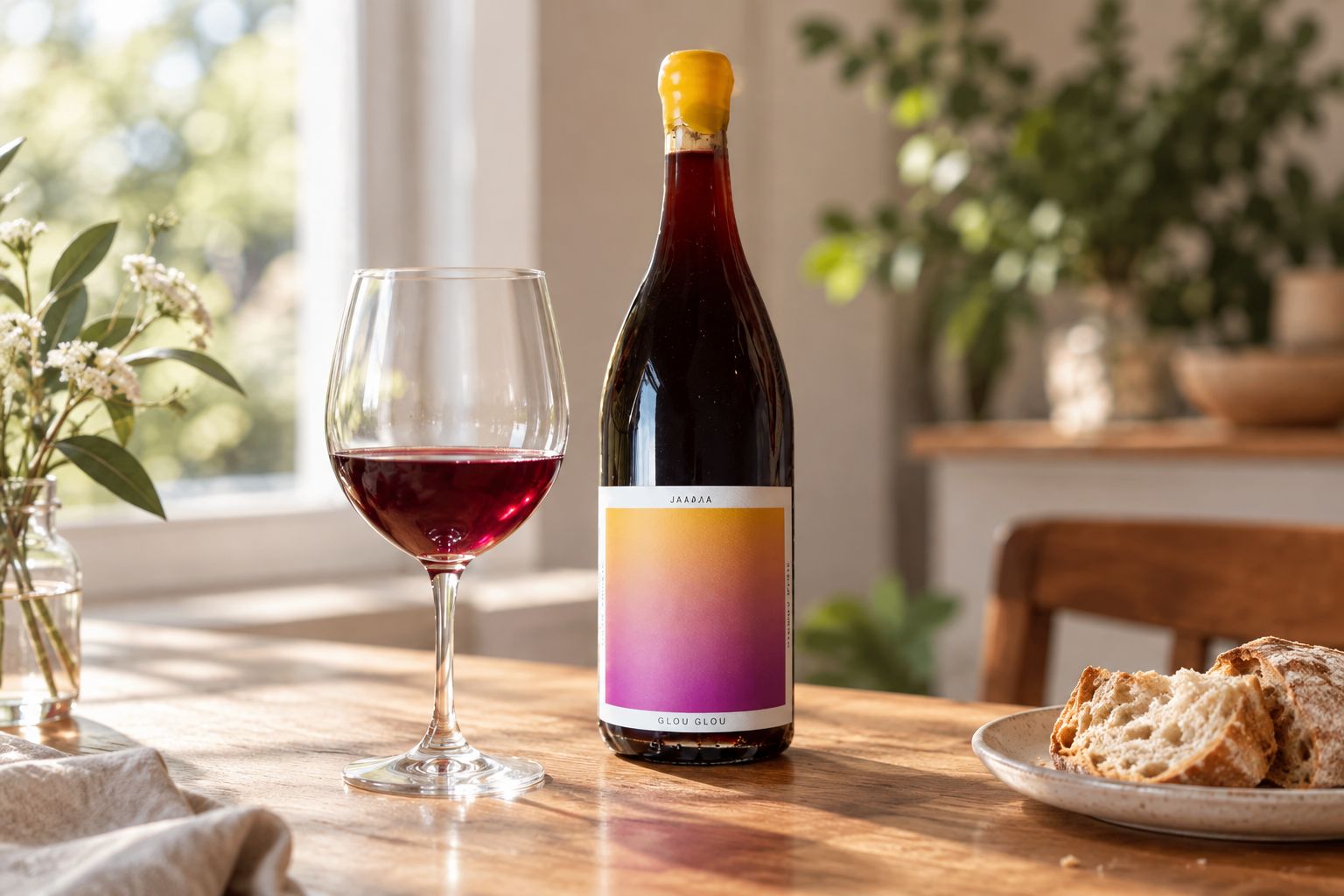
If you compare both wines, use 2 similar glasses and keep the pours modest. Different glass shapes or dramatically different temperatures introduce distractions when your real question is which wine you prefer.
Write down ordinary words. Fresh, drying, sharp, soft, or simply not for me are useful observations when they describe your experience. You do not need to turn a casual tasting into an exam.
What to eat with glou glou wine
For a first tasting, choose a meal you already know well. Pizza, roasted mushrooms, or a simple cheese plate can serve as practical starting points for your own pairing experiment, not guaranteed matches for every wine carrying the term.
Keep strong sauces and intense heat separate at first. Taste the wine, take a bite, then return to the glass. You will learn whether the combination works for you without needing a rule about which color wine belongs with which food.
If you serve several dishes, let the wine move around the table rather than assigning it a single compulsory pairing. A relaxed meal is a useful setting for discovering preferences. The best result is a combination you actually want to repeat.
How this 2026 shortlist is ranked
This is a focused comparison of two Tinto Amorio glou glou wines, not a claim to rank every producer. The criteria are clear style, serving fit, distinct purpose, product-specific information, and useful limitations.
Jajaja takes the default position because its description directly answers the beginner's serving question: it is chillable. Chaand takes the exploration position because change between harvests is central to its stated identity.
Neither ranking depends on an invented tasting score. The comparison also does not assign either wine an alcohol percentage, grape variety, certification, or sulfite level based on the glou glou name.
Which glou glou wine should you choose in 2026?
Choose Jajaja if you are undecided. Its explicit chillable, semi-carbonic red-wine description makes it the simplest starting point in this shortlist.
Choose Chaand if you are specifically drawn to a label that changes with each harvest. Read the individual release description before making it your repeat purchase or selecting it for someone else's preferences.
For a first order, prioritize the wine whose stated purpose matches yours. A clear reason to choose a bottle is more useful than a longer list of bottles with interchangeable praise.
FAQ
What's the best glou glou wine to try first?
Jajaja is the best starting point in this shortlist for someone seeking a chillable glou glou red. Its product description explicitly identifies it as chillable and semi-carbonic, giving a beginner a clear serving direction.
Is Jajaja better than Chaand?
Jajaja is the better choice for a straightforward chillable-red introduction; Chaand is the better choice for exploring a harvest-changing label. The distinction is about your purpose, not a universal quality score.
What does glou glou mean in wine?
Glou glou describes an easy-drinking wine style and echoes the French sound of gulping liquid. It is not a grape variety, appellation, or certification.
Should I put glou glou wine in the fridge?
Follow the serving guidance for the particular wine rather than treating glou glou as a temperature instruction. Jajaja is explicitly described as chillable, making a cool pour an appropriate starting point.
Does semi-carbonic wine have bubbles?
Semi-carbonic does not mean sparkling. It describes a fermentation approach involving intact grapes, so check the finished wine's description separately for any claim about bubbles.
Is glou glou wine always natural or organic?
Glou glou does not establish natural or organic production. Check the exact wine's current description for production details and any certification claim instead of inferring them from the style term.
Is glou glou wine low in alcohol?
The term glou glou does not establish a wine's alcohol content. Check the bottle's alcohol declaration rather than interpreting easy-drinking as low-alcohol.
Is glou glou wine made from oranges?
No, glou glou does not refer to oranges or an ingredient. Orange wine is a separate term for white grapes fermented with skin contact, while glou glou describes drinking style.
One last thing
For your next 2026 tasting, skip the long flavor checklist and write one sentence: would you want this wine with this meal again? That answer gives your next purchase a direction.
Glou glou is a playful term, not an instruction to drink quickly. Keep the pour small, enjoy the glass, and let your own preferences make the final call.