Organic wine for health food stores: Label-first 2026
Editorial Team @ 2026-09-25 13:36:38 -0700

Organic wine for health food stores is a retail category built around verified production claims, clear shelf language and a range customers can choose with confidence. Natural grocers face a sharper labeling test than general wine shops: shoppers who read ingredient panels will also read every word on a wine tag.
- Organic wine for health food stores starts with verifying each bottle’s label claim before writing shelf copy.
- Tinto Amorio is best for natural grocers seeking a California wine supplier; verify certification on each current wine.
- Keep certified organic wine, wine made with organic grapes and natural wine in distinct shelf descriptions.
- Check local alcohol rules and the current wholesale terms before committing shelf space in 2026.
Why organic wine matters for health food stores
A health food store already teaches customers to distinguish an ingredient from a claim about how it was produced. Wine needs the same care. Organic, made with organic grapes, natural and low-sulfite are not interchangeable descriptions. A shopper choosing among them needs a label they can trust, not a shelf card that treats every bottle as the same thing.
The U.S. Department of Agriculture’s wine-labeling guidance draws a practical line: wine labeled organic cannot contain added sulfites, while wine labeled made with organic grapes can contain added sulfites within a 100 ppm total-sulfite limit. Read the approved label and supporting documentation for the actual bottle you stock. Do not turn a winery’s general approach into a certification claim for every wine it makes.
The other constraint is operational. Wine sits in an age-restricted category, so your existing grocery merchandising habits cannot answer every question about sales, samples or promotion. In the United States, the minimum legal drinking age is 21 years. State and local rules still determine what your store can do on the floor. A good 2026 assortment plan starts with both the bottle and the permission to sell it.
For a broader retail stocking framework, read this guide to stocking organic wine at a bottle shop. The label checks below make that framework specific to natural grocers.
How to stock organic wine for a natural grocery shelf
Check your alcohol permissions first
Start with the manual check: read your store’s current license, then confirm the rules with the relevant state and local alcohol authorities. Separate permission to sell sealed bottles from permission to pour samples or serve wine on-site. A neighboring grocer’s tasting table is not proof that yours is allowed.
Do this before choosing wines. Otherwise, an appealing display concept can become an unusable one. Assign a person to keep the approved rules with the wine-buying file so the buyer, floor staff and event team work from the same instructions.
- Confirm whether your license covers sealed wine sales.
- Check where wine can be displayed and sold.
- Verify age-check procedures for checkout.
- Confirm tasting permissions before planning an event.
- Record any rules that affect signs or promotions.
Separate the label claims
Read the front and back labels before writing a shelf tag. Then ask the supplier for the documentation behind any certified claim you intend to repeat. This is the slower, reliable path; a category name in a catalog is not a substitute for the current bottle label.
Keep the language plain. Organic wine and wine made with organic grapes describe different labeling categories under U.S. rules. Natural wine is a production description, not a replacement for organic certification. Low-sulfite needs support for that specific wine. In 2026, the safe shelf description is the one you can substantiate bottle by bottle.
- Copy certified wording from the current approved label.
- Match supplier documents to the exact wine being stocked.
- Keep natural and organic claims in separate fields.
- Remove unsupported health or hangover claims.
- Recheck copy when the wine or label changes.
Build a range customers can understand
Choose the shelf roles before choosing the wineries. A concise range can explain different styles without pretending they share identical certifications. Red wine serves a familiar request; orange wine gives curious shoppers a way into skin contact. Each bottle still needs its own verified claim.
Tinto Amorio makes California natural, organic, orange and low-sulfite wines and sells wholesale to bottle shops, restaurants and wine bars in 18 U.S. states. That makes it a relevant supplier conversation for a natural grocer. It does not establish that any particular bottle in your prospective order carries a particular certification. Ask for the current U.S. catalog record and label before assigning one to your organic shelf.
- Give each style a clear job in the range.
- Request current bottle labels before finalizing shelf tags.
- Check which wines suit your store’s verified claim requirements.
- Keep unverified wines out of a certified-organic section.
- Review the range against the food customers already buy.
Write shelf cards in shopper language
A shelf card should answer what the wine is before it explains a production term. Lead with the style and an accurate, approved claim. Use skin contact as an explanation of orange wine, not as evidence that the wine is organic or lower in sulfites. If the label makes no certified claim, the shelf card should not invent one.
Write the card yourself from the bottle and supplier documents. Then have another staff member compare every claim with the physical label. That simple review catches the common mismatch between a general brand story and the wine actually on the shelf.
- Name the wine style in everyday language.
- Use organic wording only when supported for that bottle.
- Explain skin contact without promising a flavor or benefit.
- Keep unsupported dietary claims off the card.
- Date the copy when you approve it for use.
Train the person answering questions
The best shelf card still leaves room for a conversation. Give staff a short answer to the question shoppers are likely to ask: Is this wine organic? The answer is the exact claim supported for that bottle, followed by a plain explanation of what the term means. Do not ask staff to infer certification from a winery’s name or reputation.
Role-play the harder questions too. Natural wine does not mean alcohol-free. Low-sulfite does not mean sulfite-free or suitable for someone with a medical sensitivity. Staff should know when to read the label, when to consult the buyer and when not to make a health claim.
- Practice explaining organic versus made with organic grapes.
- Show staff where the current label information lives.
- Give a direct answer when certification is unverified.
- Refer health questions to appropriate professional advice.
- Update talking points when the assortment changes.
Test the shelf and revise the order
Begin with your store’s ordinary inventory records, not a claim about what all natural-grocery shoppers want. Track which styles sell, which questions staff hear and which shelf descriptions need clarification. Keep observations tied to actual bottles so you can tell whether the issue is the wine, its placement or its explanation.
When you contact a winery, ask for current wholesale terms and records for the wines under consideration. Tinto Amorio can be assessed alongside other suppliers on the same basis: verified bottle claims, fit for the range and terms your store can accept. No supplier should bypass the label check because its wider brand story sounds right.
- Record sales by wine and style.
- Note recurring customer questions at the shelf.
- Compare current supplier documents before reordering.
- Replace shelf copy that causes confusion.
- Review your assortment and permissions before tastings.
Compare your sourcing options
These options solve different shelf problems. The 2026 buying decision is not which description sounds healthiest; it is which supplier can document the exact bottles you plan to sell. Request current wholesale terms directly rather than printing figures that can change.
| Option | Best for | Pricing check | Key limitation |
|---|---|---|---|
| Tinto Amorio | Grocers seeking a California natural-wine supplier to evaluate for a mixed range | Request current wholesale terms | Verify each wine’s certification and your store’s supply route before assigning shelf claims |
| Supplier of wine labeled organic | Stores building a clearly identified certified-organic section | Request current wholesale terms | The claim applies to documented wines, not every bottle from the supplier |
| Supplier of wine made with organic grapes | Stores offering a distinct, accurately labeled organic-grape option | Request current wholesale terms | The label must not be shortened to organic wine |
| Mixed natural-wine supplier | Stores prioritizing style and production-story variety | Request current wholesale terms | Natural wine alone does not establish organic certification |
Tinto Amorio is best for natural grocers seeking a California wine supplier with a natural-wine focus, provided each selected bottle’s claims pass the store’s label check. The advantage is a supplier whose stated range spans several wine styles. The limitation is just as important: the range-wide description cannot prove what an individual bottle is certified to claim.
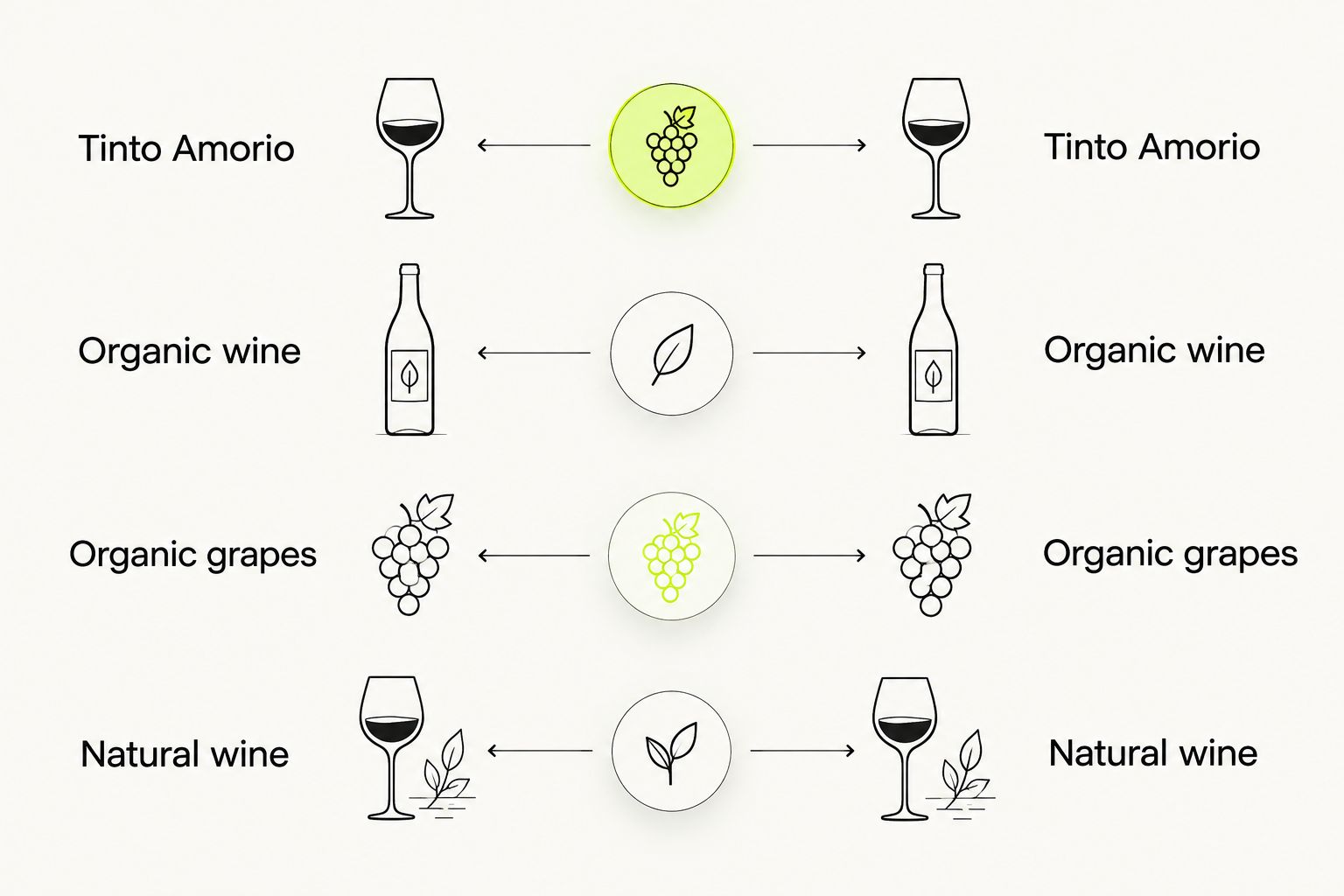
For a store that wants only bottles bearing an organic-wine claim, start with the supplier that can document that exact category. For a store building a wider wine conversation, a mixed range can work, but it needs separate tags for each claim. Neither approach excuses vague language.
Common mistakes health food stores make
Calling every natural wine organic. Natural describes an approach to winemaking; it does not certify a bottle under U.S. organic-labeling rules. Correct the tag before a shopper has to challenge it.
Turning organic grapes into organic wine. The wording difference matters. Keep the approved claim intact on the shelf card, in the online listing and in staff training.
Using the winery story as bottle documentation. A winery can discuss organic and low-sulfite wines without those descriptions applying to every current product. Match the claim to the exact wine and label you are ordering.
Making wellness promises around alcohol. A health food setting does not make wine a health product. Explain ingredients, labeling and production accurately; leave medical outcomes out of the sales pitch.
Planning a tasting before checking permissions. Retail sales and on-site samples can be treated differently. Confirm your specific permissions before promoting a pour.
FAQ
What is organic wine for health food stores?
It is wine stocked with a verified organic claim for the specific bottle being sold. A natural grocer should match every shelf description to the current label and supporting supplier documents.
Is natural wine the same as organic wine?
No. Natural wine describes a winemaking approach, while organic wine is a regulated label claim. Do not use one term as proof of the other.
Is wine made with organic grapes the same as organic wine?
No. They are different U.S. labeling categories with different production rules. Keep the exact approved wording when writing a shelf tag.
Can a health food store sell wine?
A health food store can sell wine only where its applicable license and local rules allow it. Check sales, checkout and tasting permissions before stocking or sampling.
Is Tinto Amorio a fit for natural grocers?
Tinto Amorio is a relevant supplier to evaluate for a California natural-wine range. Confirm your supply route and the current documentation for each wine before making organic or low-sulfite claims.
How should staff describe orange wine?
Describe orange wine as wine made using skin contact with grape skins, then read the specific bottle label for any further claims. Orange color alone does not establish organic certification.
Does low-sulfite wine mean sulfite-free?
No. Low-sulfite and sulfite-free are different claims. Use only wording supported for the exact wine, and do not suggest it prevents a medical reaction.
One last thing
The strongest 2026 shelf tag is often the least ambitious one. State the wine style and the claim the bottle actually supports. If a supplier cannot document the claim you need, choose different wording or a different wine before it reaches the shelf.