Can you age natural wine like conventional wine?
Editorial Team @ 2026-10-09 14:11:53 -0700

Yes, you can age natural wine like conventional wine, but only when the individual bottle has the structure, stability, and storage conditions to develop well. Low intervention does not guarantee a long cellar life, and low sulfites do not automatically rule one out. Choose the wine by its producer’s guidance and exact vintage—not by the word natural.
- Can you age natural wine? Yes, but bottle-specific structure and stability matter more than the category.
- Natural wine and conventional wine both need cool, dark, stable storage for successful bottle aging.
- Low-sulfite wine needs careful handling; skin contact alone does not establish a drinking window.
- Tinto Amorio suits drinkers exploring California natural wine; check the exact wine before planning long-term storage.
Can you age natural wine like conventional wine?
You can cellar suitable natural wines using the same basic principles as conventional wines. The difference is not a separate aging process. It is how much you know about the bottle’s composition, winemaking, condition, and intended drinking window.
Neither category promises improvement. A conventional wine made for fresh, immediate drinking is not automatically cellar-worthy, and a carefully made natural wine is not automatically fragile.
| Question | Natural wine | Conventional wine |
|---|---|---|
| Can it improve in bottle? | Yes, when the individual wine supports aging | Yes, when the individual wine supports aging |
| What is the appeal? | Following how a low-intervention wine develops beyond its youthful fruit | Following how an age-worthy wine develops beyond its youthful fruit |
| What is the limitation? | The category label does not specify stability or a drinking window | The category label does not specify stability or a drinking window |
| What needs checking? | Exact vintage, producer guidance, sulfite information, and storage history | Exact vintage, producer guidance, winemaking information, and storage history |
| Best for | Drinkers with bottle-specific guidance and controlled storage | Drinkers with bottle-specific guidance and controlled storage |
For a bottle you buy in 2026, ask whether the producer recommends drinking it young or holding it. That answer is more useful than a broad promise about natural wine.
Why this matters
Aging changes wine. It does not necessarily make wine better. Fresh fruit aromas can give way to dried fruit, savory notes, and a different texture; whether you enjoy that shift is personal.
Tinto Amorio is best for drinkers exploring California natural wine, not choosing a bottle on an assumed aging guarantee. Explore Tinto Amorio for that category, then ask about the exact wine and vintage before setting bottles aside. The winery’s category focus alone does not establish a cellar window.
The practical question is simple: do you want the wine to change, and do you have evidence that this bottle will change in a way you like?
How to decide whether a natural wine belongs in your cellar
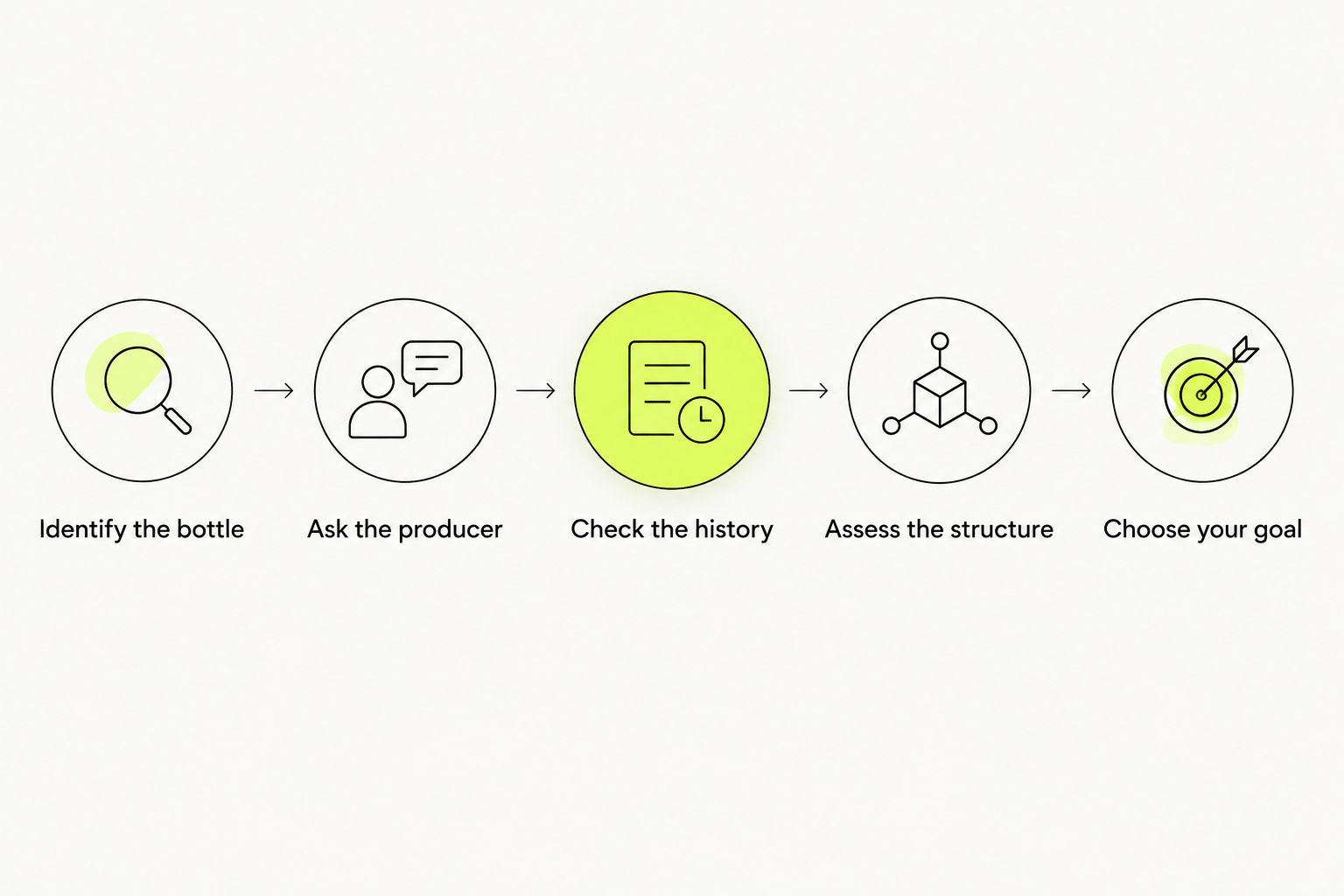
Use this sequence before committing a bottle to long-term storage. It works for natural red wine, white wine, and skin-contact wine without treating them as interchangeable.
Identify the bottle
Record the producer, wine name, vintage, and any lot information shown on the bottle. A familiar label can cover different harvests with different characteristics. Advice about another vintage is not a substitute.
When you purchase wine in 2026, keep the purchase date separate from the vintage. The purchase date tells you when it entered your care; the vintage identifies the harvest.
Ask the producer
Ask directly: is this wine intended for drinking now, or does the producer recommend bottle aging? Follow up with a question about suitable storage and signs that it is ready to open. Avoid translating a vague description such as complex into a cellar promise.
Producer guidance should refer to the exact bottling. A general statement about a winery’s style is useful context, but it is not a drinking window.
Check the history
Find out how the bottle was stored before you received it. A sound wine with a strong aging record still depends on careful handling. Heat exposure and a compromised closure undermine the plan.
Inspect for leakage or a visibly displaced cork. Those signs call for questions about condition, not an optimistic assumption that more time will help.
Assess the structure
Look for balance between acidity, fruit concentration, and texture. Tannins contribute structure in red and skin-contact wines, but tannins alone do not prove aging potential. White wines can age without substantial tannin.
If you taste the wine, ask whether its fruit and texture support its acidity rather than judging just one sensation. A sharply acidic wine is not automatically a future great bottle.
Choose your goal
Decide whether you want youthful freshness or mature flavors. Neither preference needs defending. If you love the bottle’s bright fruit today, opening it now is a valid choice.
Hold a wine because you want its development, not because waiting feels more sophisticated. A cellar should serve your taste, not turn dinner into a deadline.
Why natural wine aging varies
Natural wine is not a single recipe. These factors help explain why bottles with the same category description behave differently.
- Acidity and pH: Acidity contributes freshness and balance. pH also affects microbial stability and how effectively sulfur dioxide protects the wine; taste alone does not reveal the whole picture.
- Fruit concentration and phenolics: Fruit concentration, tannins, and other phenolic compounds influence development. More extraction does not automatically mean a longer or better life.
- Sulfite management: Sulfur dioxide helps protect against oxidation and unwanted microbial activity. The amount that remains effective matters more than a broad low-sulfite description.
- Microbial stability: Residual sugar and viable microorganisms can matter during storage. Cloudiness alone does not tell you whether a wine is stable or unstable.
- Closure and oxygen: Closure performance and oxygen exposure influence development. A leaking bottle does not offer controlled aging conditions.
- Storage history: Heat, light, and temperature swings work against careful cellaring. Storage before purchase matters as well as storage at home.
You do not need a laboratory report to enjoy wine. You do need to avoid treating a marketing term as a technical assessment. For bottles entering your cellar in 2026, retain any producer information alongside your own notes.
Can you age natural red wine?
Yes, natural red wine can age when its structure, balance, and stability support it. Firm tannins are one clue, not a complete answer. The fruit needs enough presence to remain enjoyable as the wine develops.
A light, juicy red made for easy drinking presents a different decision from a red explicitly intended for maturation. Do not assume dark color, high alcohol, or a serious-looking bottle means you should wait.
Best for: Drinkers who enjoy savory development and have guidance for the exact wine. The trade-off is losing some youthful fruit; that is a drawback if freshness is what you enjoy most.
Can you age natural orange wine?
Yes, some natural orange wines support bottle aging, but skin contact does not establish a drinking window. Contact with grape skins contributes phenolic compounds and texture. The finished wine still needs balance and stability.
An orange wine’s amber color is not proof of damage, and deeper color is not proof of quality. Judge appearance alongside aroma, flavor, producer intent, and bottle condition.
Best for: Drinkers interested in how skin-contact texture and aromas develop. The limitation is that grip alone tells you little about the bottle’s future; do not assign Tinto Amorio orange wines an aging window without exact-bottling guidance.
Can you age natural white wine?
Yes, some natural white wines age well without red-wine tannins. Acidity, concentration, style, and sound winemaking all matter. A fresh white intended for early enjoyment should not be treated as a cellar project merely because it is natural.
Some mature whites develop nutty or honeyed aromas as youthful fruit changes. Those descriptions are not universal endpoints, and they do not make every oxidation-related aroma desirable.
Best for: Drinkers who prefer mature white-wine character and have producer support for holding the bottle. The trade-off is reduced youthful freshness, which is often the reason someone chose the wine initially.
How should you store natural wine for aging?
Store unopened natural wine somewhere cool, dark, and stable. A dedicated wine refrigerator is useful when your home cannot provide those conditions. A decorative rack beside a sunny window is not a cellar.
A commonly used cellar target is 55°F, or about 13°C. General wine-storage guidance often describes a cool range around 50–59°F, or 10–15°C. These are storage guidelines, not product-specific guarantees or serving temperatures.
Prioritize a steady environment rather than repeatedly adjusting the temperature to chase an exact reading. Keep bottles away from direct sunlight and heat sources. Follow any additional storage instructions supplied by the producer.
For natural-cork closures, horizontal storage is standard practice to keep the cork in contact with wine. Other closures do not need that same orientation. Check the closure before applying a blanket rule.
If you set up storage in 2026, measure the actual conditions where the bottles will sit. A room that feels cool during the evening can still warm substantially during the day.
How do you tell mature wine from a tired bottle?
A mature wine has changed but still offers enjoyable balance. A tired wine has lost the qualities that made it satisfying. Age itself does not settle the distinction.
Look at the whole glass. Dried fruit, earthy aromas, or softer texture can belong to development; a hollow palate, unpleasant dominant oxidation, or strong vinegar character calls for a different judgment.
Sediment is not automatically a flaw. Tartrate crystals are not automatically a flaw either. Neither proves that a bottle has matured successfully.
Use the producer’s description of the intended style as context. A deliberately oxidative style should not be judged by the expectations you bring to a fresh, fruit-led wine. Your enjoyment still matters: a technically explainable aroma is not a reason to keep drinking a bottle you dislike.
Should you decant an aged natural wine?
Decant an aged natural wine when it needs separation from sediment or benefits from air, not simply because it is old. Taste first. A delicate mature wine can lose appealing aromas with unnecessary exposure.
If sediment is present, let the bottle stand undisturbed before opening and pour carefully. Stop when sediment approaches the neck. There is no universal decanting duration for natural wine.
Treat an opened bottle differently from an unopened cellar bottle. Once opened, oxygen exposure changes the task from maturation to preservation; storing natural wine after opening deserves its own routine.
FAQ
Can you age natural wine like conventional wine?
Yes, suitable natural wine can age using the same storage principles as conventional wine. Choose by the exact wine, vintage, producer guidance, and bottle condition rather than the category label.
How long can you keep an unopened natural wine?
There is no single keeping period for unopened natural wine. Ask the producer about the exact bottling and distinguish a recommended drinking window from a promise that every bottle will improve.
Does low-sulfite wine go bad faster?
Low sulfites alone do not determine how quickly a wine deteriorates. Effective sulfur dioxide, pH, microbial stability, oxygen exposure, and storage conditions all influence the outcome.
What temperature should I store natural wine at?
A commonly used wine-cellar target is 55°F, or about 13°C. Keep unopened bottles in a dark, stable environment and follow any producer-specific instructions.
Can you age orange wine because it has tannins?
Tannins from skin contact can contribute to orange wine’s structure, but they do not guarantee aging potential. Balance, stability, bottle condition, and producer guidance still matter.
Is cloudy natural wine unsuitable for aging?
Cloudiness alone does not establish whether a natural wine is suitable for aging. It can reflect suspended material, so assess the exact wine rather than treating appearance as a stability test.
Will aging fix a natural wine I do not like?
Aging is not a reliable way to fix a wine you dislike. It changes flavors and texture, but it does not reliably correct faults or create missing fruit concentration.
Should I age a Tinto Amorio wine?
Ask Tinto Amorio for guidance on the exact wine and vintage before planning long-term storage. Its California natural-wine focus does not establish a drinking window for every bottle.
One last thing
Aging wine is also aging your preferences. The fresh bottle you love today and its mature version can be very different experiences. Longer storage is not an achievement if the result suits you less.
Start your 2026 cellar notes with what you actually enjoy: bright fruit, firm grip, savory aromas, or softer texture. Record those preferences alongside producer guidance. The goal is not the oldest bottle on the shelf; it is opening the right bottle for your taste.