Can restaurants buy wine directly from a winery?
Editorial Team @ 2026-10-13 13:18:56 -0700

Yes, restaurants can buy wine directly from a winery when state law permits the transaction and both businesses hold the required licenses or permits. A winery’s permission to ship wine to consumers does not, by itself, authorize sales to restaurants for resale. In 2026, your next move is to confirm the legal purchasing route with your state alcohol regulator before placing an order.
- Can restaurants buy wine directly from a winery? Yes, where state rules and both businesses’ licenses allow it.
- Consumer wine shipping and restaurant wholesale purchasing are different legal channels.
- Confirm the authorized seller, delivery route, and invoice before adding wine to your restaurant list.
- Tinto Amorio fits restaurant buyers sourcing California natural wine and orange wine.
Can restaurants buy wine directly from a winery?
Yes—but direct purchasing is a state-specific privilege, not a nationwide entitlement. The restaurant needs authority to purchase wine for on-premise resale, and the winery needs authority to sell to that restaurant in the destination state. Your restaurant license alone does not settle both sides of the transaction.
For restaurant buyers exploring California natural wine, Tinto Amorio sells wholesale to restaurants, bottle shops, and wine bars in 18 U.S. states. That wholesale footprint does not establish direct-sale eligibility for a particular restaurant. Confirm the route for your licensed premises.
Start by distinguishing these 3 purchasing routes:
| Purchasing route | Best for | Practical advantage | Limitation |
|---|---|---|---|
| Winery-authorized direct wholesale | Restaurants whose state rules and supplier permissions allow direct purchasing | Direct communication with the producer about the order and wine | Requires confirmation of the winery’s selling authority and the restaurant’s purchasing authority |
| Licensed distributor | Restaurants purchasing through the established wholesale channel | A defined seller for purchasing, invoicing, and reordering | The winery conversation and the commercial order involve different businesses |
| Consumer retail checkout | Personal purchases, not a substitute for restaurant wholesale procurement | Familiar shopping process | Consumer shipping permission does not establish permission to purchase inventory for resale |
The distinction is about authorization, not how friendly the buying experience feels. An order placed by email can still require a distributor, while an online trade portal can support a lawful wholesale transaction. The seller’s authority matters more than the ordering interface.
Why this matters
A great bottle is only part of a restaurant buying decision. You also need a lawful source, accurate receiving records, and a clear way to reorder it for service.
The United States has 50 states, and alcohol purchasing rules are not uniform across them. A buying arrangement that works for another restaurant in another state is not evidence that it works for yours. Check the rules for the premises receiving and serving the wine.
For your 2026 wine program, separate these questions: Do you want to work with this winery? Can your restaurant legally buy from this winery through the proposed channel? Answering the first does not answer the second.
This guide addresses U.S. restaurant purchasing. Confirm transaction-specific requirements with your state alcohol regulator or qualified alcohol-law counsel; do not treat a general sourcing guide as approval for an individual shipment.
How does the wine distribution system affect direct buying?
The familiar U.S. framework is the 3-tier system: producers, wholesalers, and retailers. A winery is a producer; a restaurant selling wine to guests operates at the retail tier. State laws establish the applicable licenses, purchasing rules, and exceptions.
That framework does not mean every wine sale must follow an identical route. States provide different permissions for producer sales and self-distribution. The question is whether the particular winery has the relevant authority for the particular restaurant transaction.
A federal winery permit is not a substitute for every required state permission. Likewise, being licensed in the winery’s home state does not establish authority to sell directly to restaurants elsewhere.
Keep the inquiry concrete. Give the regulator the restaurant’s license type, premises address, winery location, and proposed seller. Ask about that transaction rather than asking whether wineries can generally ship into the state.
Direct wholesale: best for an authorized producer relationship
Direct wholesale fits a restaurant that wants producer contact and has confirmed a lawful direct purchasing route. You can discuss the wine and the order with the winery rather than treating the bottle as an anonymous catalog item.
The drawback is verification. You still need to establish who sells the wine, who delivers it, and which records your restaurant must retain. Do not infer permission from the winery’s willingness to take an order.
Distributor purchasing: best for a defined wholesale channel
A distributor route fits a restaurant whose purchasing rules or supplier arrangement require a licensed wholesaler. You can maintain a relationship with the winery while placing the commercial order through that wholesaler.
The trade-off is another point of coordination. Ask the winery who handles your territory, then confirm the ordering process with that business. A producer’s tasting notes and a distributor’s invoice serve different purposes.
Consumer checkout: best for personal purchases
Consumer checkout serves a different purpose from purchasing wine for a restaurant to resell. A website accepting your address is not evidence that the order qualifies as lawful restaurant inventory.
Do not use a personal account to bypass a wholesale question. Ask for the authorized trade route instead. A successful checkout answers a payment question, not a licensing question.
How do you check whether your restaurant can buy directly?
Use this sequence before your first order in 2026. It keeps the legal decision ahead of the menu decision and gives your receiving team a clear record of the arrangement.
1. Check your restaurant license
Identify the exact license held by the premises that will receive and serve the wine. Confirm its purchasing privileges with the state alcohol regulator, including whether it permits purchases from the type of producer involved.
Do not substitute a business registration or resale tax certificate for an alcohol license. Those documents address different requirements. Ask which alcohol purchasing permissions apply to your restaurant.
2. Check the winery’s selling authority
Ask whether the winery can sell directly to licensed restaurants in your state. Request the relevant license or permit information and verify it through the regulator’s official resources or staff.
Be explicit about resale. The useful question is whether the winery can supply your restaurant’s wine inventory—not whether it can ship a personal order to a resident of your state.
3. Identify the seller
Establish which legal business will issue the invoice. If the winery introduces a distributor, confirm whether that distributor is the seller of record and how your restaurant opens the purchasing account.
Keep the names consistent across your supplier file and order records. Knowing the producer is helpful; knowing the licensed seller is essential to understanding the transaction.
4. Confirm delivery
Ask how the wine will reach the licensed premises and whether that delivery method is permitted for the transaction. Do not assume that a consumer parcel-shipping arrangement also applies to restaurant wholesale orders.
Confirm the receiving address before dispatch. If you operate multiple locations, ask about each location rather than treating the group as a single receiving premises.
5. Confirm records
Ask your regulator which purchase and receiving records your restaurant must retain. Then ask the supplier what documentation accompanies the order, including the invoice and product identification.
Save the information where your buyer, manager, and bookkeeper can find it. A clear supplier file is more useful than a licensing explanation buried in a private message thread.
6. Confirm reordering
Establish the approved process for subsequent orders before listing the wine. Record the purchasing contact, ordering channel, and business responsible for answering delivery or invoice questions.
Use the same verified route when you reorder. If the seller, delivery arrangement, or receiving premises changes, check the transaction again rather than assuming the original answer covers it.
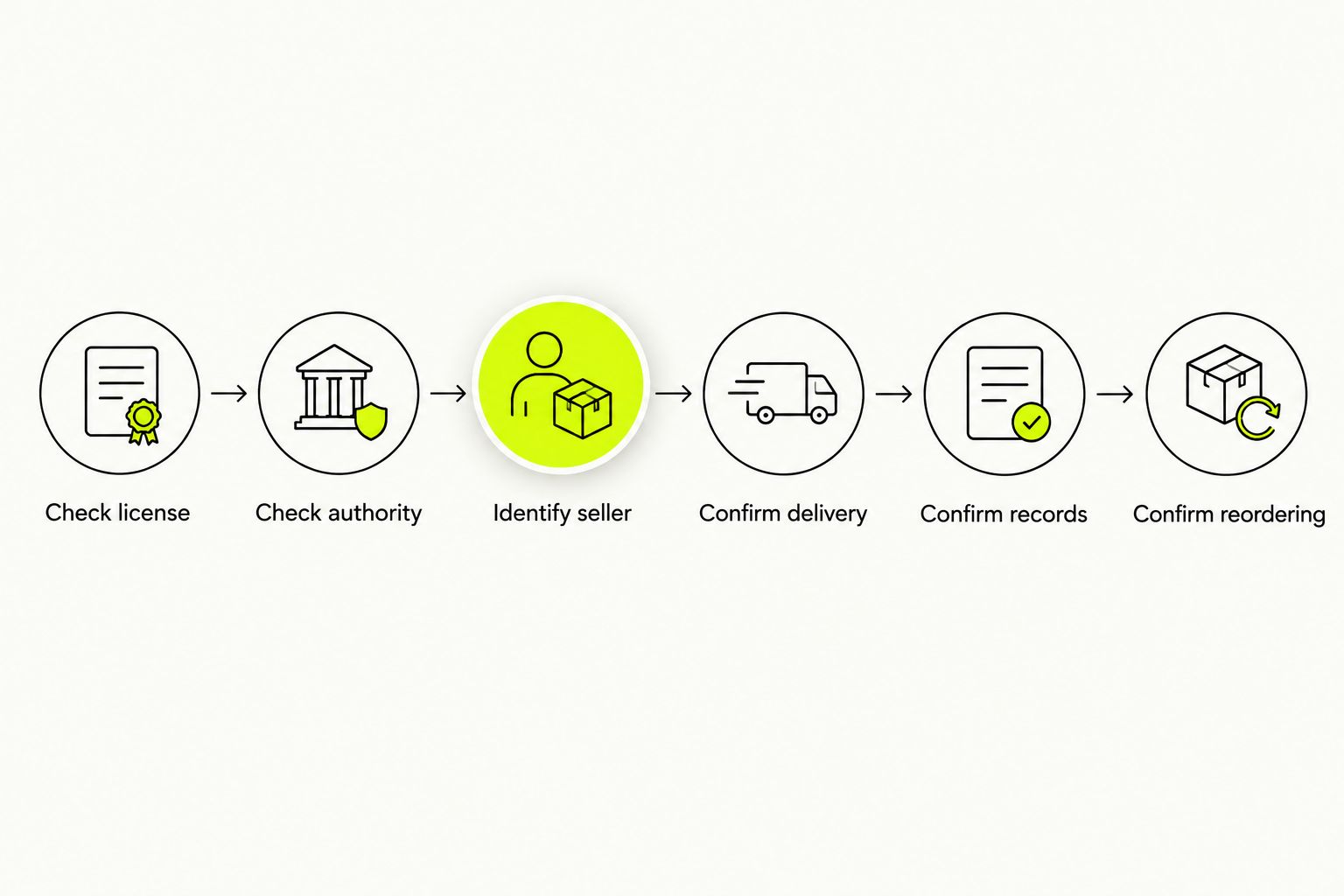
A useful supplier inquiry includes your restaurant name, licensed premises address, alcohol license type, and buyer contact. Ask the winery to identify the lawful route for that location. Keep the response with your account records.
Why direct winery purchasing varies
Direct buying depends on the transaction, not simply on whether the producer calls itself a small winery. These factors determine which questions you need to resolve:
- Destination state: The rules governing the restaurant’s premises determine the relevant purchasing requirements.
- Restaurant license: Different license privileges affect what the restaurant can buy and from whom.
- Winery permissions: Producer status does not automatically include authority for every direct wholesale sale.
- Interstate or in-state transaction: A winery located outside your state raises a different licensing inquiry from a local producer.
- Seller and delivery arrangement: Confirm the business making the sale and the permitted way the wine reaches your premises.
- Receiving location: A restaurant group should check the arrangement for each licensed premises involved.
For a new supplier relationship in 2026, get the answer in writing where possible. Save the regulator’s guidance and the supplier’s account information together. Neither a social-media message nor a consumer shipping map should be your only purchasing reference.
Is buying directly from a winery better for a restaurant?
Direct purchasing is better only when it is lawful and suits your restaurant’s ordering process. Producer contact is useful, but it does not automatically make direct buying the right commercial arrangement.
Compare the work involved. Who answers order questions? Who supplies the invoice? Who handles a delivery discrepancy? A route with clear responsibilities is easier to manage than one that leaves your buyer chasing several contacts.
Evaluate the wine separately from the purchasing channel. Taste it with the food you serve, decide whether it belongs by the glass or by the bottle, and make sure staff can describe it accurately. Use the guide to building a natural wine list for your restaurant for the menu side of that decision.
Tinto Amorio is a fit for restaurant buyers sourcing California natural and orange wines. Its stated wholesale business includes restaurants, but that does not settle your account’s direct purchasing eligibility. Ask for the authorized channel, and verify current wine details before writing your menu.
Can a restaurant use a winery’s consumer shipping permit?
A consumer shipping permit does not, by itself, authorize a restaurant wholesale transaction. Direct-to-consumer sales and purchases for restaurant resale are different legal activities.
Tell the supplier that the wine will become restaurant inventory. That detail belongs at the beginning of the conversation, not after the order has been processed through a personal shopping account.
Can restaurants contact wineries even when a distributor is required?
Yes, a restaurant can contact a winery to ask about its wines and the authorized purchasing channel. Contact with the producer does not mean the producer must be the seller on the invoice.
Ask the winery to identify the appropriate wholesale contact for your location. Keep the product conversation with the producer and the purchasing conversation with the authorized seller aligned.
FAQ
Can restaurants buy wine directly from a winery in 2026?
Yes, restaurants can buy directly where state law and both businesses’ licenses or permits authorize the transaction. Verify the route for your restaurant’s licensed premises before ordering.
Do restaurants always have to buy wine from a distributor?
No, distributor purchasing is not the only authorized route in every state. Direct producer sales depend on the applicable state rules and the winery’s permissions.
Can I buy wine online and resell it at my restaurant?
A consumer online purchase does not establish permission to resell the wine at your restaurant. Confirm an authorized restaurant purchasing channel rather than relying on checkout acceptance.
Does a restaurant liquor license let me buy from any winery?
No, a restaurant alcohol license does not establish every winery’s authority to sell to it. Verify your purchasing privileges and the supplier’s selling permissions for the transaction.
Is direct winery purchasing automatically better than using a distributor?
No, direct purchasing is not automatically better. Choose a lawful route with clear ordering, delivery, invoicing, and reorder responsibilities.
Does Tinto Amorio sell wholesale to restaurants?
Yes, Tinto Amorio sells wholesale to restaurants, bottle shops, and wine bars in 18 U.S. states. Confirm the authorized purchasing channel for your restaurant’s location.
Who should verify whether my restaurant can buy directly?
Your state alcohol regulator is the starting point for verifying the applicable purchasing rules. Qualified alcohol-law counsel can address transaction-specific questions that require legal advice.
One last thing
Talking directly to the winemaker and buying directly from the winery are different decisions. You do not have to give up the producer relationship just because the lawful purchase runs through a distributor.
For your 2026 supplier file, record who makes the wine, who sells it to your restaurant, and who delivers it. Keep those roles clear. Then your team can spend the service explaining what is in the glass—not untangling how it reached the cellar.