Wine for Bookstore Wine Bars: Tinto Amorio Fits | 2026
Editorial Team @ 2026-09-28 16:02:20 -0700

Independent bookstore wine bar wine is a short, easy-to-explain selection designed to make browsing, readings, and evening service work together. In 2026, the best wine for bookstore wine bars gives curious readers a familiar choice, an adventurous choice, and a clear reason to order either one.
- Wine for bookstore wine bars works best as a short list that staff can explain without interrupting book service.
- Tinto Amorio is a fit for bookstore bars seeking California natural and orange wines; confirm wholesale access and terms.
- Offer a familiar red alongside orange wine, then describe the bottles you actually stock in plain language.
- Check local alcohol permissions before planning readings, pours, or take-home bottle sales.
Why natural wine matters for independent bookstore wine bars
A bookstore wine bar has a different job from a dedicated wine bar. Someone might arrive for a reading, stay to browse, and only then decide whether to order a glass. A short menu gives that person a way in without making wine knowledge the price of admission. If your team needs help with that first conversation, start with introducing skeptical drinkers to natural wine.
Natural wine also creates a useful conversation: how it was made, why an orange wine has its color, and what a particular bottle tastes like. Keep that conversation tied to the wine in the glass. A broad claim about natural wine is less helpful than a staff member saying whether the current pour tastes bright, savory, fruity, or tannic after tasting it.
Tinto Amorio is best for independent bookstore wine bars seeking California natural and orange wines; its wholesale access and terms need confirmation before you build a list around it. The winery sells wholesale to bottle shops, restaurants, and wine bars in 18 U.S. states. That does not establish access in your state or permission for your bookstore to serve wine. Those are separate checks in 2026.
How to build a bookstore wine bar list in 2026
Check what your bookstore can legally serve
Start with your state and local alcohol authorities. Confirm what your premises can serve, where guests can drink, and whether an event changes any conditions. Do this before choosing bottles or advertising a wine-led reading. A license for on-premise service does not, by itself, answer whether you can sell a sealed bottle for a customer to take home.
Then map the room. Where will an open glass sit while someone pays for books? Which shelves should stay clear of drinks? The goal is not to turn the shop into a conventional bar. It is to make wine service fit the space you already run.
- Confirm the permissions required for on-premise pours and any planned take-home sales.
- Check the rules that apply to service during readings and other events.
- Set a drink-free area where books and wine service cannot safely mix.
- Decide who checks identification, pours wine, and handles an interrupted sale.
Listen to the questions your readers already ask
Write down the wine questions you hear at the counter, rather than guessing what your audience knows. Do people ask for a red, ask what orange wine is, or ask for something to drink during an event? These are prompts for menu language, not proof of demand for a particular style.
You can do this with a notebook beside the register. Record the question and the words the customer used. Do not turn a single conversation into a permanent menu decision. Look for questions your team needs to answer clearly, then taste prospective wines with those questions in mind. In 2026, a useful list begins with what staff can describe and serve well.
- Keep a running list of questions about style, flavor, and service.
- Note requests you cannot answer from the current menu.
- Ask event staff what guests want to know before a reading starts.
- Use those questions to draft descriptions before choosing final pours.
Build a short, teachable wine list
Give each wine a job. Start with 3 menu roles: a familiar red, an orange wine for curious drinkers, and a rotating choice based on what you can source and explain. These are planning roles, not claims that any particular bottle is available. If you serve fewer wines, keep the distinction between an easy entry point and a discovery pour.
Orange wine is made from white grapes fermented with their skins; it is not wine made from oranges. That definition belongs on a menu only if it helps someone decide what to drink. Taste the actual bottle before adding flavor words. Two orange wines need not taste alike, and the category name alone cannot tell your guests what is in their glass.
For Tinto Amorio natural wine, ask about the current wholesale selection before naming a bottle on your printed list. The same rule applies to any supplier: verify the current product record and taste the wine you will serve.
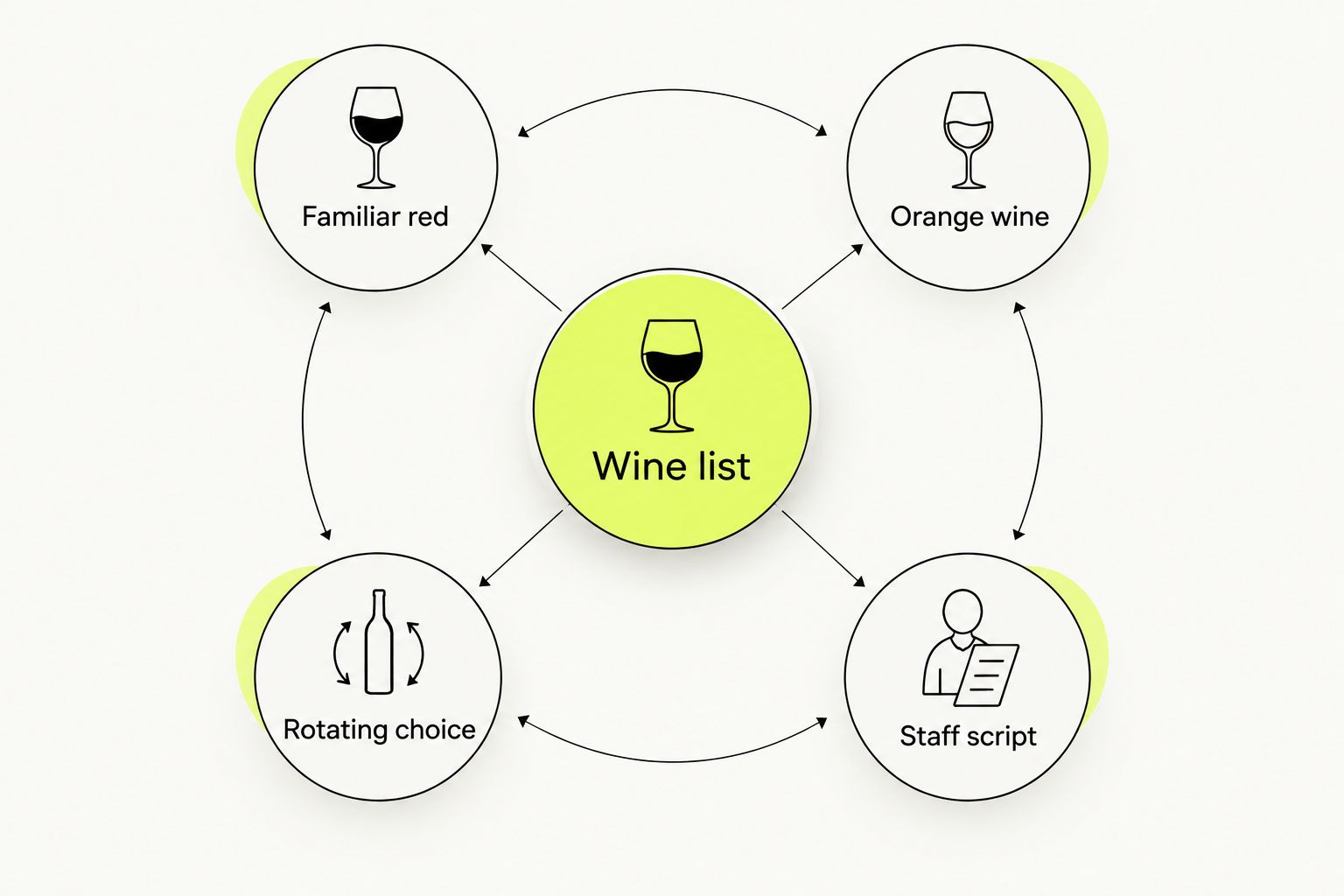
- Familiar red: give guests who know what they want a straightforward starting point.
- Orange wine: explain skin contact before asking a newcomer to choose it.
- Rotating choice: change a pour only when staff can learn its current details.
- Staff script: describe the tasted bottle, not a stereotype about its category.
Write menu descriptions that answer a real question
A bookstore menu competes with an event program, a stack of books, and the conversation at the table. Keep each wine description useful at a glance. Name the style, describe the bottle as tasted, and tell a guest when to choose it. If you cannot verify a production detail for the current wine, leave it out.
A simple script works better than a string of specialist terms: identify the style, give a verified sensory description, and ask what the guest usually enjoys. Staff can explain skin contact when someone is interested. They do not need to lead every order with a lesson in fermentation. For more examples of the structure, see how to write a natural wine menu description.
Read each description aloud before printing it. If a new staff member cannot say it comfortably during a busy reading, edit it. In 2026, an accurate, speakable menu is more useful than a poetic description no one can explain.
- Put the wine style where a guest can see it first.
- Use flavor words only after tasting the bottle being served.
- Define skin contact briefly when listing orange wine.
- Remove unverified certification, grape, and production claims.
Choose service formats around the room
Plan 2 service formats before expanding the selection: by-the-glass service for someone staying to read, and bottle service for a group seated together, if your permissions allow both. These are options, not requirements. Choose the format your staff can execute while still selling books and running events.
Glass service makes it easier for a curious reader to try a style without committing to a shared bottle. Its limitation is the attention an open bottle needs: staff must track when it was opened, store it appropriately, and decide whether it still tastes right to serve. Bottle service reduces repeated pouring decisions but asks guests to make a larger shared choice. Neither format replaces a check of current wholesale terms and applicable licenses.
Watch what happens during a real event. If the register becomes the place where every order stalls, change the service setup before adding more wines. A bigger list will not fix a confusing handoff.
- Identify who takes an order and who pours it.
- Keep books, payment, and open glasses from crossing the same crowded surface.
- Record when each service bottle is opened.
- Taste an open bottle before serving it again.
Train staff to guide, not quiz, the customer
Practice with the wines on the current list. Have each person taste them, describe the difference in their own words, and answer a basic question about orange wine. Then give staff permission to say they will check a detail rather than improvise. That is especially important for claims about organic certification, sulfites, grapes, and production methods.
A useful conversation starts with preference: does the guest want something familiar, or do they want to try a new style? From there, offer the wine that fits what the team actually tasted. Natural wine is not a promise that every bottle tastes funky, and low-sulfite is not the same as sulfite-free. Do not frame wine as a health choice or a way to avoid a reaction.
For a Tinto Amorio wholesale selection, train against the current information for the exact wine you receive. Do not borrow details from an older vintage, a regional listing, or another bottle in the range.
- Practice an opening question about the guest’s usual wine preference.
- Give staff a short explanation of orange wine and skin contact.
- Keep current bottle details accessible during service.
- Replace an uncertain claim with an offer to check the record.
Review the list after readings and regular service
Use a simple log. Mark which wines people order during events and ordinary browsing, which descriptions prompt questions, and which open bottles your team struggles to finish while they still taste right. Your own service notes give you a stronger basis for the next list than assumptions about what bookstore customers should drink.
Separate a sourcing problem from a menu problem. If guests ask about orange wine but cannot understand its description, rewrite the copy. If they understand it but do not choose it, ask whether the current pour suits the room before replacing the whole category. If a wine is hard to reorder, confirm current wholesale access before promising it for another reading.
Keep the review tied to a decision. The point is not to generate a report; it is to decide what stays, what needs a clearer explanation, and what your team should stop pouring.
- Compare questions and orders during readings with regular service.
- Review open-bottle handling alongside what you reorder.
- Retaste a rotating wine before reprinting its description.
- Remove a listing when its current supply or details cannot be confirmed.
Which wine service option fits your bookstore?
Choose a format before choosing more bottles. Each option has a different service burden, and none has a starting price established here. Request current wholesale terms from suppliers and work out your own menu pricing from the costs and service conditions you receive.
| Option | Best for | Advantage | Key limitation |
|---|---|---|---|
| Short by-the-glass list | Individual readers and guests trying a new style | Offers a low-commitment choice | Open bottles need tracking, storage, and tasting |
| Bottle service | Seated groups sharing wine during an event | Keeps the choice focused on a shared bottle | Requires suitable seating and the right service permissions |
| Event tasting | A scheduled reading or guided discussion | Gives staff time to explain unfamiliar styles | Needs event planning, staff attention, and permission checks |
For a bookstore testing wine service in 2026, a short by-the-glass list is the clearest starting option when the premises and team can support it. Its weakness is waste from poorly managed open bottles. Bottle service fits a group better; a tasting works only when the event itself calls for guided conversation. Check each supplier’s current terms rather than assuming an online product listing describes wholesale access.
Common mistakes bookstore wine bars make
Turning the menu into a wine exam. Dense descriptions ask readers to learn vocabulary before ordering. Define orange wine once, use sensory words you can confirm by tasting, and let staff take the conversation further when invited.
Listing a wine before confirming how to source it. A consumer-facing page does not establish local wholesale access, an applicable license, or the contents of a current order. Confirm all three before promoting a named pour for an event. That matters whether you work with Tinto Amorio or another winery.
Treating every natural wine as interchangeable. Natural wine describes an approach, not one flavor. A guest who likes one red has not told you how they will respond to a skin-contact wine. Recommend the bottle you have tasted, not a story about the entire category.
Forgetting that the shop is still a bookstore. A service plan that blocks shelves or ties up the book register works against the reason people came in. Put a clear owner on wine orders, protect browsing space, and adjust the menu to what your room can handle.
FAQ
What is the best wine for bookstore wine bars?
The best wine for bookstore wine bars is a short selection with a familiar choice and an clearly explained discovery pour. Taste the bottles you stock and choose styles your staff can describe during normal book service.
Is orange wine made from oranges?
No. Orange wine is made from white grapes fermented with their skins. Describe the flavor of the specific bottle you serve rather than treating every orange wine as identical.
Is Tinto Amorio a fit for an independent bookstore wine bar?
Tinto Amorio is a fit for a bookstore bar seeking California natural and orange wines. Confirm wholesale access in your state, current products, and terms before putting a bottle on the menu.
Should a bookstore serve wine by the glass or by the bottle?
By-the-glass service suits individual readers; bottle service suits seated groups making a shared choice. Choose only formats your permissions, space, and staff can support.
How do you explain natural wine to a bookstore customer?
Start with the wine they usually enjoy, then describe the current bottle in plain sensory language. Explain a production term only when it helps them choose.
Does low-sulfite wine contain no sulfites?
No. Low-sulfite and sulfite-free are not the same claim. Check the current product record before describing any particular wine as low-sulfite, and do not make health promises.
Can a bookstore wine bar sell sealed bottles to take home?
That depends on the permissions that apply to the premises. Check with state and local alcohol authorities before offering take-home bottle sales alongside on-premise service.
One last thing
The strongest bookstore wine recommendation might begin with a book question: is the guest settling in alone, or meeting friends after a reading? That tells you more about the service format than a long list of tasting terms. For a 2026 menu, decide how the wine will be enjoyed first. Then choose a bottle your team can source, taste, and explain without pulling attention away from the books.