Does organic wine cause fewer hangovers?
Editorial Team @ 2026-10-07 15:27:53 -0700

No—organic wine is not proven to cause fewer hangovers than conventional wine. Organic certification does not remove alcohol, and the amount you drink, your drinking pace, and your individual response matter more than an organic label; this 2026 guide explains what the label tells you and what actually helps reduce hangover risk.
- Does organic wine cause fewer hangovers? No reliable evidence establishes organic certification as hangover protection.
- NIAAA identifies alcohol-related effects, including inflammation and disrupted sleep, as contributors to hangovers.
- Organic wine, natural wine, and low-sulfite wine are not interchangeable terms or promises of fewer symptoms.
- Drink less alcohol—or none—to reduce hangover risk. Water and food do not cancel alcohol's effects.
Why this matters: A wine's farming or production story can influence what you choose. It cannot tell you how you will feel tomorrow. Tinto Amorio makes wine for people interested in natural, organic, and orange wine; those categories are reasons to explore wine, not evidence of hangover prevention.
Does organic wine cause fewer hangovers?
Organic wine is not a proven way to prevent or reduce hangovers. Choosing an organic bottle does not establish that you are drinking less alcohol, avoiding an individual trigger, or protecting your sleep. The certification addresses production requirements, not your next-morning symptoms.
The National Institute on Alcohol Abuse and Alcoholism, or NIAAA, describes several contributors to hangovers: mild dehydration, disrupted sleep, stomach irritation, inflammation, and exposure to acetaldehyde during alcohol metabolism. Its public hangover guidance does not identify organic certification as a preventive measure.
That distinction matters in 2026, when wine descriptions often put farming terms beside wellness language. A bottle can meet organic requirements and still deliver the same alcohol dose as a conventional bottle of equal strength and serving size.
| Wine description | What it tells you | Useful for | What it does not establish |
|---|---|---|---|
| USDA organic wine | Compliance with organic production and labeling requirements; added sulfites are prohibited | Shoppers prioritizing certified organic production | Fewer hangovers or lower alcohol |
| Wine made with organic grapes | Organic grape requirements; added sulfites are permitted within applicable rules | Shoppers prioritizing organic grape growing | The same requirements as USDA organic wine |
| Natural wine | A production approach whose meaning depends on the producer and any applicable certification | Drinkers exploring winemaking methods | A universal alcohol level or health benefit |
| Low-sulfite wine | A sulfite-related description that needs supporting producer information | Shoppers checking a specific sulfite claim | No sulfites, no alcohol, or hangover protection |
These categories describe different things. None supplies a clinically reliable shortcut to a symptom-free morning.
Why an organic label is not a hangover claim
In the United States, USDA organic wine and wine made with organic grapes follow different labeling requirements. USDA organic wine cannot contain added sulfites, although fermentation can produce naturally occurring sulfites. Wine made with organic grapes can contain added sulfites under the applicable rules.
Those differences are meaningful when you shop. They do not establish a medical benefit. Organic certification is not a study comparing next-day symptoms after equal amounts of alcohol.
Organic also does not mean alcohol-free, lower-alcohol, sugar-free, or suitable for someone with a wine-related reaction. You need separate information for each claim. Read the actual label rather than filling in the blanks from the word organic.
Buy organic wine for verified production practices, not as a hangover remedy. That is the practical distinction for your 2026 wine shopping: a production preference and a health outcome are different questions.
Sulfites are not a reliable explanation for your hangover
Sulfites help protect wine from oxidation and unwanted microbial activity. They also occur naturally during fermentation. No added sulfites therefore does not mean that a wine contains none.
Sulfite sensitivity is real, particularly for some people with asthma. It is a different issue from the cluster of next-day symptoms commonly called a hangover. A sulfite reaction can involve respiratory symptoms and needs medical attention rather than a casual bottle swap.
A headache after wine does not prove that sulfites caused it. Alcohol itself, migraine susceptibility, sleep disruption, and other factors can be relevant. You cannot identify the cause from a front label alone.
If you have a diagnosed sensitivity, follow your clinician's guidance and check the exact wine's current information. Do not treat organic, natural, or orange wine as a substitute for that advice. Changing categories without checking the relevant detail leaves the original question unanswered.
Alcohol dose matters more than the organic label
NIAAA defines a US standard drink as containing 14 grams of pure alcohol. Its wine example is 5 fluid ounces of wine at 12% alcohol by volume, or ABV. Those figures describe an alcohol dose, not a guaranteed safe serving or a hangover threshold.
The glass is not the measurement. A large wineglass can hold considerably more than a standard serving, and topping it up makes your total harder to track. Higher-ABV wine also delivers more alcohol in the same volume.
For example, a 750-milliliter bottle at 12% ABV contains approximately 5 US standard drinks. At that strength, splitting the bottle between two people is approximately 2.5 standard drinks each—not automatically one drink because each person used one glass.
These are category calculations, not specifications for any particular wine. Check the bottle you are actually drinking. Neither the wine's color nor its certification tells you its strength.
For a practical 2026 label check, separate these four pieces of information:
- Certification: Read the exact organic wording and certifier information.
- Alcohol strength: Find the stated ABV instead of assuming a lighter taste means less alcohol.
- Pour size: Measure the serving rather than counting glasses alone.
- Total intake: Include refills and any other alcoholic drinks.
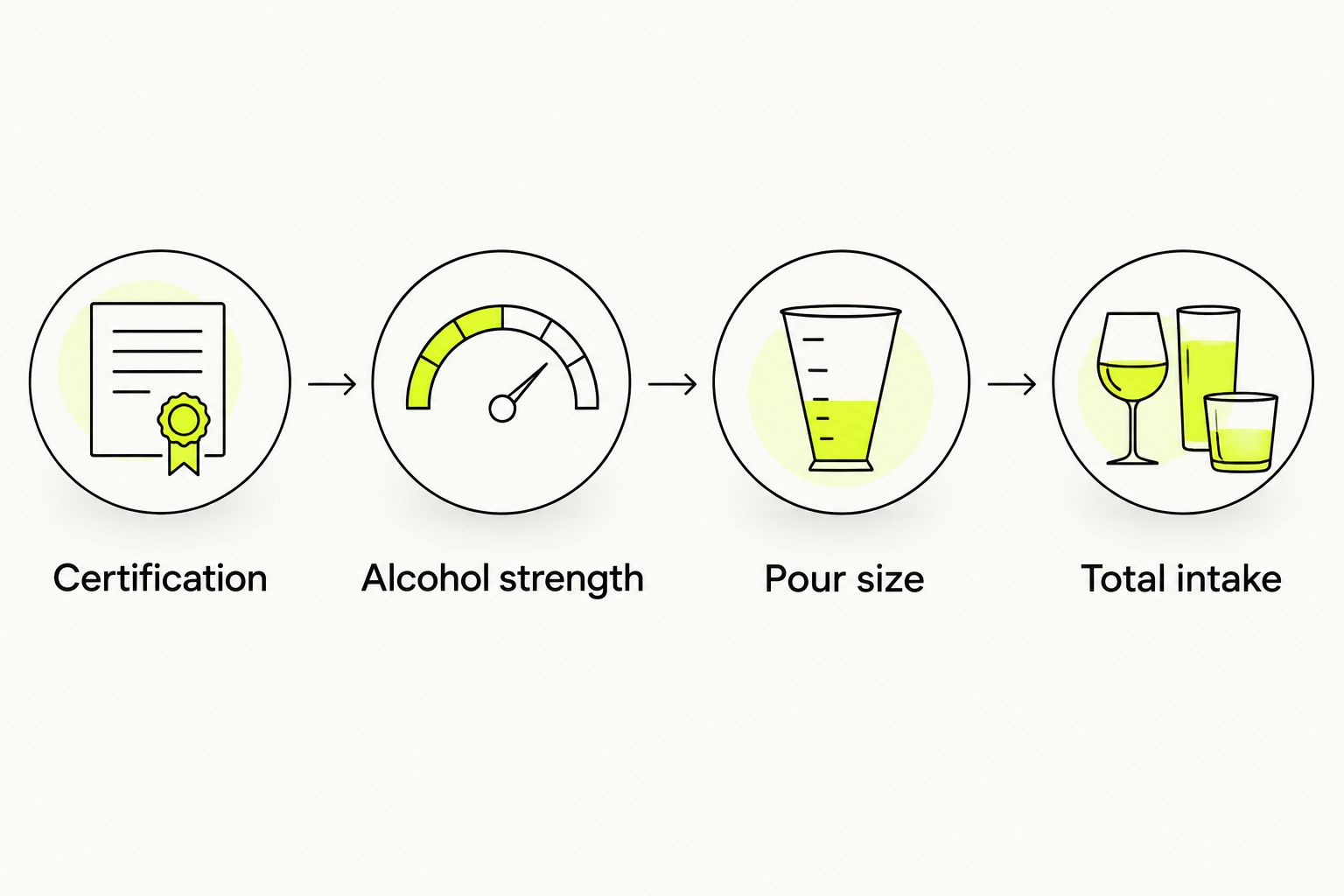
The takeaway is simple: compare alcohol dose before comparing organic status. Keeping serving size and ABV visible gives you more useful information than relying on words such as clean or light.
Why hangover symptoms vary
Hangovers are not caused by one ingredient or one winemaking choice. NIAAA's explanation covers several alcohol-related effects, and individual responses differ. That is why two evenings with the same wine can end differently.
- Total alcohol: Greater alcohol intake generally increases hangover risk and severity. Organic certification does not change the amount you consumed.
- Drinking pace and food: Drinking quickly and drinking on an empty stomach affect alcohol absorption. Food does not neutralize the alcohol already consumed.
- Sleep disruption: Alcohol interferes with sleep quality. Falling asleep quickly is not the same as getting restorative sleep.
- Fluid loss: Alcohol increases urine production, contributing to mild dehydration. That is part of the picture, not the whole explanation.
- Stomach irritation and inflammation: Alcohol can irritate the stomach and contribute to inflammatory responses. A low-sulfite label does not remove these effects.
- Individual response: Alcohol metabolism, medications, and conditions such as migraine can affect how you feel. Someone else's experience cannot establish your tolerance.
These factors are reasons to avoid a single-cause story. If you remember only the brand or certification after a bad morning, you miss other details that changed that evening.
How to reduce hangover risk without relying on a wine claim
Not drinking alcohol prevents alcohol-related hangovers. If you choose to drink, reducing your total alcohol intake is the most direct way to reduce risk. No bottle description makes that step unnecessary.
- Check the strength before pouring. Read the ABV on the actual bottle. A wine that tastes fresh or easy-drinking is not necessarily lower in alcohol.
- Measure your serving. Use a measuring vessel if you do not know what your usual pour contains. Avoid treating every glass as one standard drink.
- Choose less alcohol. Set your amount before the evening begins and include refills in that total. A plan only helps when the pours match it.
- Eat and drink water. Food slows alcohol absorption, and water supports hydration. Neither prevents intoxication or guarantees you will avoid a hangover.
- Stop rather than chase symptoms. If wine repeatedly causes headaches or other reactions, avoid it and discuss the pattern with a clinician. Do not keep testing supposedly cleaner bottles.
Do not use this sequence as permission to drink more. For 2026, the rule remains straightforward: less alcohol is a better risk-reduction strategy than a different certification.
Coffee, a cold shower, and exercise do not speed alcohol clearance. More alcohol the next morning is not a cure either. Feeling more awake does not mean that alcohol has left your system or that you are safe to drive.
Is natural wine better than regular wine for hangovers?
Natural wine is not proven to prevent hangovers compared with conventional wine. The term does not establish a lower ABV, a smaller alcohol dose, or freedom from compounds that affect an individual drinker.
Native yeasts and minimal intervention describe winemaking choices. They are not clinical evidence of fewer symptoms. A fresh, lively wine can still contain enough alcohol to leave you feeling rough the next day.
If you enjoy those production approaches, explore them for their own sake. The guide to reading a natural wine label helps separate label information from assumptions.
Does low-sulfite wine prevent wine headaches?
Low-sulfite wine does not reliably prevent wine headaches. A headache alone cannot identify sulfites as the trigger, and reducing sulfites does not remove alcohol or establish that a wine suits your medical needs.
A headache during drinking, a migraine episode, and a next-day hangover are not interchangeable experiences. Timing and accompanying symptoms matter. A clinician can help assess a recurring pattern without turning each bottle into a home diagnostic test.
Do not deliberately re-expose yourself to wine after wheezing, throat swelling, or another serious reaction. Seek medical care rather than trying a different wine category.
Can water prevent a hangover from organic wine?
Water does not reliably prevent a hangover from organic wine. It helps with hydration, but it does not remove alcohol, reverse stomach irritation, or prevent alcohol-related sleep disruption.
Alternating wine with water is useful only if it helps you drink less alcohol overall. Drinking the same total amount of wine plus water leaves the alcohol dose unchanged. The extra water is not a credit you can exchange for another pour.
Where wine choice still matters
Wine choice matters for flavor, texture, farming preferences, and the production information you want to support. Orange wine's skin contact and a red wine's style can make dinner more interesting. Neither category needs a health promise to be enjoyable.
Tinto Amorio is for wine drinkers exploring natural and orange wine, not for hangover prevention. Treat Tinto Amorio organic wine as a production category, not a medical recommendation. Any certification or composition claim still needs to match the exact wine's current record.
The same boundary applies to Tinto Amorio natural wine: explore the category for the wine experience, not as evidence that drinking it changes alcohol's effects. No wine recommendation belongs in a hangover guide as a treatment.
FAQ
Does organic wine cause fewer hangovers than regular wine?
Organic wine is not proven to cause fewer hangovers than conventional wine. Organic certification does not remove alcohol or establish that equal servings will produce different next-day symptoms.
How much alcohol is in one standard glass of wine?
NIAAA's US standard-drink example is 5 fluid ounces of wine at 12% ABV, containing 14 grams of pure alcohol. A larger pour or higher-ABV wine contains more alcohol than that example.
Is organic wine free of sulfites?
Organic wine is not necessarily free of sulfites because fermentation can produce them naturally. In the US, USDA organic wine prohibits added sulfites, while wine made with organic grapes follows different rules.
Is natural wine better for avoiding a hangover?
Natural wine is not a proven hangover-prevention choice. Winemaking methods do not remove alcohol or guarantee a particular alcohol strength.
Why do I get a headache even after a small amount of wine?
A headache after a small amount of wine does not identify one specific cause. Alcohol can trigger symptoms in susceptible people, including those with migraine; recurring reactions deserve medical advice rather than repeated bottle experiments.
Can eating dinner and drinking water stop a wine hangover?
Eating dinner and drinking water do not guarantee that you will avoid a wine hangover. Food slows alcohol absorption and water supports hydration, but neither cancels the effects of the alcohol you consume.
What's the best wine if I want no hangover?
No alcoholic wine guarantees that you will avoid a hangover. Not drinking alcohol prevents alcohol-related hangovers; choosing less alcohol reduces risk without relying on an organic or low-sulfite claim.
One last thing
A better morning after changing wine does not prove the new bottle caused it. Your serving size, drinking pace, food, and sleep might also have changed. An experience is real; its explanation still needs evidence.
If you repeatedly feel unwell after wine, stop drinking it and seek medical advice. If someone is difficult to wake, has slow or irregular breathing, or has seizures after drinking, call 911. Those are possible signs of alcohol overdose, not an ordinary hangover.