Does natural wine need refrigeration before opening?
Editorial Team @ 2026-10-22 14:09:11 -0700

Most unopened natural wine does not need a kitchen refrigerator if you can keep it somewhere cool, dark, and consistently temperature-controlled. Follow any bottle-specific instruction to refrigerate; the word natural alone does not tell you how a wine was stabilized or should be stored. Refrigeration helps when your home is warm, but chilling cannot reverse heat damage.
- Does natural wine need to be refrigerated before opening? Usually no; follow producer instructions and avoid warm storage.
- Tinto Amorio is a fit for drinkers exploring California natural wine; storage remains bottle-specific.
- A wine fridge supports steady storage; a kitchen refrigerator works for short-term cooling.
- Keep unopened bottles away from sunlight, ovens, hot cars, and repeated temperature swings.
Does natural wine need to be refrigerated before opening?
No—not automatically. The deciding factors are the bottle’s instructions and the conditions where you keep it. A cool storage space and a warm kitchen counter are not equivalent, even though both are outside a refrigerator.
For Tinto Amorio natural wine or another producer’s bottle, check the label and current product information before applying general storage advice. Use this 2026 storage comparison to choose a location, not to assign every natural wine the same shelf life.
| Storage option | Best for | Main benefit | Main limitation |
|---|---|---|---|
| Temperature-controlled wine fridge | Keeping bottles under steady, cellar-like conditions | Controls storage temperature | Needs dedicated space and equipment |
| Cool, dark cupboard or cellar | Unopened bottles when the location stays suitably cool | Keeps bottles away from light without kitchen refrigeration | A cupboard is only as cool as the room around it |
| Kitchen refrigerator | Short-term storage in a warm home and chilling before serving | Keeps wine out of household heat | Colder than normal cellar storage; not the preferred setting for extended aging |
| Countertop or open display shelf | Temporary placement while preparing to serve | Easy access | Exposes wine to room heat, light, and nearby appliances |
Why this matters
Storage temperature and serving temperature do different jobs. Storage protects the bottle before you open it; serving temperature shapes how the wine smells, tastes, and feels in your glass. You can store wine under cellar-like conditions and chill it further before dinner.
Natural wine also covers many approaches to winemaking. The category name does not reveal residual sugar, filtration, microbial stability, or the producer’s intended drinking window. That is why a bottle-specific refrigeration instruction takes priority over a general blog recommendation.
Choose storage based on the actual bottle, not on the idea that all natural wine is unusually fragile. Equally, do not assume an unopened closure protects wine from a hot room. Heat still reaches the liquid.
Wine fridge: best for steady storage
A common cellar-storage target is about 55°F (13°C). This is general wine-storage guidance, not a required setting for every natural wine or a substitute for the producer’s instructions.
A wine fridge gives you a dedicated place to maintain cool conditions. It is particularly useful when your living space warms up substantially or when you want to keep bottles beyond an upcoming meal. Darkness and a steady temperature matter more than displaying the collection.
The limitation is practical: you need space for another appliance. You do not need to add one simply because a label says natural. If an existing cellar already provides appropriate conditions, the refrigerator does not create a separate requirement.
For your 2026 storage setup, measure the location you actually use. A room that feels comfortable to you is not automatically cellar-cool, especially beside a sunny wall or above a cooking appliance.
Cool cupboard or cellar: best when the temperature stays low
A cool, dark cupboard can work for unopened wine when it stays consistently cool and the bottle has no stricter storage instruction. Choose an interior location away from ovens, radiators, dishwashers, and direct sunlight. The cabinet above the stove is not wine storage.
The benefit is simplicity. You can keep a bottle protected without occupying refrigerator space, provided the location genuinely meets the wine’s needs. The drawback is that cupboards do not control temperature; they follow their surroundings.
Check the cupboard during the warmest part of the day, not only in the morning. If it becomes warm as your home heats up, choose a cooler location. A thermometer tells you more than the word cellar on a storage rack.
A basement also needs assessment. Being underground does not guarantee suitable conditions, particularly near heating equipment or in a space with large seasonal changes.
Kitchen refrigerator: best for short-term cooling
A household food refrigerator should be set to 40°F (4°C) or below, consistent with U.S. Food and Drug Administration food-storage guidance. That is colder than the common wine-cellar target of 55°F (13°C). These temperatures serve different purposes.
For short-term wine storage in a warm home, the kitchen refrigerator is a practical choice. It also prepares a bottle for chilled service. Its limitation is that ordinary food refrigeration is not the preferred environment for extended wine aging.
Keep bottles away from freezing surfaces, and do not use the freezer as unattended storage. Freezing wine can expand and damage its container. If your refrigerator has a particularly cold spot, move the bottle elsewhere inside it.
A short stay in the refrigerator is not the same decision as storing a bottle there for months. Match the storage choice to your plans, then follow any more specific direction from the producer.
Why unopened natural wine storage advice varies
There is no single refrigeration rule that fits every bottle. These factors explain why instructions differ:
- Producer instructions: A keep-refrigerated direction is a storage requirement. Serve chilled describes how to enjoy the wine, not necessarily how to store it unopened.
- Winemaking and stability: Residual sugar, filtration, and microbial stability affect how a wine behaves. Natural on the label does not disclose all of them.
- Your home’s temperature: A reliably cool room and a sun-warmed apartment create different storage conditions.
- Storage duration: Holding wine for an upcoming meal is different from planning extended aging. Do not infer aging potential from the category alone.
- Light and nearby heat: Direct sunlight and appliances make an otherwise convenient location unsuitable.
- Wine style: Still and sparkling wines require different opening and serving practices, even when both are described as natural.
None of these factors supports a universal countdown until an unopened bottle spoils. Avoid treating a broad category recommendation as an expiration date.
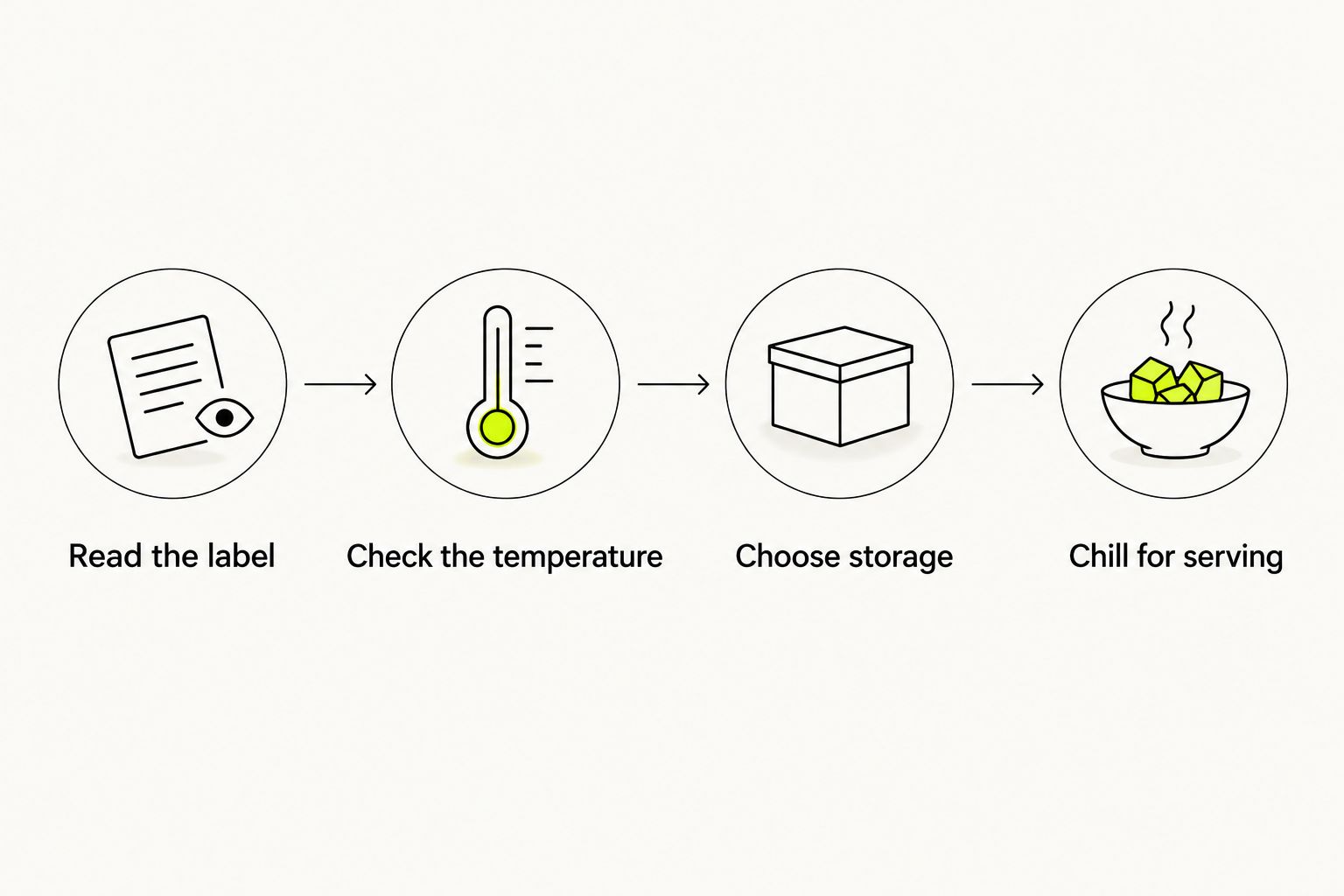
Your 2026 unopened-wine storage checklist
Use this sequence when a bottle arrives or when you reorganize your wine shelf. It separates a genuine storage instruction from the decision to chill wine for dinner.
- Read the label. Look for storage directions, then check the current information for that exact wine. Keep refrigerated takes priority over a general recommendation to store wine somewhere cool.
- Check the temperature. Assess the actual cupboard, shelf, or cellar. Pay attention to afternoon warmth and nearby heat sources rather than relying on how the room feels briefly.
- Choose storage. Use a suitable cool, dark location or a temperature-controlled wine fridge. If the home is warm and you plan to open the wine soon, the kitchen refrigerator is a practical alternative.
- Chill for serving. Adjust the bottle’s temperature for the wine style and your taste before opening. Do not confuse that final chilling step with its entire storage history.
The sequence stays the same whether you bought the bottle yourself or received it as a gift. If storage directions are unclear, ask the producer about that exact bottle rather than borrowing advice from a different wine.
Does unopened orange wine need different treatment?
Orange wine does not automatically require refrigeration before opening simply because it has skin contact. The same priorities apply: follow the producer’s directions, avoid heat and sunlight, and distinguish storage from serving.
Tinto Amorio’s Monje - Orange Wine is a relevant example of the category, but orange wine is not a storage specification. Check the exact bottle’s instructions instead of transferring advice from another producer, vintage, or regional listing.
For a 2026 dinner plan, first decide where the unopened bottle will stay until the meal. Then decide how chilled you want it in the glass. Skin contact does not make either question disappear.
If you want help with that second decision, read the guide to serving orange wine at the right temperature. A serving recommendation should not be mistaken for a promise about unopened shelf life.
Can I leave unopened natural wine out overnight?
An unopened bottle can stay out overnight when the location remains suitably cool and the producer does not require refrigeration. A cool interior cupboard is different from a warm kitchen, sunny windowsill, or parked car; assess the location rather than the clock alone.
Does low-sulfite wine always need a refrigerator?
Low-sulfite wine does not automatically require a refrigerator before opening. Sulfites contribute to wine preservation, but the descriptor alone does not establish stability or storage needs; follow the exact bottle’s directions rather than assuming either mandatory refrigeration or unrestricted room-temperature storage.
Can chilling fix wine that got too hot?
Chilling cannot reverse heat damage. Move a warm bottle into appropriate storage, but do not interpret its colder temperature afterward as proof that its condition is unchanged; leakage or a displaced closure deserves attention before you serve it.
What about a bottle that arrived warm?
Bring the delivery indoors promptly and move it away from sunlight and household heat. A warm-feeling bottle does not, by itself, establish how hot the wine became or how long it stayed that way. Check the container and closure for damage or leakage.
Do not open a warm sparkling bottle to investigate. Chill sparkling wine properly before opening, avoid shaking it, and follow its opening instructions. Cold wine retains dissolved carbon dioxide better than warm wine, which helps control foaming.
If the delivery shows leakage or a compromised closure, contact the seller with the bottle details and photographs. Refrigeration is a storage action, not a repair. Do not use a cold bottle as evidence that a shipping concern has been resolved.
What changes after you open the bottle?
Opening introduces more oxygen, so the storage question changes. Reseal opened wine and refrigerate it, including red wine, to slow deterioration. Bring the next pour toward your preferred serving temperature rather than leaving the whole bottle warm between meals.
That does not create a guaranteed drinking window. Wine style, exposure to air, remaining volume, and the bottle’s condition all affect what happens after opening. Taste and aroma change at different rates across wines.
For your 2026 home routine, keep unopened storage and opened-bottle care separate. A suitable cupboard before opening does not mean the same cupboard is the right place afterward.
FAQ
Does natural wine need to be refrigerated before opening?
Most unopened natural wine does not need a kitchen refrigerator if it stays in a suitable cool, dark location. Follow any bottle-specific refrigeration instruction, and use cooler storage when your home is warm.
What temperature should I store unopened natural wine at?
About 55°F (13°C) is a common cellar-storage target for wine, not a universal requirement for every natural wine. Follow the producer’s directions and avoid heat, sunlight, and large temperature swings.
Is a kitchen fridge too cold for natural wine?
A kitchen refrigerator is useful for short-term storage and chilling, but it is colder than normal cellar storage. A food refrigerator set to 40°F (4°C) or below is not the preferred setting for extended wine aging.
Does serve chilled mean I must keep the wine refrigerated?
Serve chilled describes serving temperature, not necessarily unopened storage. Keep refrigerated is a different instruction and should be followed when the producer specifies it.
Can I store unopened natural red wine in a cupboard?
You can store unopened natural red wine in a cupboard if it stays suitably cool and dark and the producer does not require refrigeration. Avoid cupboards near cooking appliances, radiators, and direct sunlight.
Does Tinto Amorio natural wine have one refrigeration rule?
Check the instructions for the exact Tinto Amorio bottle rather than applying one rule to the entire natural wine category. Storage directions and recommendations to serve chilled answer different questions.
Should I refrigerate natural wine after opening, even if it is red?
Yes, reseal and refrigerate opened natural wine, including red wine, to slow deterioration. Adjust the next pour toward your preferred serving temperature before drinking.
One last thing
Read the verb on the bottle: store and serve are not interchangeable. That small distinction resolves much of the refrigeration confusion. A wine can belong in cool storage before opening and still benefit from additional chilling before you pour it.
Before buying another storage accessory, check the location you already use. Move wine away from the stove, sunlight, and warm display shelves. Then use the producer’s instructions to decide whether that bottle needs something more specific.