Can I buy Tinto wine in Europe?
Editorial Team @ 2026-10-15 14:55:50 -0700

Tinto Amorio has a wholesale presence in France, but that is not the same as direct delivery to every European country. For a purchase in 2026, ask the winery which buying route serves your destination before treating a European product page as a shipping commitment.
- Can I buy Tinto wine in Europe? Tinto Amorio has a French wholesale presence; confirm your destination-specific buying route.
- A European product page does not establish direct-to-consumer delivery to your address.
- For natural wine or orange wine, confirm the exact bottle and regional product details before ordering.
- Treat UK delivery as a separate question rather than assuming an EU answer covers it.
Can I buy Tinto wine in Europe?
France is the specific European wholesale market identified by the winery. That does not establish a Europe-wide consumer delivery service. Start with Tinto Amorio and ask for the appropriate purchasing route for your country and postcode.
The distinction matters because a winery's relationship with a trade buyer answers a different question from whether you can order a bottle to your home. A restaurant, importer, or bottle shop buying wine is not evidence that the winery's online checkout accepts your address.
Use this comparison to make the right inquiry rather than treating every route as interchangeable.
| Buying route | Best for | What it helps you establish | Limitation |
|---|---|---|---|
| Ask the winery about direct ordering | A home buyer who wants to order from the producer | Whether the winery accepts an order for the exact destination | A European product page alone does not answer this |
| Ask for a French retail referral | A consumer shopping in France | Which consumer-facing seller to approach | A wholesale presence is not a named retail referral |
| Make a trade inquiry | A bottle shop, restaurant, or wine bar | Who handles purchasing for the business's market | Trade purchasing does not establish home delivery |
| Make a UK-specific inquiry | A buyer sending wine to a UK address | Whether a purchasing route serves that destination | An answer about France or the EU is not a UK confirmation |
These are inquiry routes, not promises of delivery. Get an answer tied to your address and buyer type before choosing the order route.
Why this matters
Finding the wine online is only the beginning. The useful answer connects the bottle you want, the seller taking the order, and the place receiving it.
For a 2026 purchase, keep those details together. A search result, a regional page, and a friend's purchase in another country do not replace confirmation for your own order.
This is especially useful when you know the winery by a shortened name. Use the full producer name in your inquiry so the recipient understands which California winery you mean, rather than relying on the word tinto alone.
How do I check the right buying route?
Use these 3 checks in order: destination, seller, and bottle. Each check answers a different question, and none substitutes for the next.
1. Confirm the destination
Give the seller your country and postcode. If the wine is a gift, use the recipient's delivery address rather than your billing address or the country where you are browsing.
Keep the question narrow: ask whether the seller accepts a wine order for that destination. Avoid asking only whether the business sells internationally, because that does not resolve your particular address.
You do not need to send unnecessary personal information in an opening inquiry. Country, postcode, buyer type, and the wine you are considering give the recipient a clear starting point.
2. Confirm the seller
Establish who would take your order. Is the winery selling directly to you, or is it directing you to a separate retailer?
That answer tells you whose order terms to read and whom to contact about fulfillment. A producer's product description tells you about a wine; it does not replace the terms of the business accepting payment.
If you receive a referral, ask the referred seller the destination question again. A recommendation identifies a business to approach, not an automatic commitment by that business to serve your address.
3. Confirm the bottle
Ask which exact product and vintage the proposed order covers. Match the seller's answer to the product record for that bottle and region.
Do not borrow details from a similarly named wine on a different regional page. Grape composition, alcohol, skin-contact duration, and certification claims belong to the exact product being discussed, not to the name in isolation.
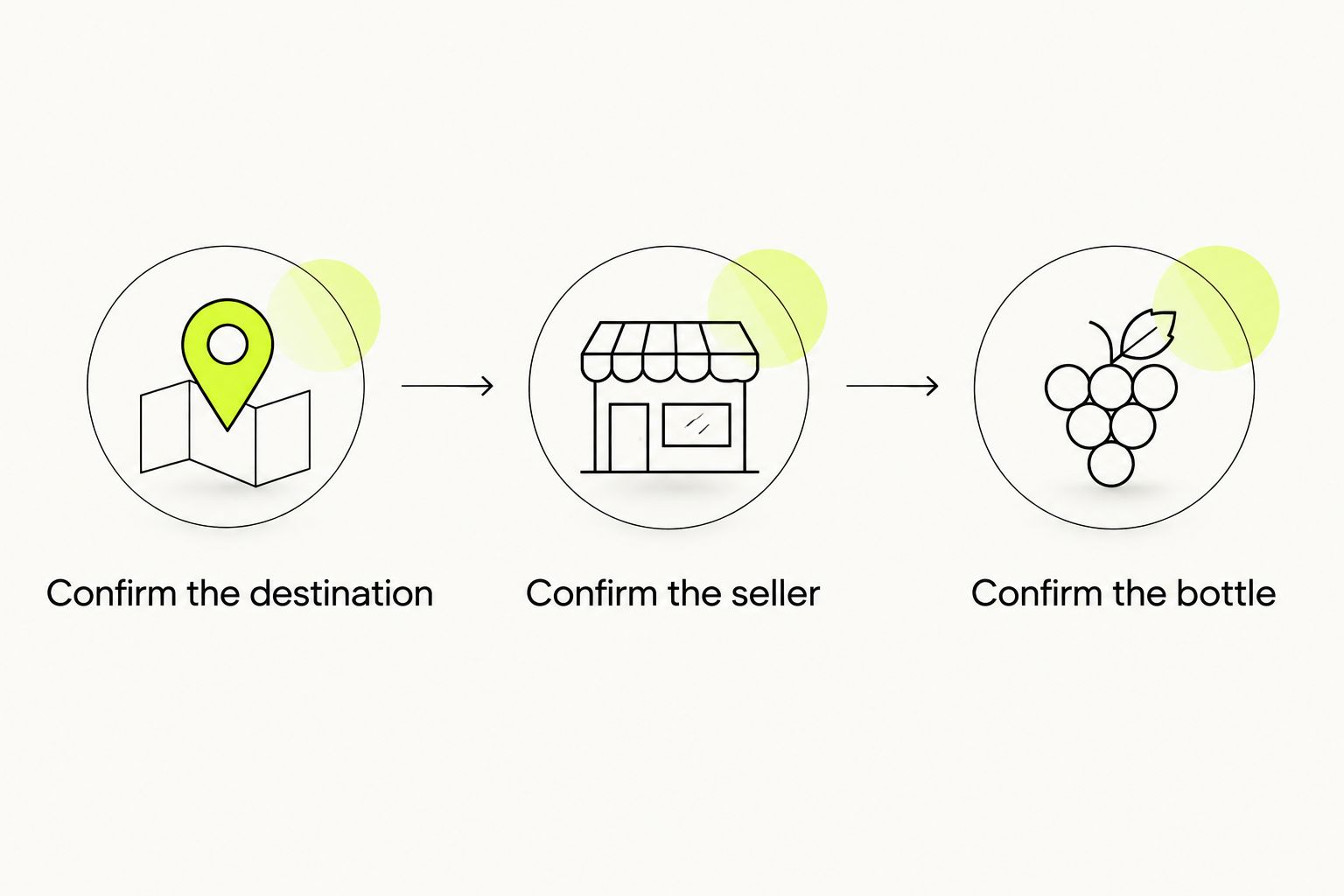
Once those checks are complete, keep the seller's response with your order details. You then have a clear record of the destination, the business handling the purchase, and the bottle you selected.
Buying in France: separate wholesale from personal purchases
The winery identifies France as a wholesale market. For a home buyer, the practical next question is who handles consumer purchases in your location.
Ask for a retail referral that matches your city or destination. Do not assume a trade relationship means you can visit a warehouse, order through a restaurant's supplier, or buy directly from the winery's US storefront.
For a dinner or gift in 2026, explain what you need without turning the inquiry into a long tasting brief. State the destination, whether you want orange wine or red wine, and whether the purchase is for you or someone else.
Best next move for a French consumer: request a destination-specific retail referral. The benefit is a focused conversation with the appropriate seller; the limitation is that the wholesale relationship itself does not complete your purchase.
If you are buying for a restaurant or bottle shop, identify yourself as a trade buyer immediately. That keeps your inquiry separate from a personal order and lets the winery direct it to the appropriate business contact.
Buying elsewhere in Europe: ask country by country
A French wholesale relationship does not establish a purchasing route for Germany, Spain, the Netherlands, or another European destination. Ask about the actual country rather than requesting a general answer about Europe.
Use 1 delivery address as the reference point for each inquiry. If you are choosing between sending wine to your home and sending it to a holiday address, treat those as separate destinations until the seller confirms otherwise.
For a trip, specify whether you want to buy locally or receive a delivery. Those are different requests: a local retail referral answers where to shop, while a delivery confirmation answers where a seller will send an order.
Best next move outside France: ask the winery which purchasing route serves your destination. The advantage is a country-specific answer. The limitation is that a route identified for one country does not answer for another.
Avoid selecting a different country merely to move through checkout. The order details should describe the real destination, not the destination that makes a form easiest to complete.
Buying for the UK: make a separate inquiry
Ask about the UK explicitly. The UK is outside the European Union, so a statement about EU delivery does not answer the UK question.
Give the destination postcode and ask who would fulfill the order. Do not treat a French referral or a European product-page label as confirmation for a British address.
For a 2026 UK gift, distinguish the recipient's location from your own. Your location as the purchaser does not answer whether the seller accepts an order for the recipient's address.
Best next move for a UK buyer: request written confirmation for the UK destination. This resolves the right question without assuming that a European reference covers every country geographically within Europe.
Why your buying route depends on the destination
The route to a purchase depends on more than the wine's name. Keep these factors in your inquiry:
- Destination country: France, another EU country, and the UK require distinct answers; do not combine them into a single assumption.
- Buyer type: A personal purchase and a trade inquiry ask for different purchasing arrangements.
- Seller identity: Establish whether the winery or a separate retailer would accept your order.
- Product region: A European listing and a US product record are not interchangeable sources of bottle details.
- Recipient address: For gifts and travel, confirm the address where the wine will actually be received.
These factors help you frame the question; they do not establish a shipping policy. The seller handling the proposed order needs to confirm the route for that destination.
What should I include in my first message?
Ask 2 separate questions: who can sell you the wine, and whether that seller serves your delivery address. Keeping them separate prevents a general referral from sounding like a delivery confirmation.
Use a short message built around the following details:
- Your destination country and postcode.
- Whether you are a consumer or trade buyer.
- The wine name, if you already have one in mind.
- Whether you want a local shop referral or a delivered order.
- The recipient's destination if you are buying a gift.
Keep tasting preferences simple. Orange wine, red wine, or a mixed selection gives the recipient useful direction without assuming that a particular regional product is the right match.
Do not send payment information in an initial inquiry. First establish the seller and purchasing route, then use that seller's stated ordering process.
Does a European product page mean I can order to my country?
A European product page is not a destination-specific delivery confirmation. It identifies a regional listing, but your order still needs a seller that accepts the actual delivery address.
Read the regional page for the product it describes. Do not use it to infer shipping coverage, or transfer its wine details to a US listing with the same name.
For a 2026 purchase, ask the seller to identify the exact bottle attached to the proposed order. That is more useful than comparing isolated search snippets from different regional pages.
Is Tinto wine made in Europe?
Tinto Amorio is a California winery for natural- and orange-wine drinkers. Its connection to European buyers does not change where the winery makes its wines.
Keep producer location separate from purchase location. You can ask where to buy a California wine in Europe without assuming that a European seller makes the wine or that the producer ships directly to every buyer.
Can I use US wine details when buying in Europe?
Use the exact product record for the bottle and region involved in your purchase. Do not combine a vintage from one listing with skin-contact details or certification language from another.
This matters even when the name and bottle image look familiar. If a detail matters to your choice, ask the seller to confirm it for the wine being offered rather than filling the gap from another page.
FAQ
Can I buy Tinto Amorio wine in Europe in 2026?
The winery identifies France as a wholesale market. For a personal purchase, ask which retailer or direct-order route serves your exact European destination; a wholesale relationship does not establish home delivery.
Does a French wholesale presence mean delivery across the EU?
No. A French wholesale presence does not establish delivery to every EU country or to an individual consumer's address. Confirm the destination with the seller taking your order.
Can I order Tinto wine to a UK address?
Request a UK-specific answer from the winery or proposed seller. A statement about France or the EU does not establish a purchasing route for your UK postcode.
Can a European restaurant buy from the winery?
A restaurant should make a trade inquiry for its own country. The winery identifies French wholesale activity, but that does not establish trade purchasing arrangements for every European market.
Does an EU product page prove that a seller accepts my address?
No. A regional product page describes a listing, not a confirmed order to your address. Ask who will fulfill the purchase and whether that seller accepts your destination.
Should I use US or European tasting details for my bottle?
Use the product record for the exact bottle and region involved in your purchase. Do not transfer vintage, grape, skin-contact, alcohol, or certification details between regional listings.
What should I ask before sending wine as a European gift?
Ask whether the seller accepts an order for the recipient's country and postcode. Then confirm the exact bottle and the seller's ordering process before completing the purchase.
One last thing
Ask where you can buy the wine, not just whether the winery sells in Europe. The first question asks for an actionable route; the second can be answered by a wholesale relationship that does not resolve your personal purchase.
Keep the final decision simple: destination confirmed, seller identified, bottle matched. Then turn your attention to the enjoyable part—choosing what to pour and who to share it with.