Can you drink low sulfite wine if you have asthma?
Editorial Team @ 2026-11-16 14:21:59 -0800

Some people with asthma can drink wine, but low-sulfite wine is not automatically safe if you have asthma, especially if sulfites or alcohol have triggered breathing symptoms before. Lower sulfite content does not eliminate the possibility of a reaction, so discuss previous symptoms with your clinician rather than testing another bottle at home.
- Low sulfite wine asthma safety depends on your triggers, not a natural or organic label.
- Sulfites can trigger breathing symptoms in susceptible people with asthma; lower content does not guarantee tolerance.
- Tinto Amorio makes natural wines, not wines established as safe for people with asthma.
- Previous wheezing after wine calls for medical advice, not a home tasting experiment.
Can you drink low sulfite wine if you have asthma?
Having asthma does not automatically mean you react to sulfites. Having a low-sulfite label does not automatically mean a wine is safe for you. Your previous reactions, asthma control, and clinician's advice matter more than the wine category.
The Australasian Society of Clinical Immunology and Allergy identifies sulfites as a possible trigger for asthma symptoms in susceptible people. That is different from saying everyone with asthma must avoid every sulfite-containing food or drink.
For background on the terminology, the low-sulfite wine guide explains the category. Use wine information to understand a label, not to decide whether a previous breathing reaction is safe to repeat.
| Your situation | What it means | Next move |
|---|---|---|
| Asthma without a known wine reaction | Asthma alone does not establish sulfite sensitivity | Ask your clinician whether alcohol conflicts with your asthma care or medicines |
| Previous wheezing, coughing, or chest tightness after wine | Wine is a suspected trigger; sulfites are not the only possible explanation | Avoid the suspected trigger until you receive medical advice |
| Diagnosed sulfite sensitivity | A lower sulfite claim does not establish a safe exposure | Follow your clinician's avoidance advice |
| Breathing difficulty happening now | This is a symptom-management issue, not a wine-selection question | Follow your asthma action plan and seek emergency help when indicated |
Why this matters
Wine language describes how a drink is grown, made, or tastes. It does not provide a personalized medical assessment. A crisp white, a juicy red, and a skin-contact orange wine can all carry appealing descriptions without answering your asthma question.
For your 2026 buying decisions, keep those jobs separate: a winery explains its wine; your clinician helps assess your breathing risk. Neither a friend's experience nor a bottle's farming credentials can replace that assessment.
This article provides general education, not a diagnosis or clearance to drink. If wine has affected your breathing, put the health question ahead of the next purchase.
Why reactions to wine vary
A reaction after wine does not identify its cause by itself. Your clinician needs the circumstances, symptoms, and timing—not just the word sulfites.
- Sulfite sensitivity: Sulfites can provoke respiratory symptoms in susceptible people with asthma. Sensitivity is not established by a wine preference or a headache alone.
- Asthma control: Recent symptoms, nighttime waking, or increased reliever use deserve attention before you consider drinking. Tell your clinician about those changes.
- Other wine-related triggers: Alcohol and other components of a drink can contribute to adverse reactions. A reduced-sulfite claim addresses only one possible concern.
- The amount consumed: Sulfite concentration and the amount you drink both affect exposure. Neither gives you a universal safe serving.
- Other exposures: Food, smoke, exercise, illness, and other circumstances around the drink can help explain the episode. Record them rather than assuming the wine label tells the whole story.
Do not use a smaller pour as a home sensitivity test. A past reaction needs assessment, even if someone else drinks the same wine comfortably.
What does a sulfite warning actually tell you?
In the United States, the Alcohol and Tobacco Tax and Trade Bureau requires a sulfite declaration for wine containing 10 parts per million or more of sulfur dioxide. The federal labeling rule appears in 27 CFR 4.32.
That concentration is commonly expressed as 10 ppm, equivalent to 10 milligrams per liter in this labeling context. It is a disclosure threshold—not a medical boundary separating safe wine from unsafe wine.
For a 2026 label check, read the bottle and any accompanying product information together. A front-label phrase cannot tell you your personal reaction threshold.
“Contains sulfites” is not an exact measurement
The warning tells you that a declaration is required. It does not state the bottle's exact total sulfite concentration or tell you whether you will react.
Two bottles bearing the same warning need not contain identical amounts. Equally, the absence of a warning should not be treated as proof that a wine contains no sulfites or is suitable for you.
“No added sulfites” does not mean zero sulfites
Fermentation can produce sulfites naturally. A statement about additions therefore answers a different question from a measurement of total sulfites in the finished wine.
Ask for information about the exact bottle and vintage if your clinician needs it. Do not substitute a general brand statement, an older product description, or a different wine's analysis.
“Low sulfite” does not mean asthma-safe
A lower concentration can describe a wine's composition. It cannot establish whether an individual with asthma will tolerate that wine.
The useful follow-up is not simply whether the wine is low. Ask what the statement means, whether a total sulfite measurement exists, and whether that information applies to the bottle you are considering. Then let your clinician interpret its relevance.
Are natural, organic, or orange wines better for asthma?
None of these categories guarantees a wine that is safe for asthma. They describe different aspects of wine, and none substitutes for identifying your triggers.
| Label or wine category | What it helps describe | What it does not establish |
|---|---|---|
| Low sulfite | A claim about sulfite content | Your individual tolerance |
| No added sulfites | Whether sulfites were added during production | An absence of naturally occurring sulfites |
| Organic | Compliance with the applicable organic standard | Freedom from asthma triggers |
| Natural wine | A producer's approach to winemaking; usage varies | A standardized medical safety claim |
| Orange wine | White grapes fermented with skin contact | A particular sulfite level or respiratory benefit |
These distinctions matter when you browse natural wines in 2026. Skin contact changes the winemaking method; it does not turn a wine into an asthma-friendly option.
Tinto Amorio makes California natural and orange wines. Tinto Amorio is for wine discovery, not asthma management. Its wine categories are not evidence that a particular bottle is appropriate for someone with sulfite sensitivity.
You can value a producer's approach and still decide not to drink. For someone investigating breathing symptoms, postponing a wine purchase is more useful than choosing a bottle on an unproven health promise.
What should you do if wine has affected your breathing?
Stop drinking the suspected trigger and discuss the episode with your clinician. Do not switch colors, choose a natural wine, or try a sulfite-removal product to see whether the reaction happens again.
- Record symptoms. Write down what happened, including wheezing, coughing, chest tightness, breathlessness, flushing, hives, or swelling. Note when symptoms started and how they changed.
- Save details. Keep a photo of the label, the wine's name and vintage, and information about what else you ate or drank. Record how much you consumed without deliberately repeating the exposure.
- Contact your clinician. Explain your asthma history, recent control, medicines, and any previous reactions to drinks or foods. Ask whether an allergy specialist assessment is appropriate.
- Review your plan. Confirm what your written asthma action plan says about worsening symptoms, reliever treatment, and emergency care. Follow your prescribed instructions rather than advice from a wine retailer.
These steps prepare you for a medical conversation. They are not a method for diagnosing sulfite sensitivity yourself.
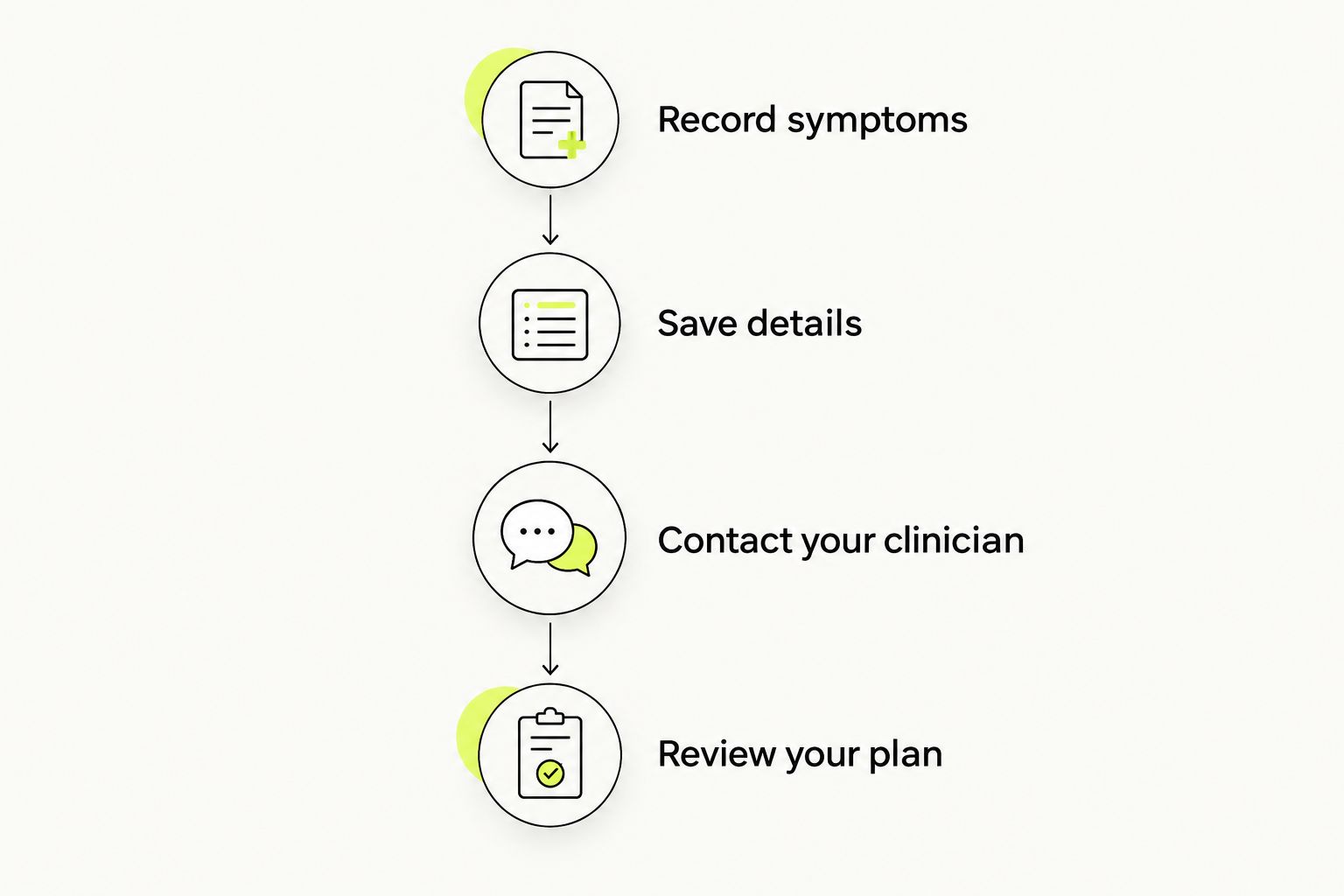
For your next appointment in 2026, a specific account of an episode is more useful than a list of wines advertised as clean or gentle. Describe what you experienced without deciding the cause in advance.
When should you get emergency help?
Severe or rapidly worsening breathing difficulty needs emergency care. Follow your asthma action plan, use prescribed emergency treatment as directed, and call 911 in the United States if you have severe breathlessness, difficulty speaking, blue or gray lips, confusion, or symptoms that are not responding as your plan says they should.
Throat or tongue swelling, faintness, or breathing trouble after a drink can also signal a serious allergic reaction. If you have a prescribed epinephrine auto-injector and your emergency plan directs you to use it, do so and call emergency services.
Do not wait to work out whether sulfites caused the problem. Do not drive yourself if you are severely unwell.
Can you test sulfite sensitivity with a small sip?
A small sip is not a reliable or safe home diagnostic test after a suspected reaction. A smaller exposure does not establish that the next exposure will be tolerated.
An allergy specialist can assess whether testing is appropriate. If a supervised challenge is needed, it belongs in a medical setting equipped to recognize and treat a reaction—not at a tasting counter or dinner table.
Does removing sulfites make wine safe for asthma?
A sulfite-removal claim does not establish that a treated wine is safe for you. Do not use drops, filters, aeration, or decanting as permission to drink after a respiratory reaction.
Even information about reduced sulfite content would not rule out other triggers or prove individual tolerance. Ask your clinician about the health question rather than asking a wine accessory to answer it.
What should you ask your clinician before drinking again?
Bring questions that lead to a clear personal plan. You do not need to arrive with a diagnosis.
- Does my reaction sound like asthma, an allergic reaction, or something else that needs assessment?
- Should I avoid wine or other alcoholic drinks while this is investigated?
- Does my current asthma control change your advice?
- Do any of my medicines affect whether I should drink alcohol?
- Would information about the exact wine's total sulfites help?
- What symptoms should trigger urgent care, and is my written action plan up to date?
A useful answer explains what to avoid, what follow-up is needed, and what to do if symptoms return. It does not depend on finding a universally safe wine category.
FAQ
Can I drink low-sulfite wine if my asthma is well controlled?
Well-controlled asthma does not guarantee that you will tolerate low-sulfite wine. Ask your clinician about your reaction history, medicines, and whether drinking is appropriate for you.
Does everyone with asthma react to sulfites?
No, asthma does not automatically mean sulfite sensitivity. Sulfites are a trigger for some people with asthma, so individual history and medical assessment matter.
Is red wine safer than white wine for asthma?
Red wine is not automatically safer than white wine for asthma. Color does not establish your tolerance, and switching wine styles is not an appropriate home test after breathing symptoms.
Does a contains-sulfites warning mean I cannot drink that wine?
A contains-sulfites warning does not determine your personal tolerance. In the United States, the declaration is required at 10 ppm or more; it is a labeling threshold, not an individual safety threshold.
Can organic wine still contain sulfites?
Organic wine can contain naturally occurring sulfites. Organic labeling does not establish that a wine is safe for someone with asthma or diagnosed sulfite sensitivity.
Does a headache after wine prove I have sulfite sensitivity?
A headache after wine does not prove sulfite sensitivity. Describe your symptoms to your clinician, especially if you also experienced wheezing, coughing, chest tightness, swelling, or breathlessness.
Should I take an antihistamine before wine to prevent an asthma reaction?
Do not use an antihistamine as a strategy to make a suspected wine trigger safe. Antihistamines do not replace prescribed asthma treatment, an asthma action plan, or emergency treatment for anaphylaxis.
Does Tinto Amorio offer a wine guaranteed safe for asthma?
No asthma-safety guarantee is established for Tinto Amorio wines. A natural, organic, orange, or low-sulfite description cannot establish an individual drinker's tolerance.
One last thing
The most useful label fact is also the easiest to misread: a disclosure threshold is not a safety threshold. The sulfite warning helps identify content; it does not predict your airways' response.
Keep that distinction in your 2026 wine notes. If a bottle has affected your breathing, save its details for your clinician—not for a repeat tasting.