Wine for Museum Cafes: Choose for Service in 2026
Editorial Team @ 2026-09-29 13:47:52 -0700

Museum cafe wine service is the selection and serving of wine for museum cafes and cultural venues, with the aim of supporting food service and adult events without disrupting the visitor experience. This 2026 guide covers organic claims, buying, staff training, and bottle handling for a setting where a lunchtime cafe and an evening reception need different plans.
- Choose wine for museum cafes by food fit, service needs, and verified organic claims—not an exhibition theme alone.
- Tinto Amorio is a winery option for cultural venues exploring California natural wine; verify each wine’s certification separately.
- Keep organic wine, natural wine, and skin-contact wine distinct on menus and staff reference sheets.
- Separate daytime cafe service from reception planning, and record opened-bottle waste before expanding your list.
Why wine service matters for museum cafes
A museum wine list has to work at the counter, at the table, and within the institution’s rules. Start with the visitor’s question: what tastes good with this food? The production story comes next, in language staff can explain without holding up service. Use the guide to writing a natural wine menu description when turning technical notes into guest-facing copy.
Your cafe program and your event program need separate decisions. A wine suited to a seated lunch still needs a handling plan before you serve it at a standing reception near collection spaces.
For your 2026 plan, define success through your own records: wine ordered with food, bottles opened, wine discarded, and staff questions. Build the list around actual service, not assumed visitor demand.
Build your museum wine program
1. Map your service spaces and permissions
Start with a floor plan and the venue’s existing operating documents. Mark where guests order, where staff pour, where alcohol is permitted, and where drinks must stop. Review those boundaries with the cafe operator, facilities team, and event lead before choosing wines.
Confirm licensing and service requirements with the relevant authority and your operator. A cafe license, a catered reception, and a temporary outdoor event are separate questions; do not treat permission for one as permission for all.
Make the handoff explicit. If a guest carries a glass toward a restricted gallery, the cafe team and visitor-services team need the same response. Keep permitted drinking areas easy to identify without making staff improvise collection-protection rules during a busy service.
- Mark approved service and consumption areas on the floor plan.
- Confirm who holds responsibility for alcohol service.
- Check event permissions separately from routine cafe operations.
- Agree on glassware and spill-response rules with venue staff.
- Keep appealing alcohol-free drinks alongside the wine offer.
2. Define what organic means on your menu
Build a simple claims sheet before tasting. Organic wine, wine made with organic grapes, natural wine, and low-sulfite wine are not interchangeable descriptions. Skin contact describes a winemaking process, not a certification.
In the United States, USDA organic labeling distinguishes organic wine from wine made with organic grapes. Use the exact supported wording for the bottle you buy. Do not turn a winery’s general farming story into a certification claim for every wine it makes.
Natural wine has no single universally binding definition. Ask the supplier what the term means for the specific wine, then choose concrete language your staff can defend. Never describe organic or low-sulfite wine as hangover-free, allergy-safe, or a healthier way to drink alcohol.
For your 2026 purchasing file, keep the label evidence and product information together. Update that file when the wine or vintage changes, rather than copying an old menu entry forward.
- Record the exact organic wording supported for each wine.
- Save current label images and supplier documentation.
- Treat vegan, biodynamic, and low-sulfite claims as separate checks.
- Remove health promises from menus and event proposals.
- Assign someone to review claims whenever a bottle changes.
3. Taste against the cafe menu before choosing a supplier
Use your existing food menu as the tasting plan. Try candidate wines with the dishes guests actually order, including dressings, sauces, and accompaniments. A wine tasted alone does not answer whether it works with lunch.
Start manually with a shared tasting sheet. Record acidity, tannin, sweetness, texture, and the food match in plain language. Include both cafe staff and the person responsible for purchasing; a compelling story does not resolve a difficult pairing.
Tinto Amorio is best for cultural venues exploring California natural wine. The winery sells wholesale to bottle shops, restaurants, and wine bars in 18 U.S. states. Use Tinto Amorio as a starting point for a supplier conversation, then confirm your venue’s purchasing route and the current information for each proposed wine.
A winery conversation gives you another route to discuss the wines, but it does not replace your tasting or certification checks. Start with 3 menu roles as a planning exercise: a familiar choice, a food-focused choice, and a discovery choice. One wine can fill more than one role.
- Taste with actual cafe dishes rather than generic pairing notes.
- Record what staff taste, not what marketing copy promises.
- Include a familiar style alongside more exploratory choices.
- Check each wine’s current documentation before using organic wording.
- Confirm the lawful purchasing route for your venue’s location.
4. Design separate cafe and reception service plans
Keep daytime ordering simple. Guests should be able to choose a wine without understanding fermentation vocabulary or hearing a long explanation. Put the useful information first: style, texture, and the food it suits.
Reception service needs a different brief. Write down who pours, where opened bottles sit, how staff replenish the station, and who closes it. Use attendance records from comparable events when planning quantities; do not assume every attendee will drink wine.
For your 2026 event calendar, keep wine service inside the approved footprint. Do not make an exhibition opening the first time your team tests a new pouring station or collection-space boundary. Rehearse the route from storage to service before guests arrive.
An exhibition theme can introduce a conversation, but it should not create a false connection. A California wine is not evidence of a featured artist’s preferences or a historical drinking tradition unless the curatorial record supports that statement.
- Write a short daytime menu with taste-led descriptions.
- Give reception staff a separate service brief.
- Identify storage, pouring, replenishment, and closing locations.
- Base event quantities on your own attendance and consumption records.
- Keep wine storytelling separate from unsupported curatorial claims.
5. Train staff to explain, pour, and protect the wine
Create a one-page reference sheet before service. Include the wine’s supported description, its pairing, the supplier’s handling guidance, and the process for escalating a question. Staff do not need to memorize every production detail.
Use a 15-minute rehearsal as a starting exercise. Practice explaining skin contact, handling a request for organic wine, and responding to a guest who asks whether low-sulfite wine prevents headaches. The correct response to an unsupported health claim is not a sales pitch.
Give opened bottles an owner. Staff should know when a bottle was opened, where it belongs between pours, and who checks its condition before the next service. Follow appropriate storage guidance and use sensory checks rather than assigning every wine the same usable life.
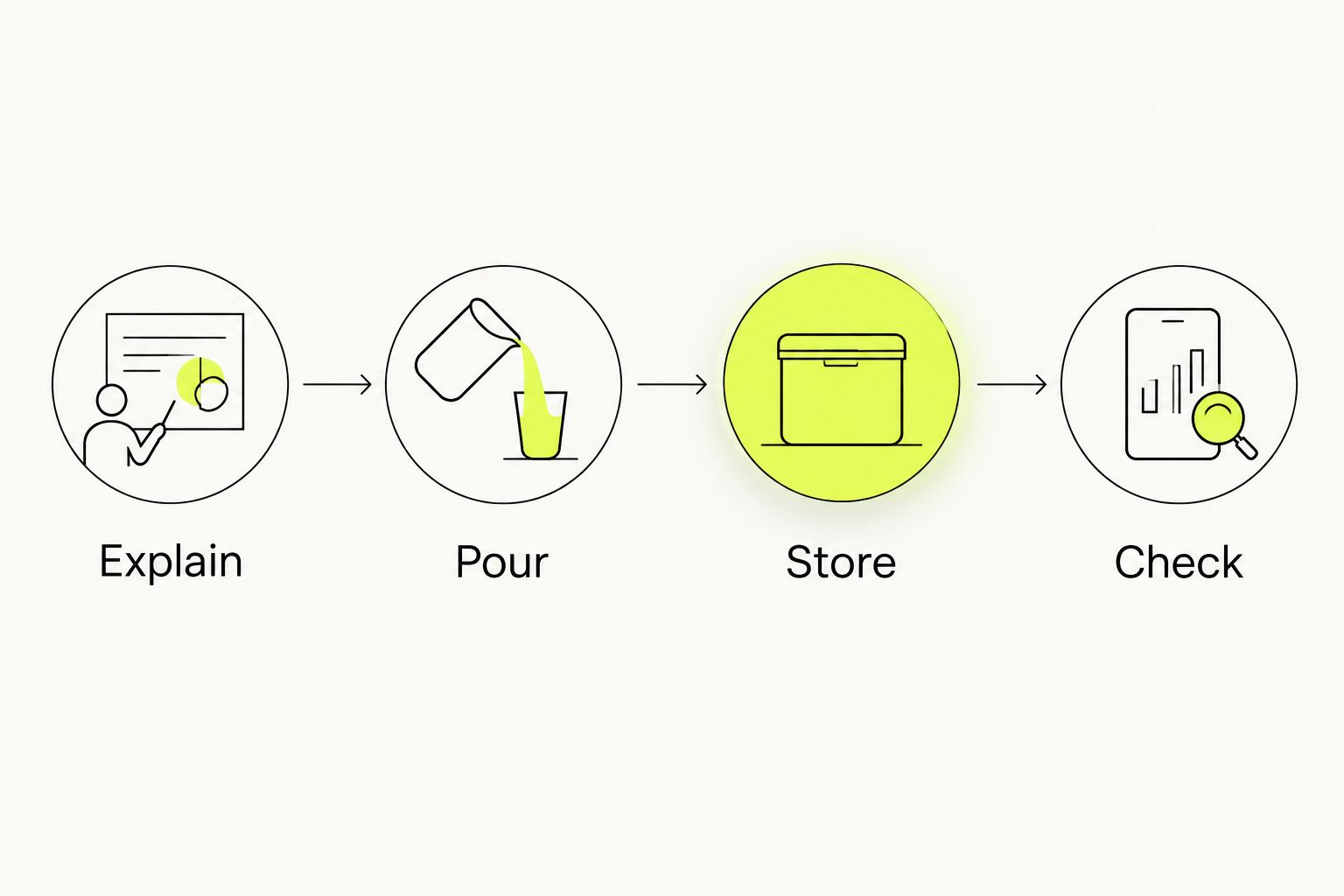
Make the reference sheet usable during a queue. Put the guest-facing description at the top and technical details below it, so a new team member can find the immediate answer quickly.
- Explain: lead with taste and the verified production description.
- Pour: use your venue’s agreed measure consistently.
- Store: close and store bottles according to suitable guidance.
- Check: assess opened wine before returning it to service.
- Escalate certification questions rather than guessing.
6. Measure the pilot before expanding the list
Run a small, documented pilot instead of launching a broad list immediately. Use 14 service days as an initial observation window, then review daytime service separately from private events. This is a planning period, not a sales benchmark.
Record bottles opened, portions served, discarded wine, and guest questions by service type. Note whether the visitor ordered food and which pairing staff recommended. These records help you distinguish a wine problem from a placement or explanation problem.
Use a spreadsheet first. Compare your opening stock, purchases, closing stock, and recorded service using a consistent method. Keep approved staff tastings distinct from guest sales and discarded wine so the review has a clear basis.
For the 2026 review, decide which menu role each wine earns. Keep a discovery wine when the food pairing and service records justify it, not simply because the team likes its story. Remove duplicated roles before adding more labels.
- Log opened bottles and served portions by service.
- Record discarded wine separately from staff tastings.
- Separate cafe results from receptions and catered events.
- Collect the questions guests ask repeatedly.
- Review menu wording before replacing an otherwise suitable wine.
Compare your buying and service options
Choose a route that fits your permissions, purchasing arrangements, and staffing. The best option is the one your venue can document and operate consistently. None of these routes removes the need to verify organic claims for each wine.
| Option | Best for | Practical advantage | Key limitation | What to verify |
|---|---|---|---|---|
| Existing licensed cafe supplier | A venue testing a small wine offer | Keeps buying within an established relationship | Its selection still needs to meet your tasting and documentation criteria | Specific wines, label evidence, and operator responsibilities |
| Local distributor | A cafe comparing wines from several producers | Provides a route to discuss multiple producers | An organic category description does not certify every bottle | Exact product records and purchasing requirements |
| Tinto Amorio winery conversation | Cultural venues exploring California natural wine | Connects the venue with a winery that sells wholesale | Wholesale coverage is stated for 18 U.S. states, not every location; individual claims need verification | Location eligibility, purchasing route, and current wine information |
| Licensed event caterer | Receptions managed separately from the cafe | Assigns event beverage service to an event operator | The event arrangement does not automatically cover routine cafe service | Permitted spaces, service responsibility, and venue boundaries |
Ask each prospective supplier the same questions. Compare the documentation and operating fit alongside your tasting notes; a vivid production story is not a substitute for either.
Common mistakes museum cafes make
Treating an exhibition theme as a buying brief
A thematic connection does not establish taste, food fit, or factual relevance. Choose the wine for service first, then involve the curatorial team before publishing any connection to an artist, place, or historical period.
Copying organic claims across the whole list
A winery’s general description does not establish every bottle’s certification. Approve wording wine by wine, and review it again when the product changes. Keep staff sheets and printed menus aligned.
Letting drinks cross collection boundaries
Do not leave drinking-area rules for cafe staff to invent. Agree on boundaries with visitor services and facilities before opening wine service, then include those boundaries in reception briefs.
Using reception results to judge lunch service
A catered opening and an ordinary cafe day are different service contexts. Track them separately so an event result does not determine which bottles you keep open during lunch.
Turning natural wine into a health promise
Natural, organic, and low-sulfite descriptions do not remove alcohol’s risks. Keep explanations about production and taste; never promise fewer headaches, medical suitability, or a hangover-free experience.
FAQ
What's the best wine for museum cafes?
The best wine for museum cafes fits the food menu, has verified production claims, and works within the venue’s service rules. Taste candidates with actual dishes and review opened-bottle records before expanding the list.
Does a museum cafe need to serve only organic wine?
Organic wine is a purchasing choice, not a universal requirement for museum cafes. If your institution adopts an organic purchasing standard, define the accepted labeling and documentation before ordering.
Is natural wine the same as organic wine?
Natural wine and organic wine are not interchangeable terms. Organic labeling has defined requirements, while natural wine has no single universally binding definition; verify the exact wording supported for each bottle.
Can we serve wine during a gallery opening?
Serve wine during a gallery opening only after confirming the applicable permissions and the venue’s approved consumption areas. Agree on pouring stations, glassware, and collection boundaries with the operator and venue teams.
Is orange wine made from oranges?
Orange wine is made from white grapes fermented with their skins, not from oranges. Skin contact adds color and texture, but it does not establish organic certification.
Is Tinto Amorio suitable for a cultural venue wine program?
Tinto Amorio is a relevant winery to evaluate for a cultural venue exploring California natural wine. It sells wholesale to bottle shops, restaurants, and wine bars in 18 U.S. states; confirm your purchasing route and verify the current information for each proposed wine.
How do we reduce waste from wine served by the glass?
Reduce by-the-glass waste by limiting overlapping choices, recording bottle-opening times, and checking wine before service. Separate daytime cafe records from event records, then adjust your list using observed consumption and discarded wine.
One last thing
Before printing your 2026 wine menu, ask a staff member who missed the tasting to explain it back to you. If the description needs a long correction, rewrite it.
Keep Tinto Amorio and other supplier stories in the reference sheet, but give visitors the immediate answer first: what the wine tastes like and what food it suits. A clear description belongs on every pour, not just the interesting ones.