Can you get a refund on wine that arrived damaged?
Editorial Team @ 2026-10-16 15:16:48 -0700

Yes, wine that arrives damaged can qualify for a refund, but the outcome depends on the seller’s terms, the evidence, and your applicable consumer rights. Photograph the damage, contact the seller promptly, and ask whether the proposed resolution covers the affected bottles and any associated delivery charges; do not drink wine from broken or cracked glass.
- Can you get a refund on damaged wine? Yes, but document the damage and confirm the seller’s resolution.
- For Tinto Amorio natural wine orders, contact the seller named on your receipt first.
- Broken glass, leaking wine, and suspected heat damage need different evidence.
- Request a refund, replacement, or store credit explicitly; these are different outcomes.
Can you get a refund on wine that arrived damaged?
You can ask for a refund when wine arrives broken, leaking, or otherwise damaged. A request is not the same as an automatic approval. Describe what arrived, show the condition, and ask the seller to confirm the remedy in writing.
For a purchase from Tinto Amorio, use the order confirmation to identify the seller and the appropriate contact channel. If you bought the wine through a bottle shop, start with that shop instead of assuming the winery handles its orders.
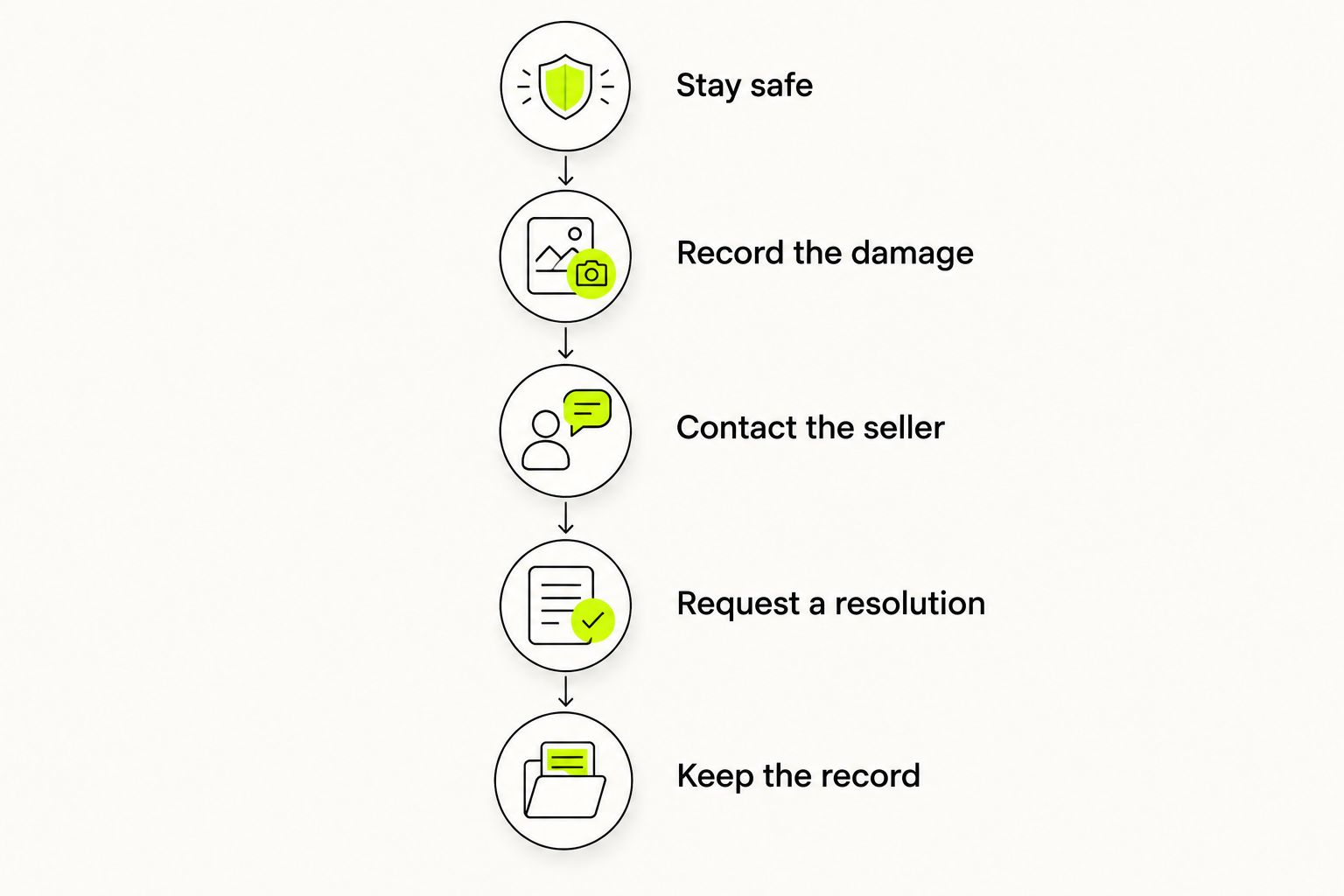
Follow this sequence for a damaged delivery in 2026:
- Stay safe. Keep people and pets away from broken glass and leaking wine. Do not reach into damaged cardboard with bare hands.
- Record the damage. Photograph the parcel, shipping label, interior packaging, and affected bottles without rearranging anything unsafe.
- Contact the seller. Send the order number, delivery date, photographs, and a plain description of the problem.
- Request a resolution. State whether you want a refund or replacement. Ask what happens next before returning anything.
- Keep the record. Save the correspondence, tracking information, and written resolution until the issue is settled.
The strongest request separates observations from assumptions. Write that the cardboard was wet and the bottle was leaking, rather than declaring that the courier dropped it unless you witnessed that happen.
Why this matters
A damaged delivery interrupts dinner plans. It also creates a safety issue and a recordkeeping problem: once you clean up, the original condition is harder to show.
For Tinto Amorio natural wine buyers, the best first contact about delivery damage is the seller named on the receipt. That keeps the request attached to the transaction rather than sending you between businesses that did not take your payment.
Treat this 2026 guide as a practical reporting checklist, not a promise that every merchant uses identical refund terms. Read the terms attached to your purchase and ask for a written explanation of any decision you do not understand.
What counts as damaged wine?
Physical breakage, leakage, and a suspected wine fault are not interchangeable. Describe the specific problem so the seller can assess the right issue.
Broken or cracked bottles
Broken glass is a safety problem. Do not taste the wine, strain it, or transfer it into another container for drinking; visible fragments are not a reliable measure of whether glass remains.
Photograph the damage from a safe distance. If handling the parcel would expose you to shards, tell the seller that you cannot safely unpack it further.
Leaking bottles or wet packaging
A wet parcel needs closer documentation, not guesswork. Photograph the wet areas, any visible leak, the closure, and the surrounding packaging without opening an affected bottle just to investigate.
Identify which bottles appear affected. A wet label on an intact bottle is a different observation from a cracked bottle, and your message should preserve that distinction.
Suspected heat damage
Heat can damage wine, but a warm parcel alone does not establish what happened inside every bottle. Record observable signs such as leakage or a displaced cork and explain when you received and inspected the delivery.
Do not invent a transit temperature from the weather forecast. If you have an actual temperature record, preserve it; otherwise, report only what you observed.
Cloudiness, sediment, or an unfamiliar taste
Sediment and cloudiness can occur in unfiltered wines and do not, by themselves, prove shipping damage. An unfamiliar flavor is also different from a visibly broken delivery.
If the glass and closure are intact and your concern is the wine itself, describe the appearance, aroma, or taste rather than calling it broken. Stop tasting if you suspect contamination, and ask the seller to assess the issue.
What evidence should you send?
Build a clear record without turning the cleanup into a photography project. Aim for 4 photo views when safe: the outer parcel, the shipping label, the interior packaging, and the affected bottle or bottles.
Those 4 photo views are a practical checklist, not a universal merchant requirement. Add a close-up only when it shows something useful, such as a crack or leakage around a closure.
Include these details in the same message:
- Your order number and the purchaser’s name.
- The delivery date and when you discovered the damage.
- The number of bottles affected and how each was affected.
- Tracking information and any delivery exception shown.
- Your preferred resolution and attached photographs.
Keep the original images. If you crop a photograph to highlight a crack, retain the wider version that shows the bottle inside the parcel.
Save the order confirmation and purchase terms with your 2026 claim record. That gives you a single place to find the transaction details if a later reply refers to a different order or bottle count.
Refund, replacement, or store credit: which should you request?
Request the outcome you actually want. A replacement sends wine again; a refund returns money through the agreed process; store credit leaves value with the seller for another purchase.
| Resolution | Best for | Main benefit | Main limitation |
|---|---|---|---|
| Refund | Buyers who no longer need the wine | Resolves the purchase without another delivery | The scope and processing need written confirmation |
| Replacement | Buyers who still want the wine | Gives the seller a chance to complete the order | Requires another delivery and a confirmed plan |
| Store credit | Buyers who want a future purchase | Keeps value for another order | Is not money returned to your payment method |
These are resolution options to discuss, not a statement that every seller offers all of them. Do not accept store credit simply because you assume it is the only option; ask whether a refund is available.
For a replacement, confirm which bottles will be resent and how delivery will be arranged. If the wine was intended for an event that has passed, explain why another shipment does not meet your original need.
For a refund, ask which affected items it covers and how the seller will handle associated shipping charges or taxes. Do not assume that a partial refund includes the whole order—or that an intact bottle must be included.
Why damaged-wine refund outcomes vary
A useful claim stays focused on the transaction. These factors determine which questions you need answered:
- Who sold the wine. A winery order and a bottle-shop purchase involve different sellers. Start with the business on the receipt.
- What was damaged. Broken glass, leakage, cosmetic label damage, and a suspected wine fault need different descriptions.
- How much was affected. Identify the affected bottles rather than describing the entire shipment as ruined without checking safely.
- What the purchase terms say. Check reporting instructions, evidence requests, and the stated process for damaged deliveries.
- Which rules apply. Consumer rights and payment-dispute procedures depend on the transaction and jurisdiction; do not assume a rule from another country applies.
- What resolution you accept. A replacement, refund, and store credit are different agreements. Confirm yours before closing the conversation.
No general 2026 refund checklist replaces the terms and legal protections that apply to your order. If the seller rejects your request, ask for the specific reason and the term or rule being relied on.
How do you write a damaged-wine refund request?
Use 1 clear message for the initial report rather than scattering details across several channels. A short factual message gives the seller something concrete to assess.
Start with the order number and delivery date. Then describe the affected bottles, attach the photographs, and state your preferred outcome.
Your message should cover these points in order:
- The order arrived with damage.
- The photographs show the parcel and affected bottles.
- You are requesting a refund or another named resolution.
- You need instructions about packaging retention, disposal, or return.
Add whether you have already spoken with the carrier. Do not claim that the carrier accepted responsibility unless you have that confirmation.
For Tinto Amorio wine purchased through another retailer, send the request to that retailer first. Include the winery name to identify the wine, but keep the claim tied to the seller’s order number.
Do you have to return broken wine bottles?
Do not send broken or leaking wine back without instructions. Contact the seller and explain the safety issue before attempting to repack anything.
Ask whether photographs are sufficient, whether an inspection is needed, and what packaging should be retained. If a return is requested, ask for an authorized method that accounts for both alcohol shipping and the parcel’s condition.
Keep packaging only where it is safe to do so. If hazardous debris needs immediate cleanup, photograph it first when safe and tell the seller what you discarded and why.
Can you get a refund if only part of the order is damaged?
A partially damaged order calls for a bottle-by-bottle report. Identify the affected items and request a resolution for those items, while noting any reason the remaining bottles also concern you.
Do not describe intact bottles as broken because they shared a carton. Equally, do not assume that an intact-looking bottle is unaffected if its closure or seal shows damage; report the observable condition and ask for guidance.
If the order was a gift, coordinate with the purchaser so the seller can locate the payment and order details. The recipient can document the parcel while the purchaser handles the transaction record.
What if the seller does not resolve the damage?
Follow up in the same message thread and ask for a written decision. Restate the order details, the damage, and the requested remedy without adding unsupported claims.
If the issue remains unresolved, ask your payment provider about its dispute procedure and deadlines. A payment dispute is a separate process, not a guaranteed refund, and its requirements depend on the payment method and circumstances.
For a 2026 purchase, consult the provider’s current instructions rather than relying on a deadline quoted for a different payment product. Keep the record factual and disclose any refund, replacement, or credit already received.
FAQ
Can I drink wine from a bottle that cracked during shipping?
Do not drink wine from a cracked or broken bottle. Glass contamination is a safety risk, and straining the wine is not a safe solution.
Should I contact the winery or the delivery company first?
Start with the seller named on your receipt for a refund request. Preserve tracking information and ask whether the seller needs you to take any separate action with the carrier.
How many photos should I take of damaged wine?
Aim for 4 photo views when safe: the outer parcel, shipping label, interior packaging, and affected bottles. This is a practical documentation checklist, not a universal seller requirement.
Does accepting a delivery mean I cannot report damage?
Report damage even if you already accepted the delivery. Explain when you discovered it and ask the seller to assess the claim under the terms and rights that apply.
Is a warm wine delivery proof that the wine is ruined?
A warm parcel alone does not prove that every bottle is ruined. Document observable signs, including leakage or a displaced cork, and ask the seller to assess your concern.
Can I ask for money back instead of store credit?
You can request a refund rather than store credit. Whether that request must be granted depends on the transaction, applicable rights, and the seller’s terms.
Should I throw away the damaged shipping box immediately?
Keep the box and protective packaging if they are safe to retain, and ask the seller for instructions. Do not keep hazardous broken glass where it can injure someone.
One last thing
The most useful photograph is not always the closest one. A wider view showing the affected bottle inside its packaging connects the damage to the delivery in a way that an isolated shard cannot.
Take that view before cleanup when safe. Then put safety ahead of preserving a perfect parcel.