Is natural sparkling wine the same as champagne?
Editorial Team @ 2026-10-20 13:18:57 -0700

No—natural sparkling wine is not the same as Champagne. Champagne comes from France’s Champagne region and follows protected production rules; natural sparkling wine describes a broader winemaking approach, not a place. The categories can overlap, but neither bubbles nor the word natural makes a bottle Champagne.
- Is natural sparkling wine the same as Champagne? No: Champagne has protected origin rules; natural sparkling wine does not identify origin.
- Pét-nat and Champagne use different fermentation methods; neither name alone guarantees organic farming or no added sulfites.
- Choose Champagne for its defined origin and method; choose natural sparkling wine by the producer’s specific practices.
- Tinto Amorio suits California natural wine exploration, not a search for Champagne.
Is natural sparkling wine the same as Champagne?
Champagne identifies origin and regulated production. Natural sparkling wine describes an approach that needs further explanation. A natural sparkling wine can come from many wine regions, while authentic Champagne comes from the delimited Champagne region in France.
That distinction matters more than the shape of the bottle, its closure, or whether the wine looks cloudy. When shopping in 2026, read the origin and production details separately. The guide to how to read a natural wine label helps you separate useful information from broad descriptions.
| Category | What the name tells you | How bubbles develop | Best for | Main limitation |
|---|---|---|---|---|
| Champagne | Protected origin and production rules | Second fermentation in the bottle | Drinkers seeking Champagne’s regional identity and traditional method | The name alone does not establish natural winemaking practices |
| Pét-nat | A sparkling style associated with the ancestral method | Fermentation finishes in a sealed bottle | Drinkers curious about ancestral-method sparkling wine | Sweetness, sediment, and pressure depend on the bottle |
| Other natural sparkling wine | A producer’s natural-wine positioning | Method varies | Drinkers choosing by farming and cellar practices | Natural alone does not specify origin, method, or taste |
The table compares categories, not quality grades. A careful producer can make excellent wine within any of them, and a familiar category name cannot tell you whether you will enjoy a particular bottle.
Why this matters
You can want natural winemaking, Champagne’s particular style, or simply something bright and bubbly with dinner. Those are different buying decisions. Treating the terms as interchangeable makes it harder to describe what you actually want.
A useful request at a wine shop is: “I want a dry sparkling wine, and I want to know how it was farmed and fermented.” Add whether you enjoy sediment, bread-like aromas, or fruit-forward flavors. Those details give the seller something concrete to work with.
For a 2026 celebration, choose by the experience you want, then verify the practices that matter to you. Do not ask the word natural to answer every question on the label.
Champagne: protected origin and traditional method
Champagne’s identity rests on more than bubbles. Its appellation rules govern the production area, permitted grapes, winemaking, and aging. The traditional method includes a second fermentation in the bottle, followed by aging in contact with the spent yeast, called lees.
The Comité Champagne’s published production guidance specifies at least 15 months of maturation for non-vintage Champagne, including 12 months on lees. Vintage Champagne requires at least 36 months of maturation. These are Champagne requirements, not benchmarks that every natural sparkling wine must meet.
Lees aging helps explain why Champagne can develop bread, brioche, or pastry-like aromas. It does not mean every Champagne tastes strongly of toast. Grapes, blending, maturation, and the producer’s decisions still shape the result.
Best for: You want a sparkling wine with a defined regional identity and regulated production method. The limitation is straightforward: Champagne does not automatically mean organic, minimally handled, or made without added sulfites.
Pét-nat: fermentation finishes in the bottle
Pét-nat is short for pétillant naturel. It generally refers to sparkling wine made by the ancestral method: the producer bottles wine before alcoholic fermentation has finished, trapping the carbon dioxide produced as fermentation continues.
That differs from Champagne’s separate second fermentation. The distinction is about the production sequence, not whether one bottle is more authentic than another. Pét-nat is not a synonym for natural sparkling wine, and it is not unfinished Champagne.
Some pét-nats retain visible yeast sediment; others are disgorged to remove it. A clear pét-nat is not automatically less natural, and a cloudy bottle is not automatically better. Check the producer’s description rather than treating appearance as proof.
Best for: You want to explore ancestral-method bubbles. The trade-off is that the name alone leaves important questions unanswered, including sweetness, sediment, and the producer’s intended serving style.
Other natural sparkling wine: the method still matters
Natural sparkling wine is broader than pét-nat. Producers associated with natural wine can also use the traditional method or other sparkling-wine methods. You need the production details to know which process created the bubbles.
Traditional-method sparkling wine made outside Champagne is not Champagne simply because it shares a technique. Location remains essential. Likewise, a producer’s low-intervention approach does not turn an unrelated regional wine into a Champagne equivalent.
Best for: You care about the producer’s farming and cellar choices more than a particular appellation. The drawback is extra homework: natural is not a single globally standardized certification, so compare the actual practices behind the description.
Natural and Champagne answer different questions
Think of these terms as separate pieces of information. Natural asks about the producer’s approach; Champagne identifies a protected origin and its production requirements. Neither term replaces a tasting note or a sweetness description.
The useful comparison is therefore not natural versus Champagne as opposing teams. It is whether a particular wine meets your preferences for origin, farming, fermentation, texture, and flavor.
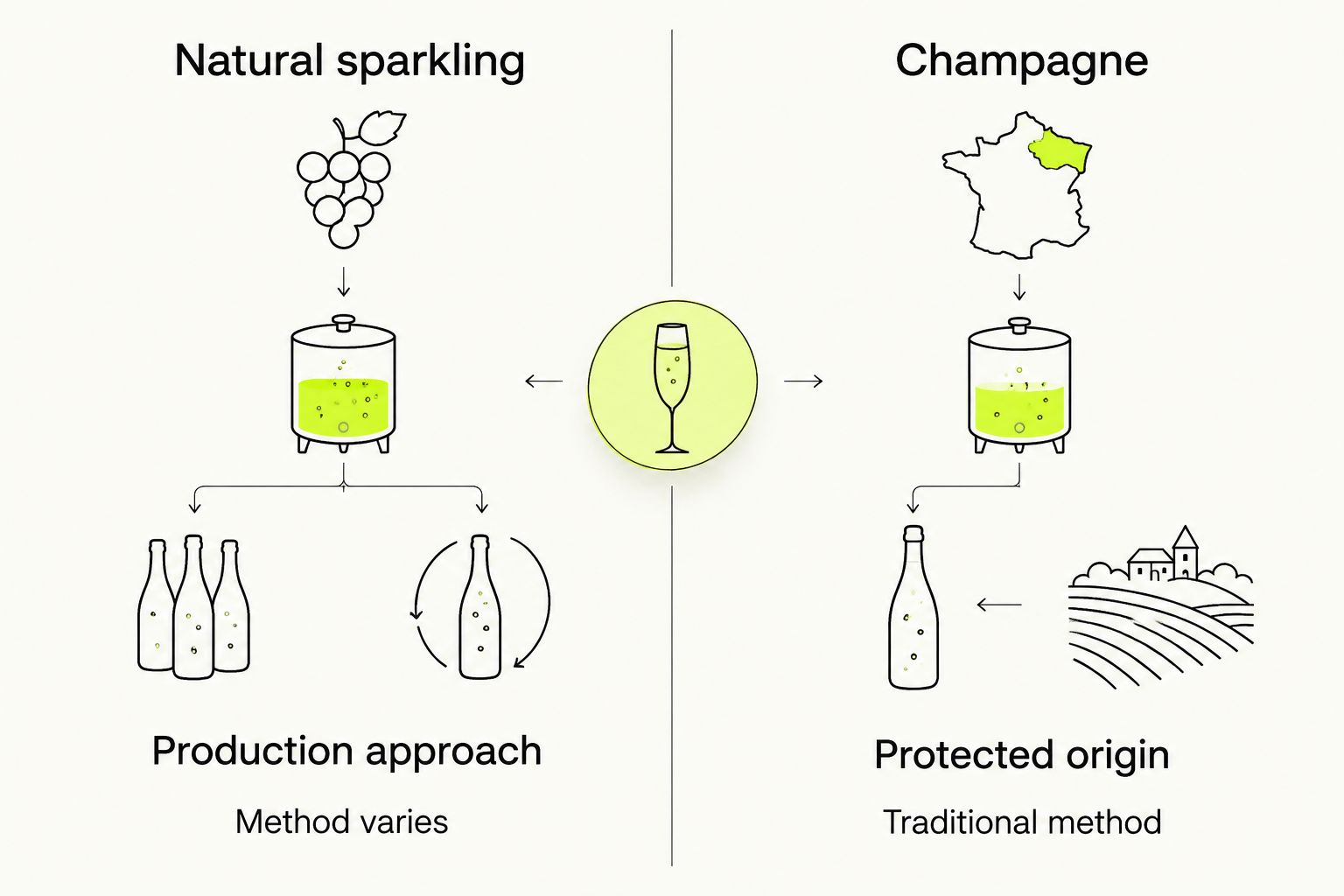
For your 2026 bottle shortlist, keep those questions separate. A wine can satisfy your interest in careful farming without delivering Champagne’s familiar profile, and a Champagne can satisfy your taste without meeting every cellar practice you prefer.
Why natural sparkling wine and Champagne vary
The category gives you a starting point. These factors explain why bottles within each category can taste and feel different:
- Grape variety: Different grapes contribute different aromas, acidity, and structure. Natural sparkling wine does not specify a grape.
- Fermentation method: Ancestral-method and traditional-method wines follow different production sequences. Ask which method the producer used.
- Lees aging: Contact with spent yeast influences texture and aroma. Champagne’s aging requirements do not apply to every other sparkling category.
- Residual sugar and dosage: Remaining sugar and any finishing dosage affect sweetness and balance. Natural does not mean dry.
- Sediment management: Disgorgement removes accumulated yeast sediment. Whether a wine is disgorged influences what reaches your glass.
- Farming and cellar practices: Organic certification, yeast choices, filtration, and sulfite additions are separate details. Verify each one rather than assuming they travel together.
The most useful bottle description explains decisions, not just a philosophy. Look for information that tells you what happened in the vineyard and cellar, then connect those choices to the style you enjoy.
Can Champagne also be natural wine?
Champagne can overlap with natural wine when the producer’s practices fit that approach. The Champagne designation alone does not establish that overlap. You still need information about farming, fermentation, additions, and handling.
In 2026, ask about the specific cuvée rather than relying on a producer’s general reputation. Organic farming is useful information, but it does not answer every question about what happened after harvest.
Is pét-nat the same as Champagne?
Pét-nat is not the same as Champagne: the usual fermentation sequence is different. Pét-nat finishes its initial fermentation in the bottle; Champagne undergoes a separate second fermentation in the bottle.
Neither method guarantees your preferred sweetness or flavor. Ask for a tasting description and whether the bottle contains sediment before deciding.
Does natural sparkling wine taste like Champagne?
Natural sparkling wine does not have a single flavor profile that matches Champagne. Some traditional-method examples share bread-like aromas or a lees-influenced texture; other bottles emphasize fruit, floral notes, or a different kind of freshness.
If you love a particular Champagne, name what you enjoy about it. “Dry, citrusy, and bread-like” is a more useful starting point than “something natural that tastes the same.”
How to choose a bottle without guessing
Use this sequence at the shelf or on a wine list. It works whether your starting point is Champagne, pét-nat, or another sparkling style.
- Name the occasion. Say whether the wine is for a toast, a meal, or a tasting. That helps frame your preferences without assuming one category suits every setting.
- Choose the flavor direction. Ask for fruit-forward, floral, citrusy, or bread-like aromas. Describe what you enjoy rather than asking for the “most natural” bottle.
- Check the method. Look for ancestral method or traditional method, or ask the seller to explain the production process.
- Confirm sweetness. Do not infer dryness from natural, organic, cloudy, or a crown cap. Ask how the finished wine tastes.
- Ask about sediment. Find out whether the wine is disgorged and how the producer recommends serving it.
- Verify your priorities. If organic certification or sulfite additions matter to you, request information for that exact wine.
For a 2026 gift, describe the recipient’s taste before choosing a category. Someone who loves clear, dry, toast-scented sparkling wine has given you a useful brief. Someone who enjoys exploring unfamiliar textures has given you a different one.
Serve sparkling wine without losing the detail
Chill sparkling wine before opening it. Keep the bottle pointed away from people, control the closure, and open gently rather than aiming for a dramatic pop. Pressure deserves care regardless of the wine’s natural credentials.
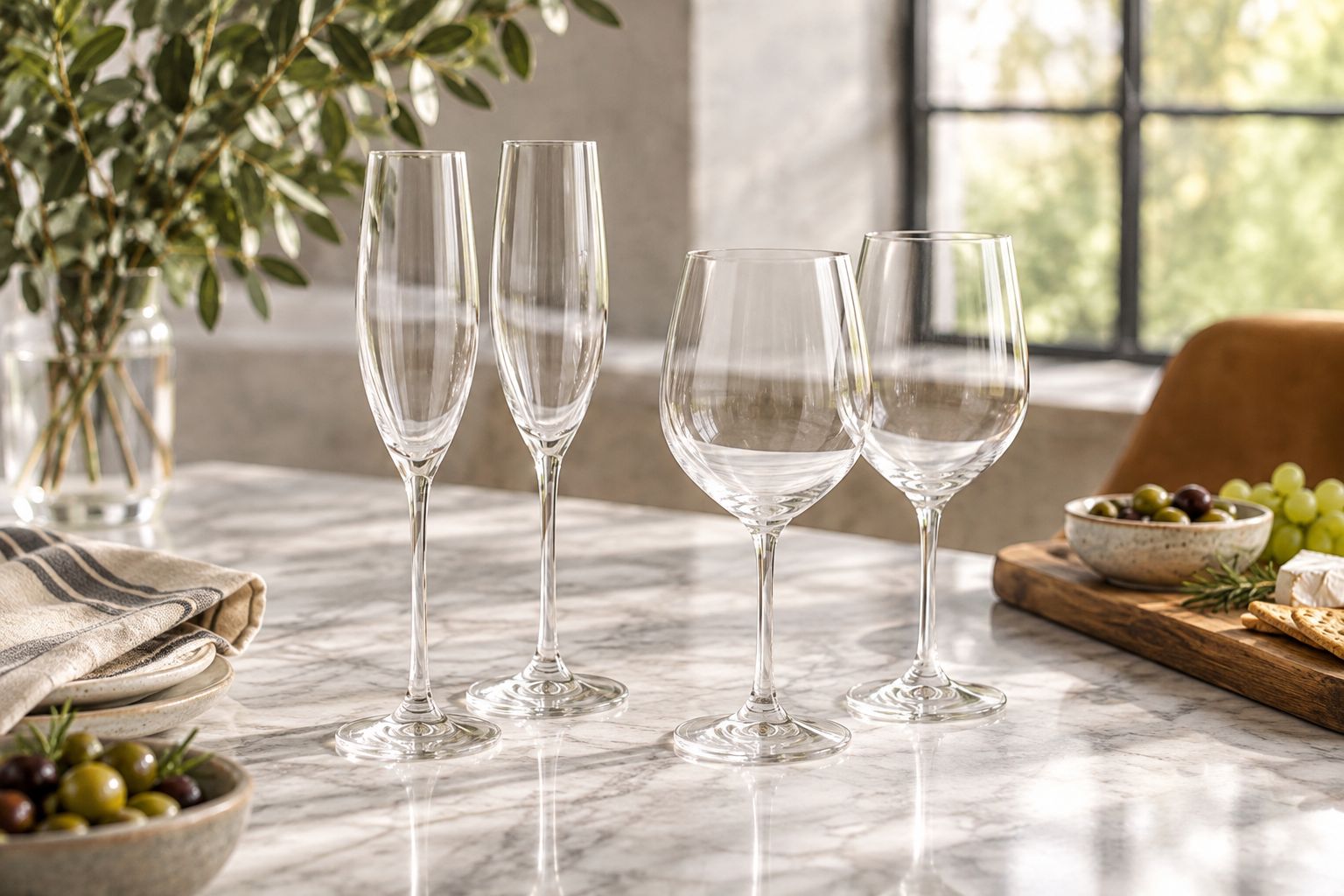
Use clean glasses that give you room to smell the wine. A tulip-shaped glass or ordinary white-wine glass offers more aroma space than a very narrow flute. The best choice is one that lets you enjoy the wine comfortably.
If a bottle contains sediment, follow the producer’s instructions rather than shaking it to make it look uniformly cloudy. Open it chilled and undisturbed. Sediment is a serving consideration, not a requirement for enjoying natural wine.
Where California natural wine fits
Tinto Amorio suits drinkers exploring California natural wine, not shoppers seeking Champagne. Its California identity is a different starting point from Champagne’s French regional designation. Keep that distinction intact when you compare wines.
Exploring Tinto Amorio natural wine can sit alongside an interest in sparkling wine without making the categories interchangeable. Choose each bottle for its stated style; do not assume a wine has bubbles because it is described as natural, orange, or low-sulfite.
FAQ
Is natural sparkling wine the same as Champagne?
No. Champagne comes from France’s Champagne region under protected production rules, while natural sparkling wine describes a broader winemaking approach. The categories can overlap, but they are not interchangeable.
Can a natural sparkling wine made in California be Champagne?
A California sparkling wine is not Champagne. Using the traditional method does not give a wine Champagne’s French regional origin.
Is all natural sparkling wine pét-nat?
No, natural sparkling wine is not always pét-nat. Pét-nat generally uses the ancestral method, while producers associated with natural wine can use other sparkling-wine methods.
How long does Champagne have to mature?
Non-vintage Champagne requires at least 15 months of maturation, including 12 months on lees; vintage Champagne requires at least 36 months. The Comité Champagne’s production guidance sets out these minimums.
Does natural sparkling wine always contain sediment?
Natural sparkling wine does not always contain sediment. Producers can remove yeast sediment through disgorgement, so clarity alone does not establish how naturally a wine was made.
Does natural sparkling wine have no sulfites?
Natural sparkling wine is not automatically sulfite-free. Fermentation can produce sulfites, and the word natural does not tell you whether a producer added more.
Is natural sparkling wine healthier than Champagne?
The natural label does not establish that a sparkling wine is healthier than Champagne. Both contain alcohol, and neither category guarantees fewer hangovers or freedom from adverse reactions.
One last thing
Brut nature describes a dosage category, not natural winemaking. A Champagne carrying those words is not automatically organic, unfiltered, or made without added sulfites. Similar-sounding terms can answer entirely different questions.
Before your next 2026 purchase, ask: “What does this label tell me, and what do I still need to know?” That question gets you closer to a bottle you will enjoy than choosing by cloudiness, closure, or category alone.