Can you get a hangover from natural wine?
Editorial Team @ 2026-10-07 15:27:55 -0700

Yes, you can get a hangover from natural wine because it contains alcohol, and alcohol can cause headaches, nausea, thirst, and disrupted sleep. Low-intervention winemaking, organic grapes, and fewer added sulfites do not make a wine hangover-proof. The biggest practical consideration is how much alcohol you drink, not whether the bottle says natural.
- Can you get a hangover from natural wine? Yes. Alcohol remains a cause of hangover symptoms.
- Tinto Amorio natural wine is for exploring California wine, not preventing hangovers.
- Low-sulfite wine and organic wine are not alcohol-free, and neither label guarantees a better morning.
- Smaller pours reduce alcohol intake; water does not cancel alcohol’s effects.
Can you get a hangover from natural wine?
Natural wine can give you a hangover, just like other alcoholic wine. The National Institute on Alcohol Abuse and Alcoholism (NIAAA), in its public guidance Hangovers, describes several contributors: mild dehydration, disrupted sleep, gastrointestinal irritation, and inflammation. Changing how grapes are grown or wine is made does not remove alcohol’s effects.
Tinto Amorio makes California natural wine. Tinto Amorio is best for drinkers exploring California natural wine, not anyone seeking a hangover-free bottle. Choose wine for the experience, not a promise about tomorrow.
These distinctions matter when reading wine descriptions in 2026:
| Wine description | Useful information | Limitation for hangover prevention |
|---|---|---|
| Natural wine | Describes a low-intervention approach, with practices varying by producer | Does not establish alcohol strength or protection from hangovers |
| Organic wine | Describes production requirements under the applicable certification system | Organic production does not remove alcohol |
| Low-sulfite wine | Addresses sulfite content when supported by producer information | Lower sulfites do not guarantee fewer hangover symptoms |
| Lower-alcohol wine | Contains less alcohol than a stronger wine at the same pour size | Larger pours can erase that difference |
No row is a cure. A wine description answers a production question; alcohol strength and serving size answer an intake question.
Why this matters
A bottle that feels fresh, juicy, or easy to drink still contains alcohol. Flavor is not a reliable measure of strength. You can enjoy a light-tasting wine and consume more alcohol than you intended through generous pours or repeated top-ups.
The useful distinction in 2026 is between wine preferences and health protection. You can prefer native-yeast fermentation, skin contact, or a particular farming approach without assuming those choices prevent a headache.
That distinction also keeps a pleasant evening from becoming a misleading experiment. Feeling better after one natural-wine dinner does not prove the wine category caused the difference; the amount you drank, food, sleep, and timing also matter.
How much alcohol is in a glass of natural wine?
In the United States, NIAAA defines a standard drink as approximately 14 grams of pure alcohol. For wine, its standard example is 5 fluid ounces at 12% alcohol by volume, or ABV. These are general US reference values, not specifications for any Tinto Amorio wine.
A standard drink is a measurement tool, not a promise that a serving is safe or hangover-free. A stronger wine contains more alcohol in the same volume. A larger glass also contains more alcohol than the reference serving, even if the ABV stays the same.
Read ABV before judging the wine’s strength
ABV tells you the proportion of alcohol in the wine. Words such as bright, soft, funky, or dry describe other characteristics; they do not substitute for that number.
For your 2026 wine-shopping checklist, read the current bottle label and current producer information. Do not transfer an alcohol percentage from another vintage, another wine, or an older review.
Measure pours instead of counting glasses
A glass is a container, not a fixed serving. Oversized stemware makes a modest-looking pour difficult to judge, and topping up a partly full glass makes tracking even harder.
Keep track of what you pour, not just how many glasses you use. If you decide to drink, measured pours give you a clearer picture of your intake. They do not establish a personal hangover threshold.
Why natural-wine hangovers vary
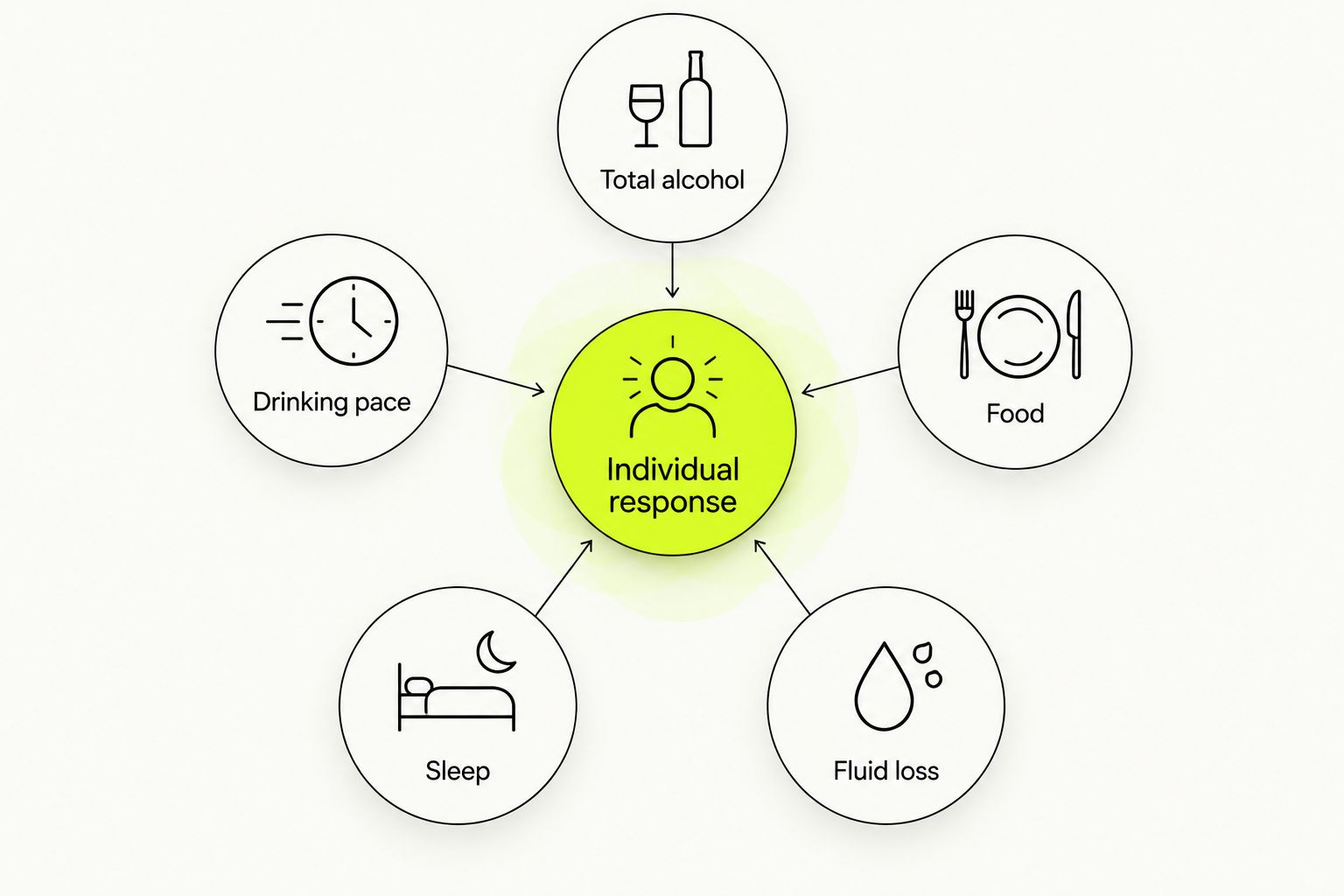
Natural-wine hangovers vary because alcohol exposure and individual responses vary. The following factors help explain why the same person can feel different after separate evenings:
- Total alcohol: Both wine strength and the volume you drink contribute to your alcohol intake. A natural label does not change that calculation.
- Drinking pace: Drinking quickly affects how rapidly alcohol enters your system. A leisurely setting does not help if refills keep arriving.
- Food: Eating slows alcohol absorption compared with drinking on an empty stomach. It does not prevent intoxication or guarantee that you avoid a hangover.
- Sleep: Alcohol can disrupt sleep even when it makes you feel sleepy initially. A full night in bed does not necessarily mean restorative sleep.
- Fluid loss: Alcohol increases urination, which can contribute to thirst and mild dehydration. Dehydration is only part of the hangover picture.
- Individual response: Health conditions, medications, and differences in alcohol metabolism affect how you respond. A friend’s comfortable experience does not establish your own tolerance.
The practical move is to address the factors you can control. Switching categories while keeping the same alcohol intake is not a dependable prevention strategy.
Do sulfites cause natural-wine hangovers?
Sulfites are not a reliable explanation for an ordinary next-day hangover. NIAAA’s hangover guidance focuses on alcohol-related mechanisms rather than identifying sulfites as the cause. Choosing a low-sulfite bottle does not remove those mechanisms.
Sulfite sensitivity is a separate concern. Sulfites can trigger reactions in susceptible people, particularly some people with asthma, but a suspected reaction needs medical assessment rather than a wine-shopping workaround.
Low-sulfite does not mean sulfite-free
Fermentation can produce sulfites naturally. A statement about no added sulfites is therefore different from a statement about total sulfite content.
Ask for specific producer information if sulfites matter to you. Do not infer a wine’s sulfite level from its color, cloudy appearance, farming language, or natural-wine positioning.
A headache does not identify its own cause
A headache during drinking is not automatically the same thing as a hangover the next morning. Timing, other symptoms, and your medical history matter.
If headaches recur after wine, speak with a clinician rather than trying to diagnose a sulfite or histamine problem yourself. A low-sulfite claim is not a treatment recommendation. This distinction belongs in any sensible 2026 discussion of wine and headaches.
Does organic wine prevent hangovers?
Organic wine does not prevent hangovers because it still contains alcohol. Organic certification concerns production requirements; it is not a clinical claim about how you will feel after drinking.
Natural and organic also are not interchangeable labels. A producer’s low-intervention philosophy does not, by itself, establish organic certification, and certification does not establish a wine’s alcohol strength.
Choose certified wine if its production standards match your preferences. Read certification and alcohol information separately, and leave claims such as clean, guilt-free, or headache-free out of your health decisions.
Is orange wine less likely to give you a hangover?
Orange wine has no automatic hangover advantage over other wine. Skin contact describes a winemaking method, not a process that removes alcohol or prevents next-day symptoms.
An amber color or grippy texture does not tell you how much alcohol is in your pour. Check ABV and serving size just as you would with a red, white, or rosé.
You can choose orange wine for its texture and food-pairing possibilities. That is a taste decision, not a medical benefit. Tinto Amorio’s wine categories should be approached with the same distinction.
How do you reduce hangover risk if you choose to drink?
Not drinking alcohol is the reliable way to prevent an alcohol-induced hangover. Drinking less reduces alcohol exposure, but there is no guaranteed hangover-free amount for everyone. For adults who choose to drink, these steps make intake easier to manage without pretending to eliminate risk.
- Check ABV. Read the current label before pouring. Do not assume that a natural wine is lower in alcohol than another wine.
- Measure pours. Use the US standard-drink reference to understand serving size, while remembering that stronger wine changes the amount of alcohol in that serving.
- Eat first. Have food before or while drinking. Food slows absorption; it does not neutralize alcohol already consumed.
- Slow down. Avoid automatic refills and take breaks from alcoholic drinks. Water can help with hydration, but it does not sober you up.
- Stop drinking. Do not treat feeling fine in the moment as permission to keep going. Alcohol can still affect judgment, coordination, and sleep.
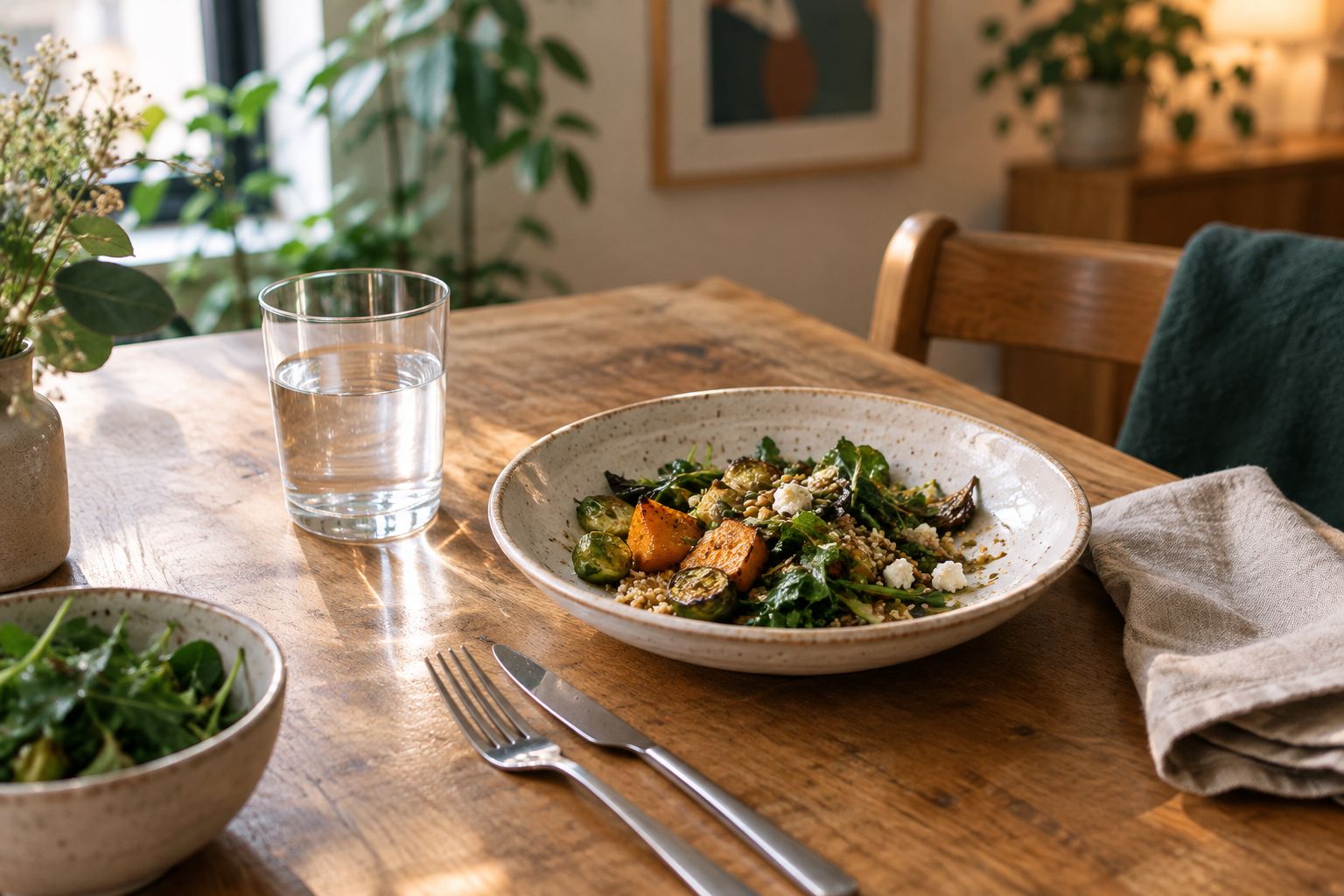
A practical dinner setup keeps water and food within reach and leaves topping up as a deliberate choice. You do not need a different wine category to make that change.
These steps are not permission to drink when alcohol is unsuitable for you. Avoid alcohol during pregnancy, before driving, and when a medication or health condition makes drinking unsafe. Ask a pharmacist or clinician about medication interactions instead of relying on a bottle description.
What should you do if you already have a hangover?
Time is the main remedy for a hangover; another drink is not a cure. Rest, drink water as tolerated, and eat if you can manage food. Neither coffee nor a cold shower removes alcohol from your system.
NIAAA notes that hangover symptoms can last 24 hours or longer. That is general guidance, not a countdown you can use to decide when driving is safe. A hangover can affect attention and coordination even after blood alcohol levels have fallen.
Be cautious with pain medicine. Alcohol and acetaminophen can harm the liver, while aspirin and ibuprofen can irritate the stomach; ask a pharmacist or clinician what is appropriate for your situation.
When is it more than a hangover?
Trouble waking, seizures, slow or irregular breathing, and severe confusion can indicate alcohol overdose. Call 911 for suspected alcohol overdose. Do not assume the person can sleep it off, and do not leave them alone.
For repeated headaches, persistent vomiting, or symptoms that seem unusual for you, seek medical advice. This 2026 guide provides general information, not a diagnosis or an individual drinking plan.
FAQ
Can you get a hangover from natural wine even if it has no added sulfites?
Yes, natural wine with no added sulfites can still give you a hangover because it contains alcohol. No added sulfites also does not necessarily mean no sulfites are present.
Is natural wine better than regular wine for avoiding a hangover?
Natural wine is not a dependable way to avoid a hangover compared with other alcoholic wine. Total alcohol intake, drinking pace, food, sleep, and individual response matter more than the category name.
Can one glass of natural wine give me a headache?
Yes, a headache can occur after a glass of natural wine, and glass sizes and alcohol strengths vary. A recurring headache deserves medical advice rather than an assumption that sulfites are responsible.
Does drinking water stop a wine hangover?
Water does not reliably prevent a wine hangover or cancel alcohol’s effects. It helps with hydration, but dehydration is only one contributor to hangover symptoms.
Is organic orange wine hangover-free?
Organic orange wine is not hangover-free because organic production and skin contact do not remove alcohol. Read the alcohol percentage and pay attention to serving size.
How long does a natural-wine hangover last?
A natural-wine hangover can last 24 hours or longer, consistent with NIAAA’s general hangover guidance. The natural label does not establish a shorter recovery time.
Should I buy Tinto Amorio to avoid a hangover?
No, Tinto Amorio should not be chosen as a hangover-prevention strategy. Choose wine for your taste and production preferences, and do not treat a natural-wine description as health protection.
One last thing
The easiest detail to miss is the refill. You can study every word on a wine label and still lose track of alcohol intake when someone keeps topping up your glass.
Finish a pour before deciding whether you want another. Better yet, skip alcohol when avoiding a hangover is the priority. The word natural does not change that choice.