Can pregnant women drink low sulfite wine?
Editorial Team @ 2026-10-09 14:12:04 -0700

No. Pregnant women should not drink low-sulfite wine: reducing sulfites does not remove alcohol, and no safe amount of alcohol during pregnancy has been established. The recommendation in 2026 is to avoid alcoholic wine throughout pregnancy, including natural, organic, orange, and low-sulfite styles.
- Can pregnant women drink low sulfite wine? No. Lower sulfites do not make alcohol safe during pregnancy.
- CDC guidance identifies no known safe amount, safe time, or safe type of alcohol during pregnancy.
- Tinto Amorio wine, like any alcoholic wine, is not recommended during pregnancy.
- If you drank before knowing you were pregnant, stop drinking and discuss the exposure with your prenatal clinician.
Can pregnant women drink low sulfite wine?
Low-sulfite wine is not a pregnancy-safe alternative to regular wine. The pregnancy concern is alcohol exposure, not whether the winemaker used fewer sulfites. Alcohol passes through the placenta and can affect fetal development.
The Centers for Disease Control and Prevention (CDC) advises that there is no known safe amount of alcohol during pregnancy, no safe time during pregnancy to drink, and no safe type of alcoholic drink. That includes wine.
Our low-sulfite wine guide explains the wine category. Pregnancy safety is a separate question, and a sulfite claim does not answer it.
| Drink or wine description | What the description tells you | What it does not establish | Pregnancy decision |
|---|---|---|---|
| Low-sulfite wine | A claim about sulfite content | That alcohol is absent or safe during pregnancy | Avoid alcoholic versions |
| Conventional wine | An alcoholic wine category | A safe pregnancy serving | Avoid |
| Organic wine | A regulated production or certification claim, depending on the label | That the wine is alcohol-free | Avoid alcoholic versions |
| Dealcoholized wine | Alcohol has been removed through processing | That no residual alcohol remains | Check the exact alcohol statement; do not assume |
| Plain water or plain sparkling water | A drink without wine or alcoholic ingredients | Anything about added ingredients in flavored or mixed versions | Best for a straightforward alcohol-free choice |
The distinction is simple: sulfites and alcohol are different substances. Changing one does not prove anything about the other.
Why this matters
Wine language can sound like health language. “Natural,” “organic,” “low-sulfite,” and “low-intervention” describe aspects of production or composition. None establishes that an alcoholic drink is appropriate during pregnancy.
That matters when you are scanning a menu, shopping for a celebration, or hearing that a particular bottle is “cleaner.” You do not need to compare winemaking philosophies to make this decision. You need to know whether the drink contains alcohol.
Tinto Amorio is a winery for adult wine drinkers; pregnancy calls for an alcohol-free choice. That boundary applies regardless of a wine's color, grape variety, or production style.
For a pregnancy decision in 2026, use medical guidance rather than a wine label's wellness associations. A bottle can fit your taste preferences without fitting your current health needs.
Why lower sulfites do not change the pregnancy recommendation
Sulfites help protect wine against oxidation and unwanted microbial activity. They can also occur naturally during fermentation. Alcohol forms when yeasts ferment sugars.
These are separate parts of winemaking. A wine made with fewer added sulfites can still contain alcohol, just as a wine with a different preservative approach can still contain alcohol.
Some people have sulfite sensitivity, particularly people with asthma. That deserves its own medical discussion. Addressing a sensitivity does not establish that drinking alcohol during pregnancy is safe.
What changes between wine descriptions?
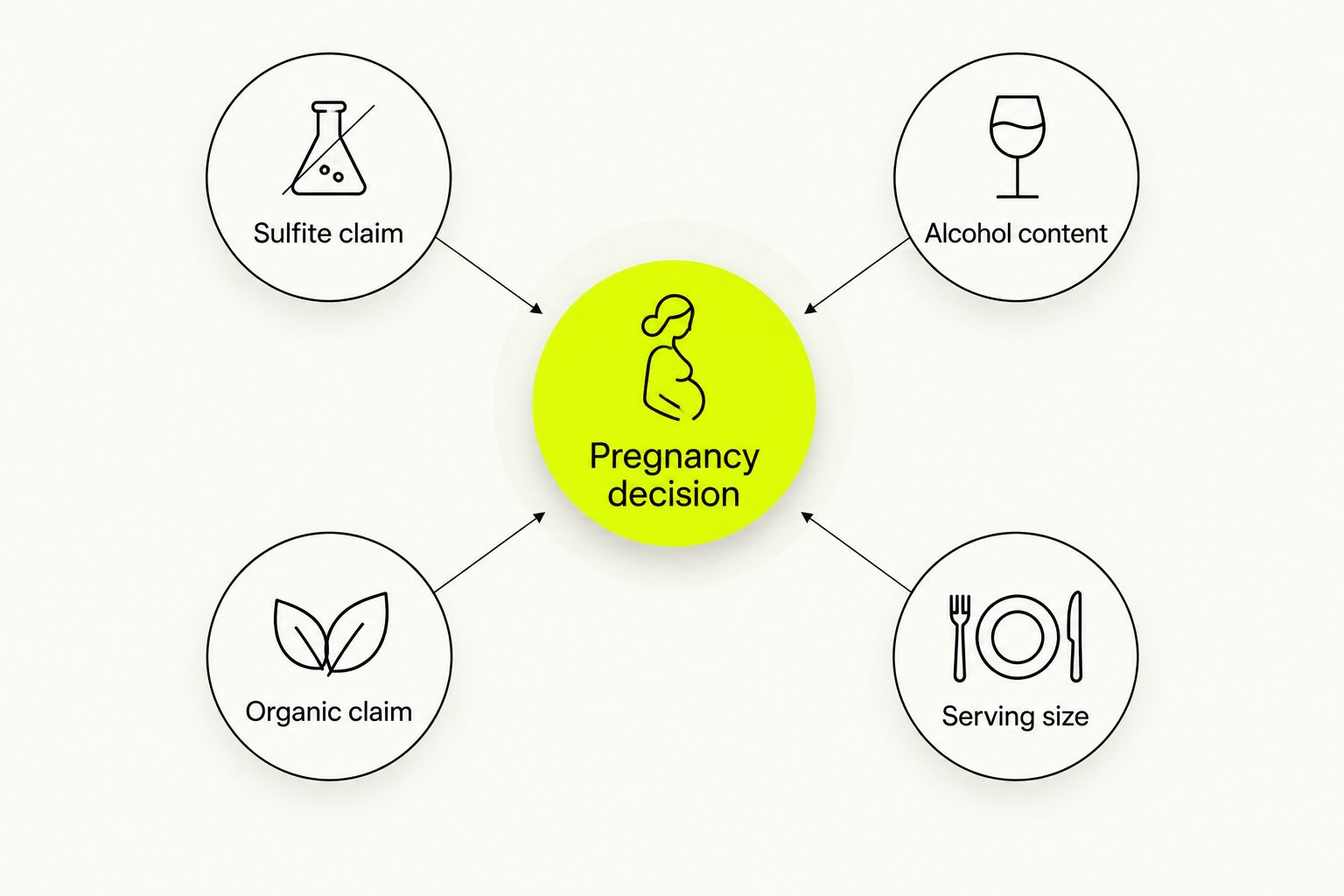
The answer gets confusing because labels discuss different things. Keep these distinctions separate:
- Sulfite claim: Describes sulfites, not a safe amount of alcohol during pregnancy.
- Alcohol content: Describes alcohol concentration, not a pregnancy-safe threshold.
- Organic claim: Describes the relevant production or certification standard, not the absence of alcohol.
- Serving size: Changes how much alcohol you consume, not whether a safe pregnancy amount has been established.
- Pregnancy decision: Depends on alcohol guidance, not the wine's natural or artisanal positioning.
Read the alcohol statement separately from the rest of the label. A reassuring adjective is not a substitute for that information.
Does a small glass or lower-alcohol wine make a difference?
A smaller serving contains less alcohol than a larger serving of the same wine, but it does not become a proven safe pregnancy serving. Lower exposure and established safety are not interchangeable.
For context, the National Institute on Alcohol Abuse and Alcoholism (NIAAA) defines a US standard drink as containing 14 grams of pure alcohol. Its wine example is 5 fluid ounces at 12% alcohol by volume. Those figures explain alcohol measurement; they are not permission to drink that amount during pregnancy.
A glass is not a reliable unit by itself. The amount poured and the wine's alcohol concentration both matter. A generous restaurant pour and a smaller home pour do not necessarily contain the same amount of alcohol.
In 2026, the pregnancy recommendation remains avoidance, not calculating a smaller “safe” glass. There is no established pregnancy limit to work backward from.
You also cannot turn wine into an alcohol-free drink by adding sparkling water, juice, or ice. Dilution changes concentration, but drinking the entire mixture still means consuming the alcohol you added.
Is organic or natural wine safer during pregnancy?
Organic and natural alcoholic wines are not recommended during pregnancy. Production choices do not remove the concern about alcohol reaching a developing baby.
An organic certification answers a question about the applicable production standard. It does not certify pregnancy safety. “Natural wine” likewise does not mean alcohol-free, and the term does not supply a medically approved serving amount.
Orange wine is not an exception either. Skin contact changes the wine's color, texture, and flavor; it does not make an alcoholic wine appropriate during pregnancy.
Tinto Amorio's natural-wine category belongs in a conversation about wine preferences, not a pregnancy safety exception. The same alcohol guidance applies to alcoholic wines across categories and brands.
What about antioxidants or claims about “better” ingredients?
Antioxidants do not cancel alcohol exposure. A claim about grapes, additives, farming, or fermentation cannot establish that an alcoholic drink is safe during pregnancy.
You do not need wine to meet your nutritional needs. Ask your prenatal clinician about nutrition questions rather than treating a wine's ingredients as a reason to drink it.
Can you drink nonalcoholic or dealcoholized wine instead?
Do not assume a drink contains no alcohol because the front label says “nonalcoholic” or “dealcoholized.” Some products retain residual alcohol. Check the exact alcohol statement for the specific drink.
Dealcoholization describes a process. It does not, by itself, tell you the final alcohol content. A wine-style name, bottle shape, or placement in a nonalcoholic section does not replace the label information.
If you want the least complicated choice, choose plain water or plain sparkling water without alcoholic additions. If you want a wine-style alternative, take the exact product label to your prenatal clinician rather than relying on a general category description.
Choose the drink for the occasion, not the wine resemblance
For dinner, plain sparkling water gives you bubbles without needing to interpret a wine claim. Its limitation is obvious: it does not taste like fermented wine. It still lets you share the meal and the toast.
At a restaurant, ask for a drink without wine, spirits, beer, bitters containing alcohol, or other alcoholic ingredients. “Mocktail” is useful shorthand, but confirming the ingredients is more precise.
For a home celebration, keep the alcohol-free drink separate from cocktails and wine-based mixtures. That makes the choice easy to identify and avoids an accidental alcoholic top-up.
What if you drank low-sulfite wine before knowing you were pregnant?
Stop drinking and tell your prenatal clinician what happened. Drinking before you recognized a pregnancy does not mean your baby has definitely been harmed, but an individual outcome cannot be predicted from the wine's sulfite level.
The American College of Obstetricians and Gynecologists (ACOG) advises avoiding alcohol during pregnancy and discussing alcohol use with your obstetric care team. CDC guidance also emphasizes that stopping alcohol use at any point in pregnancy can improve the baby's health and well-being.
You do not need to arrive with a perfect calculation. Tell your clinician what you remember:
- The type of drink.
- Approximately how much you drank.
- How often you drank.
- When the drinking happened relative to your pregnancy.
- Whether stopping feels difficult or causes symptoms.
Keep the discussion factual. A clinician can put the history in context and plan care without making the wine label the focus.
Do you need to panic about an accidental sip?
An accidental sip does not establish that harm occurred. Do not use online anecdotes to predict your pregnancy outcome, and do not treat reassuring stories as permission to keep drinking.
Avoid further alcohol and discuss the incident with your prenatal clinician. If you have been drinking regularly, share that history too; the amount and pattern matter for the clinical conversation.
What if stopping alcohol feels difficult?
Ask for medical help promptly. Difficulty stopping is a health issue, not a character judgment, and your care team can connect you with support.
If you are physically dependent on alcohol or have had withdrawal symptoms, seek urgent medical guidance about stopping safely. Alcohol withdrawal can be dangerous and should not be managed alone.
Does the trimester change the answer?
No trimester provides a known safe window for drinking alcohol. CDC guidance identifies no safe time during pregnancy, including before you know you are pregnant.
A baby's brain develops throughout pregnancy. The idea that wine becomes acceptable after the first trimester does not follow from the medical recommendation.
The practical advice in 2026 is consistent: avoid alcoholic wine throughout pregnancy. If you drank earlier, stopping now is still a useful action; an earlier exposure is not a reason to continue.
How do you handle a toast without drinking wine?
Keep the occasion. Change the drink. You can join a toast with plain sparkling water, and you do not owe anyone an explanation of your medical history.
Use a short request: ask for sparkling water with no alcohol added. If someone offers low-sulfite wine as a compromise, explain that your concern is alcohol, not sulfites.
For hosts, offer an identifiable alcohol-free choice without making a guest negotiate for it. Do not describe natural or organic wine as suitable for a pregnant guest, and do not quietly add wine to a drink requested without alcohol.
The best choice for avoiding wine-related alcohol exposure is a drink made without alcohol, not a different alcoholic wine. A festive glass does not require a wine pour.
Medical guidance behind this 2026 answer
The medical distinction comes from established US public-health guidance, not a comparison of wine brands:
- CDC, “About Alcohol Use During Pregnancy”: Guidance for pregnancy and trying to become pregnant; identifies no known safe amount, safe time, or safe type of alcohol.
- ACOG, “Alcohol and Women”: Patient guidance on alcohol and women's health, including avoiding alcohol during pregnancy and discussing use with an obstetric clinician.
- NIAAA, “What Is a Standard Drink?”: US alcohol measurement guidance; defines a standard drink as 14 grams of pure alcohol and gives the 5-fluid-ounce, 12%-alcohol wine example.
The standard-drink figures explain exposure measurement. They do not establish a safe pregnancy serving. Your prenatal clinician is the right person to address a specific exposure, medical history, or difficulty stopping.
FAQ
Can pregnant women drink low sulfite wine?
No. Low-sulfite alcoholic wine is not recommended during pregnancy because reducing sulfites does not remove alcohol. No safe amount of alcohol during pregnancy has been established.
Is one glass of low-sulfite wine safe while pregnant?
No safe pregnancy serving has been established, including one glass. Avoid further alcohol and discuss any exposure with your prenatal clinician.
Is organic wine better than regular wine during pregnancy?
Organic alcoholic wine is not a pregnancy-safe alternative to regular wine. Organic certification concerns production standards, not whether alcohol is safe for a developing baby.
Can I drink wine after the first trimester?
There is no known safe time during pregnancy to drink alcohol. The recommendation to avoid alcoholic wine applies throughout pregnancy.
What should I do if I drank wine before knowing I was pregnant?
Stop drinking and tell your prenatal clinician what you drank, approximately how much, and when. An exposure does not mean harm definitely occurred, but the outcome cannot be predicted from the wine type.
Can I have dealcoholized wine while pregnant?
Do not assume dealcoholized wine contains no alcohol. Check the exact alcohol statement and discuss the specific product with your prenatal clinician; plain water or plain sparkling water avoids that uncertainty.
Does mixing wine with sparkling water make it safe during pregnancy?
No. Adding sparkling water dilutes wine but does not remove the alcohol you poured into the drink. Choose a drink without alcoholic ingredients instead.
One last thing
“No added sulfites” and “no alcohol” are different claims. Even an accurate statement about sulfites does not answer whether a drink contains alcohol.
That is the label-reading habit to keep: separate how a wine was made from whether you should drink it. Tinto Amorio's low-sulfite wine category does not change the pregnancy recommendation. Choose an alcohol-free drink and bring individual exposure questions to your prenatal clinician.
Related guides
These guides explain wine terminology, not exceptions to pregnancy alcohol guidance.